An American Catholic church community blog, 
in latin 'Stella Borealis'-the star of the north, serving the Catholic church in the upper midwest, 
including those in parish mission seminary school etc, in the Minneapolis St.Paul Twin Cities St. 
Cloud Brainerd Duluth Wisconsin Iowa North South Dakota and surrounding area.

Saturday, December 31, 2011

Please Join Me In Prayer and Fasting for the Protection of Marriage In My State

.

In Minnesota, where I was born, raised, and still live, we will be voting next November on whether or not to amend our state constitution to define marriage as solely between one man and one woman. The Most Reverend John Nienstedt, Archbishop of St. Paul and Minneapolis, is calling on all Catholics to pray, as well as fast on all Fridays, for the protection of marriage in Minnesota. I join my Archbishop in calling on my brother and sister Catholics, whether in Minnesota or not, to join me in prayer and fasting for this effort. Archbishop Nienstedt recently released a prayer he wishes to be prayed regularly by Catholics for this intention, and I have included it below. The prayer can also be found on the website for the Archdiocese of St. Paul and Minneapolis here:

Heavenly Father,

Through the powerful intercession of the Holy Family, grant to this local Church the many graces we need to foster, strengthen, and support faith-filled, holy marriages and holy families.

May the vocation of married life, a true calling to share in your own divine and creative life, be recognized by all believers as a source of blessing and joy, and a revelation of your own divine goodness.

Grant to us all the gift of courage to proclaim and defend your plan for marriage, which is the union of one man and one woman in a lifelong, exclusive relationship of loving trust, compassion, and generosity, open to the conception of children.

We make our prayer through Jesus Christ, who is Lord forever and ever. Amen.

Labels:


Friday, December 30, 2011

10th Annual Apologetics Conference - Featuring Peter Kreeft PhD - Saturday, January 7th at 1:00 p.m.

.

Register - Now - Bring Your Kids!

Cost is only $15 per person - $10 ages 18 and under - Clergy/religious free!
Saturday, January 7, 2012

Peter Kreeft, Ph.D is the featured speaker at the Holy Name Society's 10th Annual Apologetics Conference. First talk begins at 1:00 p.m.

Peter Kreeft, Ph.D., is a professor of philosophy at Boston College and at the King's College (Empire State Building), in New York City. He is a regular contributor to several Christian publications, is in wide demand as a speaker at conferences, and is the author of over 55 books including Handbook of Christian Apologetics, Christianity for Modern Pagans, and Fundamentals of the Faith.

Dr. Keeft is one of today's most knowledgeable Apologists! His "Handbook of Catholic Apologetics" is the only book that categorizes and summarizes all the major arguments in support of the main Christian beliefs, including key distinctively Catholic doctrines. Also included is a Protestant-friendly treatment of Catholic-Protestant issues. The Catholic answers to Protestant questions show how Catholicism is the fullness of the Christian faith.

Time

Conference Schedule

12:30 p.m.
Registration Begins
(Refreshments - Books for Sale in lower level)

12:40 p.m.
Recitation of the Most Holy Rosary
1:00 p.m.
"7 Very Good Reasons to Be Catholic"


Break - Refreshments - Books for Sale - Lower Level
2:20 p.m.
"Ecumenism Without Compromise"


Followed by Special Q & A Session
4:15 p.m.
Book Signing - Lower Level


5:00 p.m.
Vigil Mass - Main Church

Conference Flyer

All Saints Catholic Church
19795 Holyoke Avenue
Lakeville, MN 55044

Come; be inspired by these powerful presentations plus a Q & A session.

  • Learn more about the Catholic Faith and how best to share it with your non-Catholic friends, family members, neighbors and co-workers.
  • Learn the best defense of the faith and how to deliver the message with conviction.
  • Question & Answer Session - have your questions answered by Peter Kreeft Ph.D. Send your questions via e-mail to Info@nomensanctum.org and Peter will answer it the day of the conference!

Register - Now

Cost is only $15 per person - $10 ages 18 and under - Clergy/religious free!

Labels:


Wednesday, December 28, 2011

MSNBC Poll: Bishops say rules on gay parents limit freedom of religion

.
By
updated 12/28/2011 5:42:01 PM ET 2011-12-28T22:42:01

Catholic Charities in Illinois has served for more than 40 years as a major link in the state’s social service network for poor and neglected children. But now most of the Catholic Charities affiliates in Illinois are closing down rather than comply with a new requirement that says they can no longer receive state money if they turn away same-sex couples as potential foster care and adoptive parents.

For the nation’s Roman Catholic bishops, the outcome is a prime example of what they see as an escalating campaign by the government to trample on their religious freedom while expanding the rights of gay people. The idea that religious Americans are now the victims of government-backed persecution is now a frequent theme not just for Catholic bishops, but also for Republican presidential candidates and conservative evangelicals.

“In the name of tolerance, we’re not being tolerated,” said Bishop Thomas J. Paprocki of the Diocese of Springfield, Ill., a civil and canon lawyer who helped drive the church’s losing battle to retain its state contracts for foster care and adoption services.

Formidable opponents
The Illinois experience indicates that the bishops face formidable opponents who also claim to have justice and the Constitution on their side. They include not only gay rights advocates, but also many religious believers and churches that support gay equality (some Catholic legislators among them). They frame the issue as a matter of civil rights, saying that Catholic Charities was using taxpayer money to discriminate against same-sex couples.

Tim Kee, a teacher in Marion, Ill., who was turned away by Catholic Charities three years ago when he and his longtime partner, Rick Wade, tried to adopt a child, said: “We’re both Catholic, we love our church, but Catholic Charities closed the door to us. To add insult to injury, my tax dollars went to provide discrimination against me.”

The bishops are engaged in the religious liberty battle on several fronts. They have asked the Obama administration to lift a new requirement that Catholic and other religiously affiliated hospitals, universities and charity groups cover contraception in their employees’ health plans. A decision has been expected for weeks now.

At the same time, the bishops are protesting the recent denial of a federal contract to provide care for victims of sex-trafficking, saying the decision was anti-Catholic. An official with the Department of Health and Human Services recently told a hearing on Capitol Hill that the bishops’ program was rejected because it did not provide the survivors of sex-trafficking, some of whom are rape victims, with referrals for abortions or contraceptives.

Critics of the church argue that no group has a constitutional right to a government contract, especially if it refuses to provide required services.

But Anthony R. Picarello Jr., general counsel and associate general secretary of the United States Conference of Catholic Bishops, disagreed. “It’s true that the church doesn’t have a First Amendment right to have a government contract,” he said, “but it does have a First Amendment right not to be excluded from a contract based on its religious beliefs.”

The controversy in Illinois began when the state legislature voted in November 2010 to legalize civil unions for same-sex couples, which the state’s Catholic bishops lobbied against. The legislation was titled “The Illinois Religious Freedom Protection and Civil Unions Act,” and Bishop Paprocki said he was given the impression that it would not affect state contracts for Catholic Charities and other religious social services.

Adoption services jettisoned
Bishops in Washington and Massachusetts had already decided to jettison their Catholic Charities’ adoption services rather than comply with nondiscrimination laws.

In New York State, religious groups lobbied for specific exemption language in the same-sex marriage bill. But bishops in Illinois did not negotiate, Bishop Paprocki said.

“It would have been seen as, We’re going to compromise on the principle as long as we get our exception. We didn’t want it to be seen as buying our support,” he said.

Catholic Charities is one of the nation’s most extensive social service networks, serving more than 10 million poor adults and children of many faiths across the country. It is made up of local affiliates that answer to local bishops and dioceses, but much of its revenue comes from the government. Catholic Charities affiliates received a total of nearly $2.9 billion a year from the government in 2010, about 62 percent of its annual revenue of $4.67 billion. Only 3 percent came from churches in the diocese (the rest came from in-kind contributions, investments, program fees and community donations).

In Illinois, Catholic Charities in five of the six state dioceses had grown dependent on foster care contracts, receiving 60 percent to 92 percent of their revenues from the state, according to affidavits by the charities’ directors. (Catholic Charities in the Archdiocese of Chicago pulled out of foster care services in 2007 because of problems with its insurance provider).

When the contracts came up for renewal in June, the state attorney general along with the legal staff in the governor’s office and the Department of Children and Family Services decided that the religious providers on state contracts would no longer be able to reject same-sex couples, said Kendall Marlowe, a spokesman for the department.

The Catholic providers offered to refer same-sex couples to other agencies (as they had been doing for same-sex and unmarried couples), but that was not acceptable to the state, Mr. Marlowe said. “Separate but equal was not a sufficient solution on other civil rights issues in the past either,” he said.

Some decide to fight
Catholic Charities in the Diocese of Rockford decided at that point to get out of the foster care business. But the bishops in Springfield, Peoria, Joliet and Belleville decided to fight, filing a lawsuit against the state.

Taking a completely different tack was the agency affiliated with the conservative Lutheran Church — Missouri Synod, which like the Catholic Church does not sanction same-sex relationships. Gene Svebakken, president and chief executive of the agency, Lutheran Child and Family Services of Illinois, visited all seven pastoral conferences in his state and explained that the best option was to compromise and continue caring for the children.

“We’ve been around 140 years, and if we didn’t follow the law we’d go out of business,” Mr. Svebakken said. “We believe its God- pleasing to serve these kids, and we know we do a good job.”

In August, Judge John Schmidt, a circuit judge in Sangamon County, ruled against Catholic Charities, saying, “No citizen has a recognized legal right to a contract with the government.” He did not address the religious liberty claims, ruling only that the state did not violate the church’s property rights.

Three of the dioceses filed an appeal, but in November filed a motion to dismiss their lawsuit. The Dioceses of Peoria and Belleville are spinning off their state-financed social services, with the caseworkers, top executives and foster children all moving to new nonprofits that will no longer be affiliated with either diocese.

Gary Huelsmann, executive director of Catholic Social Services of Southern Illinois, in the Belleville Diocese, said the decision was excruciating for everyone.

“We have 600 children abused and neglected in an area where there are hardly any providers,” he said. “Us going out of business would have been detrimental to these children, and that’s a sin, too.”

The work will be carried on, but the Catholic Church’s seminal, historic connection with it has been severed, noted Mr. Marlowe, the spokesman for the state’s child welfare agency. “The child welfare system that Catholic Charities helped build,” he said, “is now strong enough to survive their departure.”

This article, "Bishops Say Rules on Gay Parents Limit Freedom of Religion," originally appeared in The New York Times.

Labels: , ,


Tuesday, December 27, 2011

Stained glass is a 'a way of sharing the faith' (dating to the times when most people couldn't read).

.

Stained glass at Peoria's St. Joseph Catholic Church 'a way of sharing the faith'


A congregation of German immigrants, members of St. Joseph Catholic Church had the building's stained glass windows made in Munich about 100 years ago. Some of the most magnificent stained glass windows in the area, the panels depict the 15 mysteries of the rosary, with each window showing an important event in the life of Jesus Christ.


No one knows who made the first stained glass windows. Some of the earliest examples date to the first century, A.D.

And while the materials have improved since then, the tools used by stained glass artists have changed very little.

"We had an artist once who told me that if you brought a stained glass artist from the 1600s and set him down at my bench, he would feel right at home," said Carl Iverson, special projects manager for Reinarts Stained Glass Studios Inc. in Winona, Minn. "It's one of the few industries that still does it a lot of the way it was done in the past."

Reinarts has worked in many churches in central Illinois, including St. Joseph Catholic Church after a 2005 fire destroyed one window behind the alter and badly damaged another. A third window was also redone so it would match the two newly restored panels.

"When the windows get heated up too much, it actually makes the glass brittle," Iverson explained. "When you take the glass out of the lead, it actually disintegrates."

Workers used the resulting piles of glass to select new glass when they re-created the windows. Matching old glass is tricky because each batch of glass varies. In addition, there are types and colors made 100 years ago that aren't produced today.

"It's not like paint where you can say, 'Mix me this color up,'" Iverson said. "Glass is manufactured differently today. There's less hand-blown glass and more mechanically made glass."

The windows Reinarts re-created for St. Joseph were figure windows, with the images of Matthew and Mark painted on the glass. They were made by an artist using a special type of paint which, when heated in a kiln, fuses to the glass. The process creates nuanced images and forms that would be impossible to make with cut glass and leading.

"The paint is actually made of glass," Iverson said. "You paint it on and then you take off what you don't want. When you're working with a figure, especially on a face, you may fire it 10 times. The painting is created in stages."

"That's why figure windows are more expensive," Iverson said. "There's more time and skill involved."

The skills are so specialized that each window is created by a team of artisans. At Reinarts, one person paints just the hands and faces. Another artist paints the robes and background details. Another person does the design and layout, and yet another selects the glass and assembles the window.

That's the main reason why stained glass windows are so expensive, Iverson said.

"There is no margin for profits," he said. "Everything is done by hand, and labor has gone up over the years."

Expense was an important factor to the Rev. Larry Zurek when he took on the task of restoring Sacred Heart Church in 2005-06. The restoration, done shortly before the church's 100th anniversary, undid an earlier renovation from the 1960s.

At that time the building's original stained glass windows, in need of repair, were instead replaced with modern stained glass.

"It was the trend to make things look new," Zurek said.

Pastor at both Sacred Heart and St. Joseph Catholic churches, Zurek has a deep admiration for beautiful stained glass windows. They not only create colored light, but also tell a story.

"It's a way of sharing the faith," he said. "We say a picture paints a thousand words. In the Middle Ages, when people couldn't read or write, the windows told a story."

Because stained glass windows are more expensive than ever, during the restoration at Sacred Heart, Zurek had to make some compromises. He decided the majority of the church's new windows be made in a simple style by a company out of St. Louis, while three windows in the choir loft were created in the more expensive figural style by a company in England.

"I went there during the process," Zurek said. "I was really worried about the faces. That's where the art is. The higher quality artist is the one who does the face."

Zurek was quite pleased with the way the windows turned out, but he still speaks of his other church when talking about magnificent stained glass.

Built in 1879, St. Joseph is the oldest Catholic Church in Peoria. In the early 1900s, the congregation, mostly German immigrants, ordered elaborate windows from an art glass studio in Munich, Zurek said.

Like many churches, the congregation could only raise enough money initially to build the structure. The more ornate windows came later to replace the less complex windows installed when the church was built.

Several of the original windows are still in use above the front doors and in the choir loft. The three windows rebuilt after the 2005 fire are also original, Zurek said.

While the church's oldest windows are nice, those made later in Germany are masterpieces. Each tells a story, depicting the important events in the life of Jesus Christ - the joyful, sorrowful and glorious mysteries of the Rosary.

"It's amazing," said Zurek as he stood recently in the empty sanctuary of St. Joseph gazing at the image of Jesus in the manger. "A lot of time, a lot of love, were put into these windows. We are so fortunate that we didn't lose them in the fire."

Closing the church was considered after the fire, Zurek said. Once filled with a vibrant congregation, the church is surrounded by a deteriorating neighborhood and has, in recent years, lost attendance.

The windows were one of the reasons leadership chose to go ahead with the $1.3 million repair of the building. Zurek believes it would likely have been razed if the windows had not survived the fire.

While attendance during a normal service is small, on Christmas Eve the old building once again overflows as family members return to celebrate in the church of their youth.

"An old church speaks more to them than a modern place," Zurek said.

Some days Zurek comes to the empty church to pray the Rosary. While gazing at the old windows he occasionally discovers details in the intricate designs he hadn't noticed before. As the light filters through the colored glass, Zurek enjoys a feeling of reverence.

"It's not just another building. It's a sacred place," Zurek said.

The stained glass windows are a big part of that.

"It's kind of like heaven breaking into our world."

Peoria PJStar

Labels: ,


AUDIO: Fargo Bishop Samuel Aquila Believes Elements Of Communism And Nazism Attack Religious Freedoms

.

There were strong statements from Fargo Catholic diocese Bishop Samuel Aquila.

ShareThis

</em>

Fargo Catholic diocese Bishop Samuel Aquila. (Submitted Photo)

AUDIO: Fargo Bishop Believes Elements Of Communism And Nazism Attack Religious Freedoms

.
Fargo Catholic diocese Bishop Samuel Aquila talks about where the country is heading

There were strong statements from Fargo Catholic diocese Bishop Samuel Aquila. The bishop says elements of communism and Nazism are attacking religious freedoms and moving the nation away from its Judeo-Christian foundations.

In an interview with KFGO news, the bishop acknowledged that his words are strong, but necessary to convey his message. Aquila says the country began slowly changing into a secular society sometime after World War II.

Aquila says the re-definition of marriage, the debate over when life begins and euthanasia are examples of what he's concerned about.

He says the effects of communism, Nazism and atheism are stronger now than just 30 to 40 years ago. KFGO News


Catholic school realignment leaves winners, losers in St. Paul, Dakota County

.

A plan by the Archdiocese of St. Paul and Minneapolis to consolidate Catholic schools on St. Paul's West Side and in northern Dakota County keeps changing, with the latest twist leaving members of one parish proclaiming a "Christmas miracle" and members of another crying foul.

Holy Trinity in South St. Paul is the latest school to escape being absorbed into a new regional school that the archdiocese is planning to combat falling enrollment, financial stress and aging facilities at five parish schools. The decision was announced to parishioners at a recent Christmas event.

"I can't tell you how many people have described this as a Christmas miracle," said the Rev. John Echert, who appealed the decision to close the school on behalf of parents and church leaders. "That's how strongly they felt about this."

But the move has upset some members of St. Matthew's School on St. Paul's West Side who say the entire "realignment" plan has been convoluted and lacked a clear vision from the start.

The confusion has made it hard for members of St. Matthew's to see how they will fit into a regional school without losing their neighborhood ties.

"The whole realignment is a joke," said Brian Osborne, a longtime member of St. Matthew's. "They don't know what they are doing. How can a billion-dollar company be so dysfunctional?"

The initial plans that were announced had five schools - St. Joseph's, St. Michael's, St. Matthew's, Holy Trinity and St. John Vianney merging into two regional campuses.

St. Joseph's in West St. Paul quickly won an appeal to remain a parish school, and now with Holy Trinity staying open, the remaining three parish schools will form one regional campus at St. Michael's in West St. Paul.

Dennis McGrath, spokesman for the archdiocese, said that after the initial plans were announced, members of Holy Trinity and St. Joseph felt their schools were still "viable" on their own. Any appearance of confusion was unintended.

"Organizations change direction all the time, if there is reason for it," McGrath said. "We are not a dictatorship."

McGrath acknowledged the emotions involved in consolidating schools with long-standing community ties. Changing population demographics and enrollments make it necessary to consolidate schools such as St. Michael, St. Matthew and St. John Vianney.

"It makes sense and they will be a stronger school going forward," McGrath said, noting the age and repairs needed at locations such as St. Matthew. "It would be irresponsible to keep a school like that going."

There currently are 361 students at the three parish schools to be consolidated. If the students won't all fit at St. Michael's, the archdiocese will find a way to accommodate them, McGrath said.

The archdiocese said in October that the "common sense plan" was recommended by a task force made up of pastors, principals and stakeholders and came after six months of "intensive discussion."

But Glenn Burke, who served on the task force, said the discussion was heavy on local demographics, governance of the new regional school board and administrative costs. It lacked talk about facilities.

"As far as I was concerned, we missed the bigger issues about facilities and finance," he said. "I did not feel that we came to a good, solid decision and made a real recommendation to the archbishop."

He called the recommendation "premature."

"I didn't feel like there was a real good recommendation that came out of the committee to the archbishop," he said. "I understood Holy Trinity and St. John Vianney were going to be consolidated together - that was my feeling - but the question was which was the best facility?"

Burke said St. John Vianney in South St. Paul has fewer classrooms than Holy Trinity but is more up to date with a newer gymnasium and cafeteria and an expanded church lobby.

Holy Trinity has 133 students in kindergarten through eighth grade. St. John Vianney, a K-6 school, has 100 students.

Echert said the initial plan generated "a very passionate response" from Holy Trinity parents and parishioners, many of whom voiced their displeasure at a November meeting attended by the archdiocesan superintendent of schools.

"Over 80 percent of the parents signed a respectful statement to the archbishop which they presented him, indicating that they did not have confidence in the plan as it was proposed," Echert said.

Echert said that he requested that Archbishop John C. Nienstedt reconsider the decision and that the archbishop then directed a formal independent assessment of the Holy Trinity and St. John Vianney buildings.

Burke, who serves on Holy Trinity's school board and has a son enrolled at the school, said he understands the uncertainty that parents and parishioners at St. John Vianney and St. Matthew's are facing.

"We got the bad news a month and a half ago," he said. "It's tough."

Meanwhile, the archdiocese is planning a contest in the three parishes to name the new regional school, McGrath said.

Osborne worries that the regional school will wind up split between St. Michael's and St. John Vianney, leaving St. Matthew's as the only school being closed.

"There are too many unanswered questions," Osborne said. "Too many people just want to know what is going on."

2011 ENROLLMENT

Holy Trinity (South St. Paul) - 133

St. John Vianney (South St. Paul) - 100

St. Joseph's (West St. Paul) - 572

St. Matthew's (St. Paul) - 169

St. Michael's (West St. Paul) - 92

Pioneer Press

Labels: , ,


Tuesday, December 20, 2011

Kateri Tekakwitha, first Native American declared to be a Saint by Pope Benedict!

.

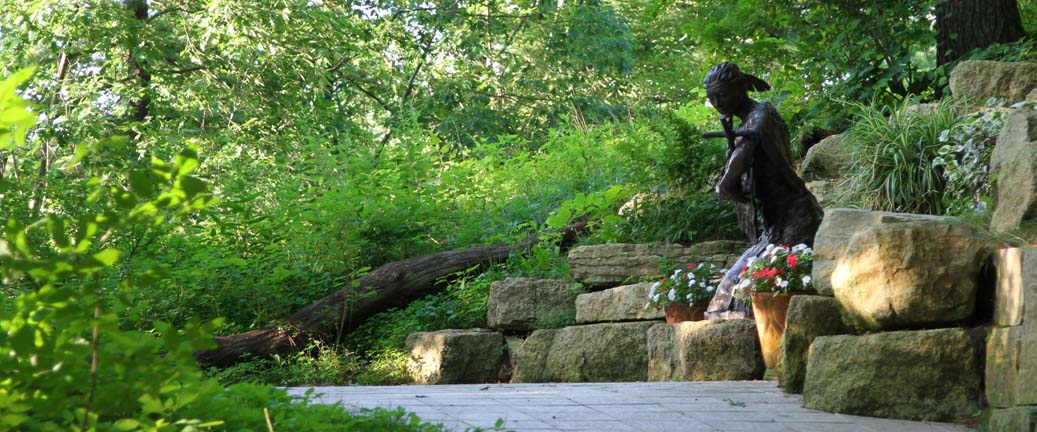
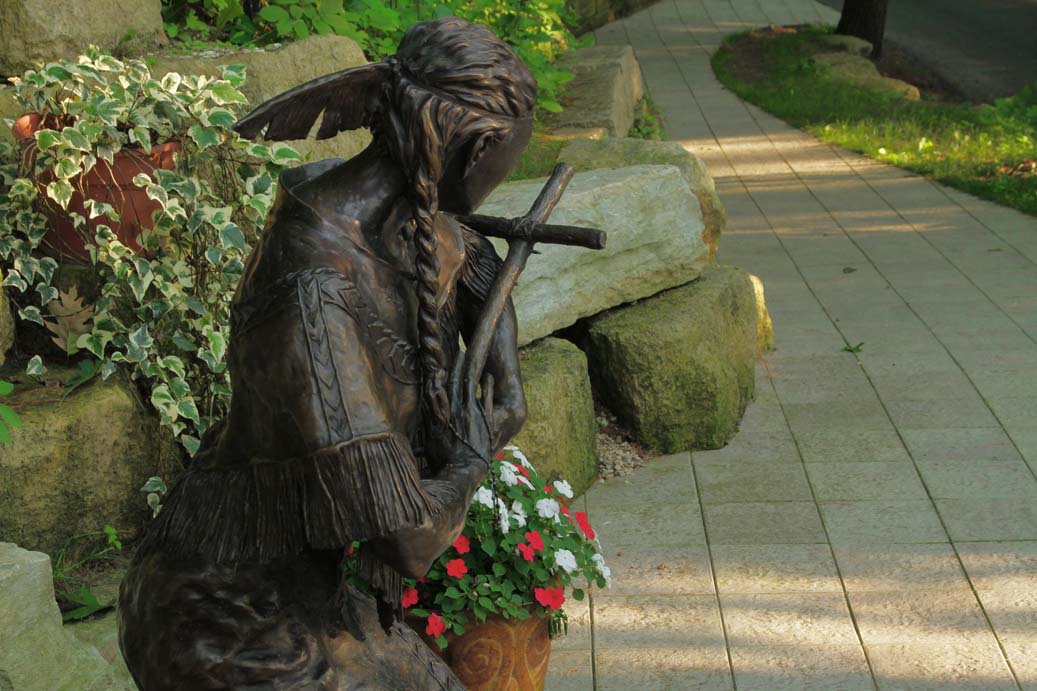
(Above) La Crosse WI: Shrine to Bl Kateri Tekakwitha

VATICAN CITY, 20 DEC 2011 – The Holy Father, yesterday signed decrees acknowledging miracles attributed to the intervention of seven blesseds (three men and four women) who will shortly be canonised. One of the new saints is Kateri Tekakwitha, the first native North American to be raised to the glory of the altars. -Vatican Information Service

Blessed Kateri Tekakwitha lived in a society where publicly and literally people ate other men, offered sacrifices to demons, and every human act was done in view of others, I mean EVERYTHING. In the mist of all this she remained a pure virgin, even before she was a Christian, but after baptism in the True Faith under the One True God, she rocketed into great holiness.A Friar With Great Devotion to her

Daughter of a Christian Algonquin woman captured by Iroquois and married to a non-Christian Mohawk chief. Orphaned during a smallpox epidemic, which left her with a scarred face and impaired eyesight. Converted and baptized in 1676 by Father Jacques de Lamberville, a Jesuit missionary. Shunned and abused by relatives for her faith. Escaped through 200 miles of wilderness to the Christian Native American village of Sault-Sainte-Marie. Took a vow of chastity in 1679. Known for spirituality and austere lifestyle. Miracle worker. Her grave became a pilgrimage site and place of miracles for Christian Native Americans and French colonists. First Native American proposed for canonization, her cause was started in 1884 under Pope Leo XIII. The Tekakwitha Conference, an international association of Native American Catholics and those in ministry with them, was named for her. – http://saints.sqpn.com/blessed-kateri-tekakwitha/

Air Maria

Montreal Gazette

ABC News

Catholic Conservation Center


Natioinal Shrine of Kateri Tekakwitha

Wikipedia Article on Kateri Tekakwitha


[National Catholic Register] on Blessed Kateri 27 December 11

Labels: ,


The Three Absolvers on How to Make a Good Confession

.
Updated a third time on December 20, 2011

Sr. Mary Ann Walsh with the USCCB has ten good, practical reasons for going to Confession regularly, with one really important reason added by Fr. Z!


First Posted on December 9, 2008


Commandments of the Church

III. To confess our sins to a priest, at least once a year.

IV. To receive Our Lord Jesus Christ in the Holy Eucharist at least once a year during Easter Season.


.
Father John Zuhlsdorf, "Father Z, renowned blogger", has 20 Tips for Making A Good Confession

Father George Rutler, author, preacher and pastor of the Church of Our Savior in Manhattan, has ten pages on "How to Make a Good Confession."

Father Robert Altier, preacher and chaplain in Hastings, MN, has a wonderful "Examination of Conscience" for you. "Keep custody of those eyes!"

and

Father John Zuhlsdorf [Fr. Z.] on "I haven't been to Confession for ten years; I don't know what to do!

Fr. Z, again:
Why I still have this blog: a reader’s testimony

And here are two more useful Examinations for children:


Click Here for an Examination of Conscience for ChildrenLink

Click Here for another Examination for Elementary School Children
Tip O' the Hat to Catholic Parents OnLine


You say that you think that you prefer to confess your sins directly to God? You don't need to do it to a priest? Read what Francis J. Beckwith, Professor of Philosophy and Church-State Studies at Baylor University, former President of the protestant Evangelical Theological Society, and a convert in April 2007 to the Catholic Church has to say on the matter.


Labels: , ,


If you live here you really don't have an excuse for not going to Confession [Bumped]

.

[Originally posted August 22, 2008]
.
Two of this area's most prolific and respected bloggers, Adoro and Terry, coincidentally posted recently on difficulties in finding a place to go to Confession. Jeepers, you'd think with 230 parishes in our archdiocese, that should be no problem.


Well, the problem is that most parishes seem to make it available on Saturday afternoons between 3:00 and 5:00, before the Vigil Mass. In days of yore, the kids went to confession on Friday afternoons, I believe, and the grown ups lined up on Saturday mornings or during parish missions or Holy Week. Maybe the problem is that we don't see many lines any more so pastors aren't offering it more often.

But a major logistical problem with sin is that it just does not happen only on Friday nights. Sin is a 24/7 event, sadly, for most of us. Therefore, it is great when we can get dash on over to the morning Confessional line, encounter only a few ahead of us and get shriven of our sins so we can face the day with joy.

Therefor the Official Minnesota Catholic Directory (a two year old edition) was scoured for those parishes that offer Confession on a daily basis (bold type) or at other times than Saturday afternoons.

Tape this to your refrigerator along with the kids homework, your workout schedule or your weight loss stats. Isn't your spiritual health as important as other important parts of your life?


Anoka St. Stephen Thursdays 7:00 p.m.
Blaine St. Timothy Saturday 6:00 pm
Burnsville MMOTC Saturday 9-10 a.m.
Carver St. Nicholas Saturday 6-6:30 p.m.
Coon Rapids Epiphany After M-F Masses; 9-10:00 am Sat
Corcoran St. Thomas Sun: 7:30 a.m.; Thurs: 11:30 a.m.
Crystal St. Raphael Saturday: 7:30-8:30 p.m.
Delano St. Joseph Thursday: After 8:30 a.m. Mass
Eagan St. John Neumann Wednesday: 7:00 p.m.
Edina Our Lady of Grace Saturday: 9:30-10:30 a.m.
Edina St. Patrick Saturday: 1:00 p.m.
Excelsior John the Baptist Sunday: 7:30-7:50; 9:30-9:50
Faribault Divine Mercy Saturday: 8-8:30; 9-9:30;
Weds & Fri: 8:00 a.m.
Forest Lake St. Peter M-F: After 8:30 a.m. Mass
Ham Lake St. Paul Mon: 8:15 a.m. & 5:30 p.m.
Hastings St Elizabeth Seton M-F: 6:45 a.m.
Hopkins John the Evangelist Saturday: 8:45 a.m
Medina Holy Name Saturday: 8:30 a.m.
Minneapolis Holy Rosary Sun: 8:45-9:15; Sun: 10:30-11:00 (Spanish)
Minneapolis OL of Lourdes 30 min. before weekend Masses
Minneapolis St. Joseph Hien 30 minutes before all Masses
Minneapolis St Anthony/Padua Saturday: 7:45-8:15
Minneapolis St. Helena Saturday 2:45-3:15
Minneapolis St. Lawrence/Newman Saturday 9:30-10:00
Minneapolis St. Leonard Saturday: After 8:00 Mass
Minneapolis St. Olaf M-F after a.m. Mass;
TThSa after noon Mass
Northfield St. Dominic M-F: 4:45 p.m.
Norwood/YA Ascension 7:30-8:15 p.m.
Ramsey Katherine Drexel 30 minutes before all Masses
Robbinsdale Sacred Heart Tues-Sat: 7:30-7:50 am [change]
St. Anthony Charles Borromeo Sat: 8:30-9 am; Weds: 5:20 pm
St. Bonnie St. Boniface Tues-Weds: 7:45-8:00 a.m.
St. Louis Pk Holy Family Sunday: 8:00-8:50 a.m.
St. Paul
St. Paul
Holy Childhood
Assumption
Sunday: 9:30-10:00 [new]
M-F: 11:30-11:55
St. Paul Bl. Sacrament Saturday: 2:30-3:30
St. Paul Cathedral
M-F: 4:00-5:05 p.m. [change]
Lent 2010: March 20, Communal
March 29, 30, 31: 3-5 & 7-8:30 [new]

St. Paul Nativity M-F: 7:45 & 4:30
St. Paul St. Agnes Sat: 7:30-9:00 a.m.;
after Tuesday devotions
St. Paul St. Bernard Monday: after 8:15 Mass
St. Paul Francis de Sales Saturday: 2:30-3:30
St. Paul St. James Tuesday: 8:30 a.m.
St. Paul St. John Before every Mass
St. Paul St Louis M-F:6:30, 9:30; also 11:30 Mon
Sat: 6:30, 11:30
St. Paul Thomas More Tuesday: 7:00 p.m.
St. Paul St. Matthew Tuesday: 7:15 a.m.
St. Paul St. Stanislaus Saturday: 2:30-3:00
St. Paul SVDP (Hmong)
Sunday: 8:00-8:45 a.m.

St Paul
St. Paul
Savage
UST, St Thomas Chapel
St. Andrew
John the Baptist
M-F 3:15 - 4:15 (NEW)
Sat: 3:00 - 4:00 p.m. (NEW)
Saturday: 8:30-9:30 a.m.
Shakopee St. Mary 15 minutes before Masses
Shoreview St. Odilia Saturday: 9:00 a.m.
S. St. Paul St. Augustine Saturday: 7:30-8:30 a.m.
Stillwater St. Mary Saturday: 8:00 a.m.
Stillwater St. Michael M-F: 5:05-5:25 p.m.
Taylors Falls St. Joseph After all Masses
Victoria St. Victoria Saturday: 6:00 p.m.
Watertown Imm. Conception Friday: 7:00-7:30 a.m.
Waverly St. Mary Before daily Mass
W. St. Paul St. Joseph Saturday: 8:30-9:30 a.m.
W. St. Paul St. Michael Saturday: 7:00-8:00 p.m.
White Bear
St. Mary/Lake Saturday: 9:00 a.m.


Labels: , ,


Monday, December 19, 2011

Winona Now Has a Minor Basilica

.


The diocese of Winona is announcing that St. Stanislaus Kostka church in Winona has been elevated the to the status of a Minor Basilica by Pope Benedict XVI. The decree from the Pope was made on November 10, 2011 and announced to the congregation of St. Stanislaus this past weekend.

The papal decree is intended to “strengthen the relation of this church with the Chair of Peter and to make it an ideal center of special liturgical and pastoral ministry” in the diocese, said Archbishop J. Augustine De Noia, OP, the secretary to the Vatican congregation.

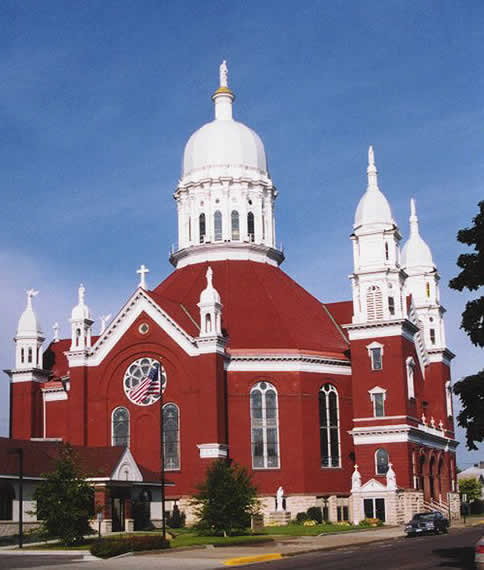
St. Stans, as those of us from Winona fondly call her, is a stunning building of beauty. It was built by the Polish immigrants in that city, literally by donation of dimes and nickels from the poor wage earners of the time. It has been remarkably preserved and restored.

One unspoken yet key person in all of this has been Deacon Justin Green who, with Janice Market and others, put in a tremendous amount of time and effort to gather and present all the materials and necessary paperwork for this to be forwarded to the Holy See.

Congratulations to all involved! To the rest of you, come to Winona and see St. Stans for yourselves!

Here is a copy of the press release from the diocese.

December 19, 2011

CONTACT: Joel Hennessy – Director of Stewardship and Advancement

Phone: 507-8581249

Email: jhennessy@dow.org

WINONA

VATICAN NAMES SAINT STANISLAUS KOSTKA PARISH A MINOR BASILICA

Through the faculties granted by the Holy Father Pope Benedict XVI, the Congregation for Divine Worship and the Discipline of the Sacraments has declared that Saint Stanislaus Kostka Parish, Winona, Minn., has assumed the status of “Minor Basilica,” emphasizing the special bond that the parish has with the Pope and with the whole Catholic Church. This Decree was made on November 10, 2011 and announced to the congregation this past weekend.

In May, His Excellency, Bishop John M. Quinn of the Diocese of Winona sent a petition to the Congregation for Divine Worship and the Discipline of the Sacraments, an office of the Vatican, so that Saint Stanislaus Kostka Parish, Winona, might take on the status of “Minor Basilica.” In November, the Congregation replied in favor of the petition, conferring this title of Minor Basilica on the parish. The decree is intended to “strengthen the relation of this important church with the Chair of Peter and to make it an ideal center of special liturgical and pastoral ministry” in the diocese, Archbishop J. Augustine Di Noia, OP, the secretary to the Vatican congregation wrote to Bishop Quinn.

One way the link is demonstrated is by celebrating feasts in a special way that are linked to the papal office, including the feast of the Chair of Peter, the feast of the Apostles Peter and Paul and the anniversary of the election of Pope Benedict XVI. The papal symbol of crossed keys may be exhibited on banners and furnishings and on the seal of the basilica and those who devoutly make a visit to the basilica on certain feast days may obtain a plenary indulgence.

”Saint Stanislaus Kostka is now a member of a small number of churches in the United States to be recognized as a Minor Basilica, and only the second in Minnesota. The other being the Basilica of St. Mary in Minneapolis, which was the first U.S. church designated as a basilica in 1926.” stated Bishop Quinn. “It is a very significant and important occasion for not only the parish and the diocese, but the entire region.”

The word basilica comes from the Greek term for “royal hall.” There are two kinds of basilicas: major basilicas, the six great Roman churches, and the minor basilicas, which are important churches in Rome and abroad which the Holy Father has honored with this title.

A church designated as a minor basilica must be a center of active and pastoral liturgy with a vibrant Catholic community and may have unique historical, artistic or religious importance. In seeking the distinction, the parish must provide a detailed report with an albumof photographs documenting the origin, history and religious activity of the church and its exterior and interior form, particularly regarding celebration of the sacraments.

Conferring the title of Minor Basilica is also a formal recognition of the beauty and dignity of the parish church. Father Thomas Hargesheimer, pastor of Saint Stanislaus Kostka, says that one of the reasons that the petition was sent was due the extraordinary architectural quality of the parish, as well as the significant Polish heritage that accompanies it.

“We really wanted to recognize the Polish immigrants that settled in the Winona area. Their heritage has had such a large impact on the development of the region. We also want to honor this parish as a faith community that contributes to not only the religious aspects of the community, but also the secular side of society as well,” said Father Hargesheimer.

This church was built and paid for by Polish immigrants and dedicated to God in honor of St. Stanislaus Kostka, a popular saint from Poland on Thanksgiving Day 1895. Now, alongwith The Polish Cultural Institute, more commonly known as The Polish Museum, Winona has truly become a destination and pilgrimage center for people of Polish heritage. Fr. Paul Breza, founder of the museum said “the news about St. Stans is very exciting – the church was built on “nickels and dimes” by the Polish immigrants during a time when wages were only around a dollar per day. This will be a great opportunity for people to learn more about the Polish heritage of Winona.”

Fr. Hargesheimer said a Mass of elevation, with Bishop Quinn presiding, will take place in 2012 at a date to be announced. For more information, contact the Saint Stanislaus Parish office by calling (507)452 Deacon Bob Yerhot

Labels: ,


Saturday, December 17, 2011

Arizona Editorial to Wisconsin atheists: Quit whining!

.
One of the all time great editorial opinions!!!

Arizona Editorial to Wisconsin atheists:

Quit whining!

December 16, 2011

A federal judge in Phoenix, Arizona, has told a group of Wisconsin atheists that they need to go home and quit fussing about other people’s business, writes Mary Kochan for Catholic Lane.

In an opinion column titled “You Whiny, Sniveling Little Atheists Are Pathetic,” Kochan left no question as to her opinion of the out-of-staters.

“You whiny, sniveling, little, pusillanimous cowards,” she writes:

You have the audacity to tell us Christians that we are “weak” and that our religion is a “crutch.” You are supposed to be so “courageous,” venturing forth boldly into the existential mystery of being alone, facing with stoicism the nothingness that awaits you at death, priding yourself on your realism and self-reliance. You are a bunch of feeble fakers.

Yes, you are outsiders. Go start your own damn country. This one was started by Christians, you puerile dimwits. It is Christians who established and largely Christians who fought and died to maintain the freedoms you enjoy. And Christians are still the majority. Apparently your vaulted belief system doesn’t equip you to handle being in the minority. That’s interesting, isn’t it? After all, this was and is a societal situation valiantly handled by millions and millions of Christians who suffered — and currently suffer — real oppression, violence, torture, economic deprivation, and cruel deaths. But you have to go through turning off the TV once in a while and so your precious puny feelings are hurt. How delicate and frail your mental architecture is!

You are a pitiful joke. Trembling over the mere mention of God. Running like babies to court because of your brittle feelings. “Oh, but judge, but judge, I saw a cross and I just can’t stand it.” “I heard someone say ‘Merry Christmas’ and it hurt my feelings.” “I just can’t sleep knowing there is a manger scene at the courthouse.” “The sight of the Ten Commandments makes me wet my pants.”

Now we see how inadequate and feeble you really are. Rage, therapists say, is the flip side of helplessness. And so we see your rage against religion in the public square for what it is: a product of your own insubstantial internal resources. Go look at yourself in the mirror if you can bear the pathetic, contemptible sight of yourself.

In case you are not certain of how Kochan really feels, she continues: “Let’s get this straight. The atheists are suing because they had to turn off the television to avoid the topic of religion or news announcements about the Day of Prayer. They had to alter their conversation to avoid the topic of religion. This made them feel like ‘outsiders.’ Oh, boo hoo.”

The case to which she is referring is a lawsuit thrown out by a judge that said the Wisconsin-based Freedom From Religion Foundation had no legal standing to sue Arizona’s governor for proclaiming a statewide day of prayer. The court said they were not injured by the governor’s proclamation, saying:

Plaintiffs provide affidavits to establish they turned off the television and altered conversational habits to avoid the topic of religion on the day of prayer.

Plaintiffs, however, do not explain why their alleged injury is different than injuries in other Establishment Clause cases in which the plaintiffs did not have standing, such as the President’s day of prayer proclamation. Essentially, Plaintiffs seek a ruling obliquely holding that injury sufficient to confer standing exists under the Establishment Clause where government action is covered in the news or the subject of a social conversation.

The Court declines to depart from Establishment Clause case law on this ground. Plaintiffs have not shown injury beyond “stigmatic injury” or feeling like an “outsider.”

[If the government violates the law in a way that stigmatizes a particular group, does a member of that group have standing to challenge the violation in federal court? In the well-known case of Allen v. Wright, the Supreme Court said no. According to the Court, stigmatic harm is too abstract and generalized to support standing in most cases. To permit standing on the basis of stigmatic harm alone, the Court stated, would "transform the federal courts into no more than a vehicle for the vindication of the value interests of concerned bystanders."
http://bit.ly/rrEwky
]

Arizona’s East Valley Tribune observed:

“Gov. Brewer’s proclamations proclaim a day of prayer, and one proclamation encourages all citizens to pray for God’s blessings on our state and nation,” the judge acknowledged. “Though ‘encouraged,’ no one, including plaintiffs, is obligated to pray. Nor are plaintiffs forced to alter their physical routine or bear a monetary expense to avoid a religious symbol.”

At best, the judge said, those challenging the governor’s actions have incurred a “stigmatic injury” or “feeling like an outsider.” None of that, said Silver, gives them the right to sue.

Attorney Marc Victor said his clients are weighing whether to seek review from the 9th Circuit Court of Appeals or file a new lawsuit in state court.

In a prepared statement Brewer praised the court, calling the lawsuit “a futile attempt to stifle an American right and tradition.”

“Citizens of every race, background and creed have been coming together in voluntary prayer since our nation’s founding, and will continue to do so against this organization’s best efforts,” the governor said.

Press aide Matthew Benson acknowledged that not everyone believes in prayer. But he said that does not mean his boss is doing anything unconstitutional.

Labels: ,


Friday, December 16, 2011

Archbishop Nienstedt issues prayer for marriage

.
Archbishop issues prayer for marriage

To assist statewide efforts to defend and define marriage in the Minnesota Constitution, Archbishop John Nienstedt has issued a prayer intended for use as part of the Prayers of the Faithful at Mass.

The archbishop also encourages use of the prayer in eucharistic adoration chapels so worshipers can pray for the success of the state marriage amendment and all efforts to strengthen marriage, according to a letter posted on the archdiocesan website at http://www.archspm.org. He also is calling on Catholics in the archdiocese to embrace Fridays as a day of prayer and sacrifice for the success of the amendment effort.

The amendment, supported by Minnesota’s Catholic bishops, will appear on the 2012 ballot. It will ask voters: “Shall the Minnesota Constitution be amended to provide that only a union of one man and one woman shall be valid or recognized as a marriage in Minnesota?”

“The current struggle to defend and define marriage within our civil constitution demands a three-fold approach,” Archbishop Nienstedt said.

[1] “We must educate our fellow citizens on the meaning and good of marriage.

[2] We must actively and resolutely promote widespread participation among our fellow believers in the support of a marriage amendment.

[3] And, most importantly, we must pray and offer sacrifice for the success of all endeavors that seek to protect and promote marriage.”

Copies of the prayer may be downloaded or ordered from the archdiocesan Office of Worship.

Marriage Prayer


Heavenly Father,

Through the powerful intercession of the Holy Family, grant to this local Church the many graces we need to foster, strengthen, and support faith-filled, holy marriages and holy families.

May the vocation of married life, a true calling to share in your own divine and creative life, be recognized by all believers as a source of blessing and joy, and a revelation of your own divine goodness.

Grant to us all the gift of courage to proclaim and defend your plan for marriage, which is the union of one man and one woman in a lifelong, exclusive relationship of loving trust, compassion, and generosity, open to the conception of children.

We make our prayer through Jesus Christ, who is Lord forever and ever. Amen.

Labels: , , ,


Sunday, December 11, 2011

Catholic Worker community has served Winona's homeless and those in need for almost 20 years

.
buy this photo

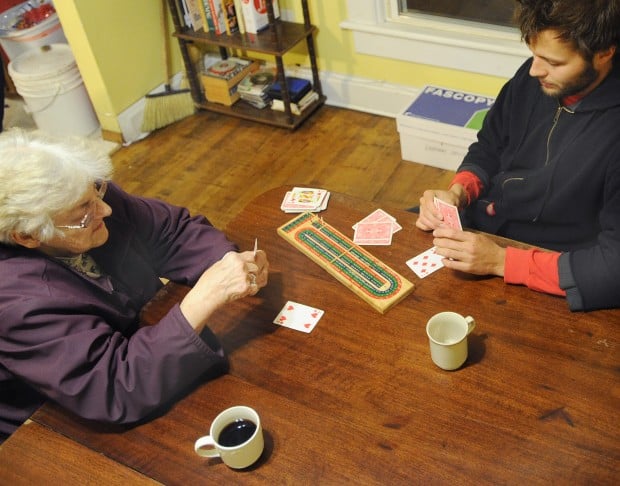
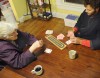
Dan Wilson, a live-in volunteer at the Bethany House in Winona, plays a game of cribbage with Sue Wallow, of Winona, over a cup of coffee Wednesday, December 7, 2011, at the Bethany House. Wilson has been volunteering at Bethany House for almost two years. (Rory O'Driscoll/Winona Daily News)

  • Winona Catholic Workers
  • Winona Catholic Workers
  • Winona Catholic Workers
  • Winona Catholic Workers

What is Catholic Worker?

The Catholic Worker movement was founded by Dorothy Day and Peter Maurin in 1933 among the poor of New York City. The movement is grounded in a firm belief in the God-given dignity of every person.

Today, 213 Catholic Worker communities remain committed to nonviolence, voluntary poverty, prayer, and hospitality for the homeless, exiled, hungry, and forsaken. Catholic Workers continue to protest injustice, war, racism, and violence of all forms.

Learn more at www.catholicworker.org. For more information on the Winona community, visit www.winonacatholicworker.org.

All they ask is your first name. Every day, the Winona Catholic Worker community breathes life into the words of the Gospel, offering home, help and a hot meal to whoever comes to the door. "Knock and it will be opened," the Gospel reads. No questions asked. "There are no forms to fill out," said Laurie Watson, a live-in community member at Bethany House. "We don't check IDs or ask questions, except ‘What is your first name?'"

Winona Catholic Workers have been opening doors to people in need since the Dan Corcoran House opened in 1992 at 802 W. Broadway. The house was named in honor of the Rev. Dan Corcoran, a chaplain at Winona State University's Catholic Newman Center who inspired a generation of students with his commitment to living the message of Jesus, according to Mary Farrell, one of the founding members of the Winona Catholic Worker community. The two-story house that had long been student housing offered shelter and hospitality to women and families in need of a place to stay. Four years later, when a house just down the block came up for sale, the community was able to open Bethany House, 832 W. Broadway, to offer hospitality to single men. It's the only non-referred emergency shelter in Winona County, Watson said, "and there's a real need."

The faces of need

That need has many faces, and speaks in a diversity of voices.

There's Bill, who on a recent evening spoke of how he spent the wee hours of Black Friday with the crowds in a Walmart parking lot. He wasn't there to shop. He was trying to catch a couple hours' sleep in his broken-down van before resuming his search for a job the next day.

There's Dan, who had hot chow and a bunk while on deployment in Iraq, but neither waiting for him when he came home.

There's Stacy, who needed a place to land while she got her financial and emotional feet back under her. Her stay at Dan Corcoran gave her the time she needed to find her niche in the larger community.

"People who come here are in crisis," said Molly Greening, live-in volunteer at Dan Corcoran. "They literally need to take time to breathe." "We need to meet them where they are. Help them feel secure. Feel at home." Greening speaks of providing a "ministry of presence" to the people who share the home. "Just being there," she said-to listen, to comfort, to play a game of cards or run an errand in an unfamiliar city-is as important as meeting physical needs for food, clothing and shelter.

Openness to the whole person and the recognition of every individual as a person of equal worth and value is at the heart of the Catholic Worker movement, Watson said. It's demonstrated as community members live in the same house, eat the same food, and for the most part have the same income as the guests living temporarily among them. Voluntary poverty puts workers on equal footing with guests, Watson said, allowing them to see the world from a perspective closer to those they serve.

A simple, welcoming routine

In practice, voluntary poverty means the six live-in community members and their guests depend on donations and their own enterprise to meet daily needs.

Winona Catholic Worker provides beds for up to five live-in guests at Bethany House, and beds for up to 14 at Dan Corcoran. They offer open hospitality Monday through Friday from 4-7 p.m. at Bethany House, a time when anyone is welcome to come in and relax with the community, take a shower, do laundry, and enjoy a good hot meal.

Guests are asked to comply with two simple rules at Bethany, Watson said. No drug or alcohol use, and be in the house by 10 p.m. Dan Corcoran has a few additional rules intended to avert potential friction in a larger house. Guests are not asked to sign in and out, attend religious services or perform household chores. "You don't ask guests to clean your bathroom," said community member Mike Abdoo.

Both houses are paid for, Farrell said, largely through the generosity of the Winona community. Day-to-day needs are met through donations of food, both groceries and food left over from events or prepared by friends. Cash donations cover other expenses and donations of clothing, furniture and services help meet the needs of guests and community members.

Live-in community members purposefully limit work time outside the community to about 15 hours a week, to prevent commitments from interfering with providing hospitality and presence to guests, Watson said.

"There's a joke that Catholic Workers aren't Catholic and they don't work," said community member James Johnson-adding that there is an element of truth lurking in the sentiment. "To be present to someone you have to be here," Greening said. "It's really as simple as that."

Catholic with a small ‘c'

"Dorothy Day (one of the founders of the Catholic Worker movement) was Catholic, so we're Catholic Workers," Johnson joked. The reality is that while the movement has a definite Christian and Catholic flavor, expressed in the traditional emphasis on the importance of performing traditional Works of Mercy and service to the poor, Catholic Worker volunteers and their supporters are more likely to be non-Catholic than members of the Catholic Church, Johnson said.

"We are definitely not ‘that homeless shelter run by the Catholic Church,'" Greening said. There are no formal ties between the institutional Catholic Church and the Catholic Worker movement, or the local Catholic Worker community, Watson said. Nor is Catholic Worker affiliated with Catholic Charities.

Catholic Worker communities are also independent of government programs and assistance, Watson said. Not being involved with government programs means communities are able to offer hospitality as they see the need, rather than abiding by government standards and limitations, she said. Independence from government extends to refusing to file for tax-exempt status, meaning donations to the Catholic Worker community are not tax-deductible.

Catholic Worker communities not only stand apart from the government, they are often critical of it. Social action is deeply ingrained in the Catholic Worker tradition, and members of Catholic Worker communities are supported and encouraged to join in protesting injustice. Community member Matt Byrne said the way of life reminds workers every day of the need to fundamentally change elements of society.

"These houses exist," he said, "because we live in a society that forces some people to be homeless." Winona Daily News

Labels: , ,


Locations of visitors to this page

stella borealis, the star of the north, the catholic church in minnesota


stella borealis, the star of the north, the catholic church in minnesota

A CATHOLIC BLOG, SCHOOLS, PARISHES, PRIESTS, NUNS, SISTERS, MINISTERS, EUCHARISTIC, RAINBOW SASH, GAY CULTURE, PENCE, ST. THOMAS, ST. CATHERINE’S, ST. ST. SCHOLASTICA, ST. MARY’S, ST. JOHN’S, ST. BENEDICT’S, COLLEGES, UNIVERSITIES, VITERBO, ST. JOAN OF ARC, MINNESOTA, WISCONSIN, IOWA, DAKOTA, MANITOBA, NORTHWESTERN ONTARIO, MINNEAPOLIS, ST. PAUL, BLOOMINGTON, STILLWATER, BROOKLYN PARK, COON RAPIDS, MAPLEWOOD, MINNETONKA, EDINA, EDEN PRAIRIE, SHAKOPEE, ANOKA, FOREST LAKE, WOODBURY, EAGEN, LAKEVILLE, BURNSVILLE, DULUTH, MOORHEAD, WINONA, ROCHESTER, ST. CLOUD, NEW ULM, WORTHINGTON, NORTHFIELD, MANKATO, VIRGINIA, HIBBING, GRAND RAPIDS, CROOKSTON, SUPERIOR, HUDSON, RIVER FALLS, WAUSAU, EAU CLAIRE, LA CROSSE, DUBUQUE, SIOUX CITY, SIOUX FALLS, FARGO, WINNIPEG, ST. BONIFACIUS, THUNDER BAY, WATERLOO, CEDAR RAPIDS, COUNCIL BLUFFS, RAPID CITY, PIERRE, ABERDEEN, BISMARCK, FARGO, SEMINARIES, SEXUAL ABUSE, BISHOPS, ARCHBISHOPS, DIOCESES, DIOCESAN, ARCHDIOCESAN. SAINT MICHAEL THE ARCHANGEL, DEFEND US IN BATTLE. BE OUR PROTECTION AGAINST THE WICKEDNESS AND SNARES OF THE DEVIL. MAY GOD REBUKE HIM, WE HUMBLY PRAY; AND DO THOU, O PRINCE OF THE HEAVENLY HOST - BY THE DIVINE POWER OF GOD - CAST INTO HELL, SATAN AND ALL THE EVIL SPIRITS, WHO ROAM THROUGHOUT THE WORLD SEEKING THE RUIN OF SOULS. AMEN.