Showing posts with label Local Saints. Show all posts

Tuesday, December 20, 2011

Kateri Tekakwitha, first Native American declared to be a Saint by Pope Benedict!

.

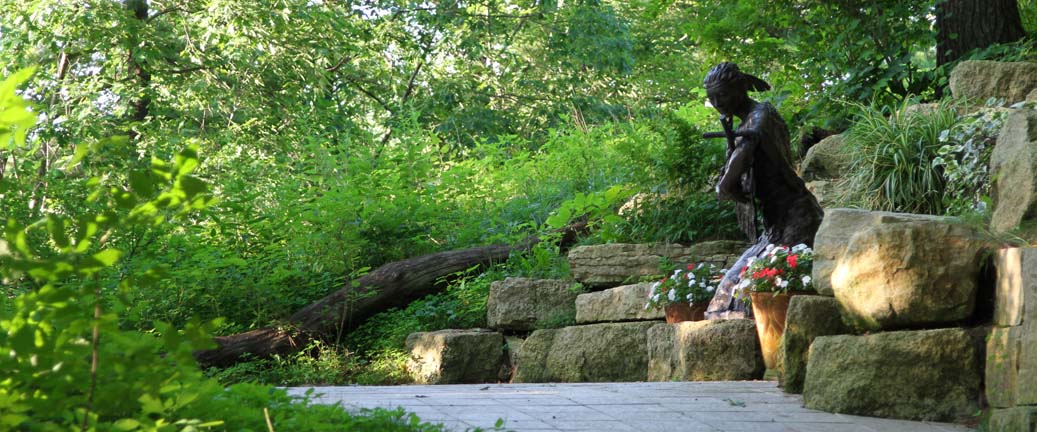
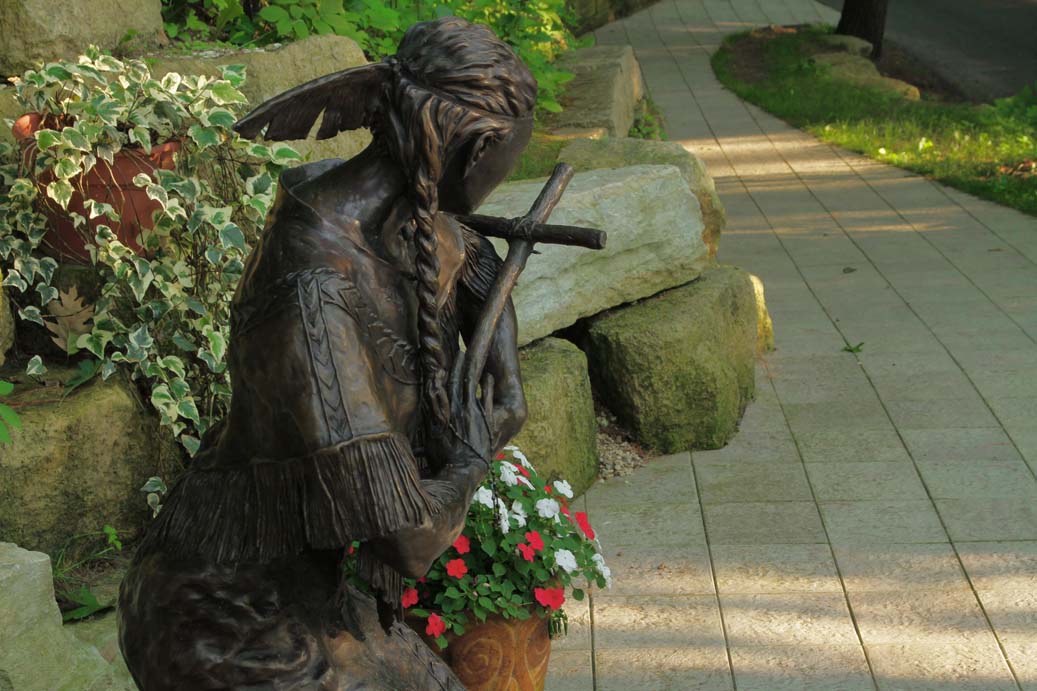
(Above) La Crosse WI: Shrine to Bl Kateri Tekakwitha

VATICAN CITY, 20 DEC 2011 – The Holy Father, yesterday signed decrees acknowledging miracles attributed to the intervention of seven blesseds (three men and four women) who will shortly be canonised. One of the new saints is Kateri Tekakwitha, the first native North American to be raised to the glory of the altars. -Vatican Information Service

Blessed Kateri Tekakwitha lived in a society where publicly and literally people ate other men, offered sacrifices to demons, and every human act was done in view of others, I mean EVERYTHING. In the mist of all this she remained a pure virgin, even before she was a Christian, but after baptism in the True Faith under the One True God, she rocketed into great holiness. – A Friar With Great Devotion to her

Daughter of a Christian Algonquin woman captured by Iroquois and married to a non-Christian Mohawk chief. Orphaned during a smallpox epidemic, which left her with a scarred face and impaired eyesight. Converted and baptized in 1676 by Father Jacques de Lamberville, a Jesuit missionary. Shunned and abused by relatives for her faith. Escaped through 200 miles of wilderness to the Christian Native American village of Sault-Sainte-Marie. Took a vow of chastity in 1679. Known for spirituality and austere lifestyle. Miracle worker. Her grave became a pilgrimage site and place of miracles for Christian Native Americans and French colonists. First Native American proposed for canonization, her cause was started in 1884 under Pope Leo XIII. The Tekakwitha Conference, an international association of Native American Catholics and those in ministry with them, was named for her. – http://saints.sqpn.com/blessed-kateri-tekakwitha/

Air Maria

Montreal Gazette

ABC News

Catholic Conservation Center


Natioinal Shrine of Kateri Tekakwitha

Wikipedia Article on Kateri Tekakwitha


[National Catholic Register] on Blessed Kateri 27 December 11

Wednesday, December 8, 2010

Virgin Mary apparitions at shrine near Green Bay recognized as first in U.S.

.

A shrine in the Town of Green Bay is one of only a handful in the world — and the sole location in the United States — officially designated as a place where the Virgin Mary appeared.

David Ricken, the bishop of the Catholic Diocese of Green Bay, announced today his official approval of the Marian apparitions at the Shrine of Our Lady of Good Help in Champion during a special Mass for the Feast of the Immaculate Conception.

Ricken’s decision makes the shrine the first and only Marian shrine site in the United States of an approved apparition of the Virgin Mary. The designation puts it in the same category as other famous Marian apparition sites such as Lourdes, France; Guadalupe, Mexico; and Fatima, Portugal.

According to the diocese, the Virgin Mary appeared in the area to Belgian immigrant Adele Brise three times in 1859.

Brise’s account states the apparition appeared in dazzling white claiming to be the “Queen of Heaven who prays for the conversion of sinners” and asking Brise to also pray for sinners and teach children about salvation. Brise’s family built a chapel at the site of the apparitions.

In the past 151 years, thousands have made pilgrimages to the Shrine of Our Lady of Good Help, the diocese said. The shrine’s history includes a number of accounts of prayers that have been answered, including documented physical healings and conversions that have taken place as a result of pilgrimages there, the diocese said.

A fire in Peshtigo in 1871 engulfed the surrounding area, but the entire five acres of land consecrated to the Blessed Virgin were not affected, the diocese said. It is believed that the land was spared thanks to a prayer vigil that circled the area, which was organized by Brise.

“I declare with moral certainty and in accord with the norms of the church that the events, apparitions and locutions given to Adele Brise in October of 1859 do exhibit the substance of supernatural character, and I do hereby approve these apparitions as worthy of belief — although not obligatory — by the Christian faithful,” Ricken said in a written statement.

Green Bay bishops have long supported the shrine as a place of prayer and pilgrimage but had made no formal decree regarding the apparitions from Brise’s account.

Ricken appointed experts to investigate and study the apparition in January 2009, and from documents, letters and written testimonies the experts determined the accounts of the apparition consistent with the Catholic faith without error.

According to the diocese, few documents remain from the era of the apparition because Green Bay was frontier country at the time. But one of the experts said the lack of information does not invalidate the event’s overall coherent impression and similarities to other recognized apparitions
Wausau Daily Herald

  • Web site for the Shrine of Our Lady of Good Help in Champion
    Father Z's Blog

    Diocese of Green Bay Investigates Apparitions at New Franken Shrine -- WDAY-TV

  • We do seem to have a problem with this "apparition." The first report says it is in the town of "New Franken." Then there is a report saying it is in the "Town of Green Bay." And also there is a report saying that it occurred in the "Town of Champion." I think the "Devils Advocate" better get busy on this one.


  • Saturday, December 4, 2010

    Diocese of Green Bay Investigates Apparitions at New Franken Shrine

    .
    After a two-year investigation, the Catholic Diocese of Green Bay is set to release its findings about apparitions at an area shrine.

    If the apparitions are decreed true, it would be an extremely rare occurrence.

    For more than 150 years the Shrine of Our Lady of Good Help, outside New Franken, has been the sight of some amazing, supernatural accounts.

    In 1859, a young Belgian woman reported the Mother Mary appeared to her here on three separate occasions, and the shrine was established.

    Twelve years later, it's where everyone fled to during the Peshtigo Fire, praying for safety.

    "The rains came during the night, stopped the fire, and it was when dawn broke the next day they witnessed what had happened. Everything around this spot as far as you could see in any direction was nothing but ashes," shrine caretaker Karen Tipps says.

    For the past 18 years, Tipps and her husband have been caretakers of the shrine owned by the Green Bay diocese.

    She says over the years there have been hundreds of stories of people coming to the shrine and being healed. Old crutches and canes were left behind.

    "They know, the doctors know, but it's just now the point some of those need to be documented," Tipps says.

    During a 10 o'clock mass this coming Wednesday morning, Bishop David Ricken will announce if the shrine is formally declared an apparition sight of the Virgin Mary.

    If he does, it will be the only apparition ever approved by decree in the United States. WBAY-TV

    Wednesday, November 17, 2010

    New Catholic saint, St. Andre Bessette, has Winona relatives

    .
    If there is a saint in your family, this is how you might tell people: My aunt is a saint …being married to that husband of hers.

    But there are folks in the Winona area who really do have a saint in the family since Brother André Bessette, CSC, was canonized by Pope Benedict XVI on October 17, 2010.

    Winona resident Lynn Kujak, Plainview resident Mary Deming, and Richard Leonard of Mantorville are all great-grandchildren of Lucie Bessette, a fifth cousin of Saint André, or Frere André, as he was a French Canadian member of the Holy Cross Brothers, and is sometimes referred to as Saint André of Montreal.

    Their father, Vincent Leonard, was born in Delavan, Minnesota, in 1905, the son of Alexander Leonard and Rosana Perrizo and the grandson of Joseph Leonard and Lucie Bessette of Blue Earth, Minnesota. Vincent married Louise Duellman in 1937 at St. Mary’s Church in Winona, and he died in Winona in 1990. The surname Leonard is an Anglicized version of their French name, Lyonnais.

    Vincent’s father died in 1919, the result of tuberculosis contracted in the Influenza Epidemic of 1917. In 1921, he was sent to the boarding school in Rollingstone, after which he worked for local farmers, surviving the Depression. His mother and two siblings died of tuberculosis, and his remaining two brothers moved to California. But Vincent found work in Winona, met Louise Duellman, married, and settled in Rollingstone, where they bought a home in 1942. During WWII, Vincent moved to California to work in the shipyards, but returned to Rollingstone where he raised his family. He was widowed in 1953 when Louise died.

    Vincent’s distant cousin, Alfred Bessette, was born August 9, 1845, in a small town southeast of Montreal, Quebec. He was so frail at birth that the priest gave him an emergency baptism. He was one of ten children of Isaac Bessette and Clothilde Foisy Bessette. His father was a lumberman, and was killed by a falling tree when Alfred was nine years old. His mother died three years later of tuberculosis.

    Alfred went to live with an aunt and uncle, who tried to find him work, but with no education and frail health, finding him any long-term manual labor proved difficult. At the age of 20, he emigrated to the U.S., where he worked in a New England textile mill making cloth for the Union Army uniforms. He returned to Canada in 1867.

    His parish priest, recognizing Alfred’s spiritual nature, sent him to the Congregation of Holy Cross in Montreal, saying in a prescient note to the superior, “I’m sending you a saint.” His health made problems for him again, but he was finally accepted by the order of brothers and took the religious name André.

    Brother André was given the job of porter, or doorman, at a college in Quebec. He joked that when he came to the college he was shown the door and stayed for forty years. He acted as receptionist and general handyman.

    He soon became known for his great devotion to St. Joseph, and people claimed that they had been cured of sickness through Brother André’s intercession. It was André’s influence that accomplished the building of the basilica of St. Joseph Oratory of Mount Royal.

    After his death in 1937, at the age of 91, a million people paid their respects. Because of his reputation as a holy man and what seemed to be his healing powers, Brother Alfred was beatified by Pope John Paul II in 1982 and attained sainthood this year.

    In addition to the Winona area relatives, Saint André Bessette’s other contemporary relatives include Madonna (born Madonna Louise Ciccone), Céline Dion, and Jack Kerouac. Winona Post


    Thursday, September 23, 2010

    Duluth's Blessed Nuno Society opens new orphanage in Mexico

    .
    Published/Last Modified on Wednesday, September 22, 2010

    The Blessed Nuno Society, Inc. opened their new orphanage, Our Lady Queen of the Angels House, in Agua Prieta, Sonora on Friday, September 10. The Blessed Nuno Society is a Catholic mission society headquartered Diocese of Duluth, with a mission office in Tucson.

    Submitted photo Irma Villalobos de Teran, left, and Ivete Dagnino de Padres, right, cut the ribbon to open Our Lady Queen of Angels orphanage in Agua Prieta on September 10.


    The newly constructed $676,000 children’s shelter includes a learning center with specialized facilities for basic tutoring, English classes, and computer skills. The orphanage also has its own small infirmary and a psychologist’s office, in addition to a nursery, chapel, kitchen and dining area. and four two-room dormitory suites.

    Queen of Angels House opened with twenty-seven children. The orphanage will normally house about thirty-five boys and girls, but has the capacity to house up to seventy-two in the event of a local emergency. The orphanage is owned by the Society’s Mexican affiliate organization, Blessed Nuno Society de Mexico, A.C., and is being operated in cooperation with the Agua Prieta Municipal DIF (office of family services). Many of the children sheltered at Our Lady Queen of Angels House are victims of the chaos on the border which leads to family separations and parents dying in the desert. Some are victims of physical or sexual abuse or trafficking.

    At the urging of Father James Crossman, the Society’s Spiritual Director, the Blessed Nuno Society began developing the plan to build the orphanage in December 2004. For more than five years the Society’s past president, Deacon Roger Birkland and Society Director Michael Morrissey promoted and led the effort to fund, construct, and furnish the orphanage. Construction was completed in December but it took another nine months to raise an additional $76,000 to furnish the facility, hire and train staff, and pass safety inspections. Funding for the project was provided by the Blessed Nuno Society members, especially three anonymous Duluth families, and with grants from the State of Sonora, the Mexican federal government and the Arizona Community Foundation. Ivete Dagnino de Padres, First Lady of the State of Sonora, and Tim Heinan, Executive Director of the Society, presided over the ribbon cutting and grand opening of the new orphanage on September 10.

    Orphan project in Mexico results in Knighthood for Tucson man with Duluth ties

    Blessed Nuno to be named a saint with help from MN-based society

    Pope to recognize Portuguese medieval soldier/saint (whose U.S. devotional headquarters are in Duluth)

    Site O' the Day: Blessed Nuno Society, Duluth

    Saturday, July 31, 2010

    "Snowshoe Priest" miracle moves U.P. bishop's cause for sainthood

    .
    Following a four-month investigation, the Diocese of Marquette [in the Upper Peninsula (U.P.) of Michigan] has closed its inquiry into an alleged miracle attributed to its first bishop, Servant of God Frederic Baraga, who is known as the “snowshoe priest.” The inquiry now proceeds to the Vatican for further consideration.

    The alleged miracle concerns a reputed tumor found on a patient’s liver in various diagnostic tests. The patient, the patient’s family and their parish priest prayed for healing through the intercession of Bishop Baraga. Bishop Baraga’s stole was also placed on the patient’s abdomen, after which the patient’s pain ceased.

    An exploratory surgery by doctors found no tumor, according to the diocese.

    See more at the site of The Badger Catholic for this article on Servant of God Bishop Baraga and other Cheesehead Catholic Communications

    See Stella Borealis posts on Bishop Baraga and his epic journey paddling across Lake Superior to Minnesota in a storm.

    Thursday, March 11, 2010

    Another possible Upper Midwest Saint we might claim? Bishop Frederick Baraga

    .
    There just doesn't seem to be much evidence that Minnesota has been the home for any significant period of time of a Saint of the Church. Oh, we have a few Saints and "almost Saints" who visited or worked here, one even Roman saint who is buried here. But nobody we can pray to as "our Saint."

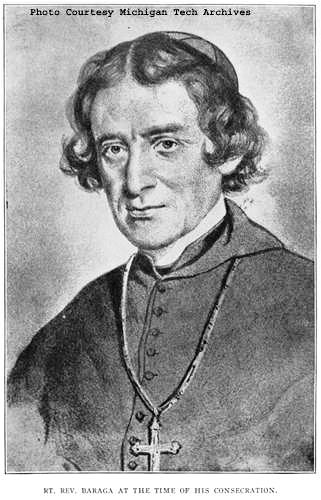
    Here, courtesy of "Father Z", is an article on another visitor who might be a Saint some day. 19th century Slovenian missionary, Bishop Frederic Baraga, bishop of the mission territory that was comprised of the region around Lake Superior, apparently is in the early stage of the long process of canonization. Bishop Baraga's large diocese was headquartered in Marquette, Michigan. Many Minnesota residents had the bishop as their ordinary when they first worked in the iron ore and copper mines of the Upper Peninsula of Michigan before they moved to one of Minnesota's three iron ranges.


    A miracle through Bishop Baraga?

    [Father Z] I believe my friend, now Bishop of Marquette, H.E. Most Rev. Alexander Sample was once the postulator for the cause of Bishop Baraga, but that would have been many years ago. The cause has moved along. I believe the positio super virtutibus was already dealt with at the Congregation, but Bp. of Baraga, Servant of God, is not yet "Venerable".

    There is now news from Marquette about a possible miracle.

    this is from CNA:

    Michigan diocese investigates miracle attributed to former bishop

    Marquette, Mich., Mar 11, 2010 / 08:26 am (CNA/EWTN News).- The Diocese of Marquette is investigating an possible miracle attributed to Servant of God, Bishop Frederic Baraga. The official inquiry will move the cause for Bishop Baraga’s canonization forward, which was opened for the prelate in 1952.

    In press conference on Wednesday, the current Bishop of Marquette, Alexander K. Sample, announced the recent development, saying, “Since my first days as a seminarian studying for the priesthood, I have had great devotion to Bishop Baraga.”

    “As his eleventh successor, I am thrilled at the prospect of a miracle that will advance his cause. With all the priests, deacons, religious and lay faithful of the diocese, I give thanks to God for his, holy, priestly, example,” he added.

    Father Ronald Browne, who has been appointed to lead the work of the canonical tribunal, explained the story behind the alleged miracle. “We have a case involving what was thought to be a tumor on a patient’s liver that showed up on various tests, including a CT scan and an ultrasound. However, when exploratory surgery was done, there was no tumor to be found,” Fr. Browne said.

    The Diocese of Marquette reported that while in the Upper Peninsula, the patient and the patient’s family invoked the intercession of Bishop Baraga and placed his stole on the sick person’s abdomen. Following the prayers, the patient said that the pain in the abdominal area went away.

    The diocese explained that in order for the event to be considered as a miracle, it needs to be affirmed as something that science cannot explain and be attributable to the intercession of the candidate for sainthood.

    Once the tribunal has investigated the event – the process is scheduled to begin on March 12 – two physicians must testify regarding the physical condition of the patient before and after the event. After the alleged miracle has been verified, documentation will be sent to the Congregation for the Causes of Saints in the Vatican, who will then submit the cause to Pope Benedict XVI. The Holy Father will then determine whether or not Bishop Baraga will be beatified.

    If the miracle is recognized as authentic, the diocese will need to verify one more miracle in order for the Michigan bishop to be declared a saint.

    Bishop Baraga was born in 1797 in Slovenia, and come to the United States as a missionary to the upper Great Lakes region in 1830. Ministering to the Odawa and Ojibwa Native American tribes, the bishop is said to have traveled throughout the 80,000 square mile territory by means of boat, canoe, horse, dog sled and even snowshoe. Often called the “Snowshoe Priest,” he was consecrated a bishop in 1853 and served until his death in 1868. Bishop Baraga is credited with writing a Ojibwa/English dictionary which is still in use today.

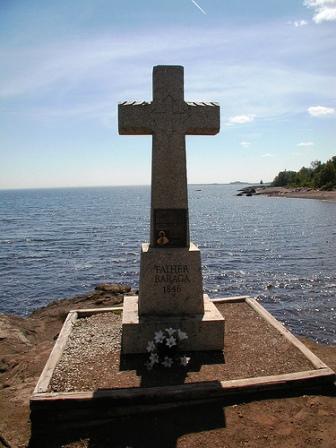
    Bishop Baraga also has ties to my native Minnesota. On the North Shore of Lake Superior you can visit "Baraga’s Cross".

    Father Baraga's cross

    Where the Snowshoe Priest outlasted Lake Superior.

    Father Baraga's Cross on the North Shore.


    Only tough guys lasted for long around Lake Superior, and Father Frederic Baraga was one of them. The Slovenian priest arrived in 1831 and spent a long and frenetic life canoeing and snowshoeing between Ojibwe settlements in Sault Ste. Marie in Michigan; Grand Portage on the northeastern tip of Minnesota; and La Pointe on Wisconsin's Madeline Island.

    One day in 1846, Father Baraga, learning of a possible epidemic among the Ojibwe in Grand Portage, set out from Madeline Island in a small boat with an Ojibwe guide. A terrible storm arose, but they were blown over a sandbar and into the quiet mouth of the Cross River, where the town of Schroeder is today. In thanksgiving, they erected a small wooden cross at the site, later replaced by a granite one.

    The Snowshoe Priest, who compiled an Ojibwe dictionary in his spare time, became the first bishop of Upper Michigan and lived until 1868. He's buried in the 1890 Romanesque cathedral of Marquette, where efforts are under way to canonize him.

    The Cross River is at Mile Marker 78, or 78 miles from Duluth's Canal Park. It's five miles south of Tofte.


    Here are links to Saints and "Almost-Saints" who have a Minnesota connection: Archbishop Fulton Sheen; St. Peregrine; Father Darin Didier; Venerable Solanus Casey; Saint Nino; Dr. Giancarlo Rastelli; and St. Riccardo Pampuri. Search on Stella Borealis in the box in the upper left to find articles about these people.

    Wikipedia Article on Bishop Baraga

    Wednesday, December 9, 2009

    Remembering Fulton Sheen

    .
    If the Twin Cities were located in Italy, we'd probably have a couple dozen patron saints to whom we could pray for our special intentions. Alas, we have none, yet. And we have to expand our boundaries a bit to become inclusive. The Venerable Solanus Casey, born and raised in Prescott, Wisc., across from Hastings, is about as close as we can get so far. Many, including Father Benedict Groeschel of EWTN and the Franciscan Friars in New York are praying for his canonication.

    Rochester has a couple of Italian doctors who have been canonized. They served for a time at the Mayo Clinic. St. John's University has the relics of an old Roman, St. Peregrine.

    But in time, we might have a real connection if the canonization process of Archbishop Fulton Sheen who graduated from the St. Paul Seminary in 1919 and was ordained in Peoria, Ill. succeeds. Pray for that. Abp. Sheen's career as a priest, a bishop, a preacher, an apologist, a television and radio personality made him known to millions, of all faiths.


    Today is the thirtieth anniversary of the death of Archbishop Fulton Sheen, who was revered by millions of Americans because of his great gifts in preaching and writing about the truths of the Catholic faith – and about the great heresies of the twentieth century.

    Fulton John Sheen was born over his father’s hardware store in El Paso, Illinois, on May 8, 1895. An outstanding student, Sheen attended St. Victor’s College in Bourbonnais, Illinois, and later, realizing he had a religious vocation, entered Saint Paul Seminary in Minnesota.

    Ordained a priest on September 25, 1919, he was not assigned a parish, but was sent to The Catholic University of America for graduate studies. Upon earning his Master of Arts degree, he traveled to Europe for additional education. After earning a doctorate of philosophy from the University of Louvain and a doctorate in sacred theology from the Angelicum in Rome, Sheen was offered teaching positions at Oxford and at Columbia University. Sheen sent a letter to his bishop asking, “Which offer should I accept?” The answer was, “Come home.”

    In the summer of 1926, Father Sheen was summoned to the bishop’s office, who informed him, “Three years ago I promised you to Bishop Shahan of The Catholic University as a member of the faculty.” Sheen asked, “Why did you not let me go there when I returned from Europe?” “Because of the success you had on the other side, I just wanted to see if you would be obedient. So run along now, you have my blessing.”

    Sheen was to teach for twenty-five years. During this period, his reputation as a preacher and Catholic apologist grew, and invitations to speak and preach throughout the nation poured in. In 1930 the American bishops invited him to represent the Church on NBC’s nationally broadcast show “The Catholic Hour,” and he appeared on that show until 1951, when he switched from radio to television.

    Many believed Sheen had the ability to become the greatest Catholic philosopher of the twentieth century. His duties at The Catholic University, however, became minimal; he eventually taught only one graduate course a year. The chairman of the philosophy department, Father Ignatius Smith, explained, “I was often criticized for not giving him more work, but I felt he was doing more good on the outside.”

    Sheen accomplished much on the outside. He produced at least one book a year, wrote two weekly newspaper columns, became national director of the Society for the Propagation of the Faith, and edited two magazines. Also, he was instrumental in numerous conversions, including Clare Booth Luce, Henry Ford II, Communists Louis Budenz and Elizabeth Bentley, and violinist Fritz Kreisler.

    Sheen had the rare ability to take complex philosophical and theological concepts and translate them into language the person on the street could understand. Witness this from 1933:

    Never before in the history of the world was there so much knowledge; and never before so little coming to the knowledge of the Truth. Never before so much straining for life; never before so many unhappy lives. Never before so much science; never before was it used so for the destruction of human life.
    Or this from 1944:

    In religious matters, the modern world believes in indifference. Very simply, this means it has no great loves and no great hates; no causes worth living for and no causes worth dying for. It counts its virtues by the vices from which it abstains, asks that religion be easy and pleasant, sneers the term “mystic” at those who are spiritually inclined, dislikes enthusiasm and loves benevolence, makes elegance the test of virtue and hygiene the test of morality, believes that one may be too religious but never too refined. It holds that no one ever loses his soul, except for some great and foul crime such as murder. Briefly, the indifference of the world includes no true fear of God, no fervent zeal for His honor, no deep hatred of sin, and no great concern for eternal salvation.

    His insights went beyond strictly religious questions. The books – e.g., Liberty, Equality and Fraternity (1928), Freedom Under God (1940), Whence Come Wars (1940), For God and Country (1941), A Declaration of Dependence (1941), God and War (1942), and Communion and the Conscience of the West (1948) – educated Americans on the evils of Nazism, fascism, and communism.

    In 1951, now Bishop Sheen appeared at Manhattan’s Adelphi Theatre and said to America, “Thank you for allowing me into your home.” It was the beginning of his award-winning television show, “Life Is Worth Living.” He was the first (and possibly only) religious leader with a show sponsored by a major corporation.

    “Life Is Worth Living” was up against “The Milton Berle Show.” Every week America asked, “Shall we watch Uncle Miltie or Uncle Fultie?” Sheen’s ratings skyrocketed, and Mr. Television was knocked off the top of the ratings chart.

    The show continued until 1957 and had an estimated audience of 30 million. The bishop, who covered various subjects from psychology to Irish humor to Stalin, received 8-10,000 letters a day. In 1964 Sheen appeared on a weekly show entitled “Quo Vadis America,” and in 1966, “The Bishop Sheen Show.”

    On October 2, 1979, seven days after celebrating the sixtieth anniversary of his priesthood, in St. Patrick’s Cathedral in New York, Pope John Paul II embraced Archbishop Sheen and told him, “You have written and spoken well of the Lord Jesus. You are a loyal son of the Church.”

    On December 9, 1979, Archbishop Fulton Sheen died in the Lord. He was buried beneath the main altar at St. Patrick’s Cathedral, where he had preached for many years. In a nation that still harbored anti-Catholic sentiments, Sheen gave Catholicism a public face that made the Church and its teachings acceptable to millions of Americans.

    Archbishop Fulton Sheen, God love you – and pray for us. The Catholic Thing

    George J. Marlin is an editor of The Quotable Fulton Sheen (Doubleday Image).

    Saturday, October 31, 2009

    Looking for an Intercessor on All Saint' Day? How 'bout Minnesotan, Father Darin Didier?

    .

    He listens to those in need. He is there when people want to cry on his shoulder. He loves unconditionally. He gives hope to people in despair. Some think he helps heal the sick. And he does it all from his grave.

    Even in death, Darin Didier continues to touch people’s lives.

    Bonnie and Len Didier of Alexandria describe their son as a caring, loving boy and man who was always reaching out to people. Len could spend hours telling poignant stories of how his son made a difference and changed people’s lives for the better.

    Darin reached out to people with drug and alcohol problems. He prevented two people from committing suicide. He helped people through rough times.

    From his grave at St. Mary’s Cemetery in Alexandria, those stories of healing and hope continue, and to some, are nothing short of miraculous.

    Darin grew up in Alexandria and graduated from Jefferson High School in 1991. An avid runner, he was pursuing an education in physical therapy when someone put a slight twist in his plans.

    It was God.

    Darin, who was raised Catholic, had one more year of school left when he took a trip to Phoenix with a friend. While there, they visited with a priest who Darin knew. That visit changed his mind about what he wanted to do with his life.

    He wanted to be a priest.

    “Darin came back and said that Father Luke could read his soul,” Len recalled. “He wanted to quit school and become a priest.”

    With only one more year of physical therapy school left, his parents convinced him that he should finish what he started.

    “I told him, ‘If the good Lord wants you, he can wait a year,’ ” Len said.

    After he completed that year and earned his degree, Darin attended a minor seminary school for one year. Having spent several years in college, he needed a break from school for awhile, so he worked as a physical therapist for two years.

    Len was right. God was still waiting.

    In the fall of 2000, Darin answered the call when he began a five-year education at Mount St. Mary’s Seminary in Maryland. Things went well until a visit home in May 2003, when Bonnie noticed a strange mole on her son’s neck.

    “I noticed it and thought he really needed to get it checked,” Bonnie said. “Something inside me told me I should be worried about it.”

    A biopsy revealed it was cancerous and he was diagnosed with non-Hodgkin’s lymphoma. Within a week, Darin was receiving chemotherapy treatments, which lasted throughout the summer.

    He returned to seminary school that fall and continued with chemotherapy and total body radiation. But the cancer was persistent, and with each treatment, it came back. As a “last resort,” Darin had a stem cell transplant in March 2004.

    “It didn’t work at all,” Len said. “Everything they did, his cancer came back worse. It’s like it got angry.”

    But the Didiers never gave up hope.

    “I was always thinking a miracle would happen,” Bonnie said. “Miracles happen every day.”

    Accepting his illness with the knowledge that he had just as important a job to do in heaven as on Earth, Darin continued his education at the seminary, not letting on how sick he really was. Suspecting that he may not live long enough to become a priest, in May 2004 he was ordained a deacon.

    Despite the persistent cancer and some intense holistic treatments, Darin made it through his last year of seminary. On June 4, 2005, his dream came true. He was ordained a priest and was assigned to Holy Spirit Catholic Church in Fargo, North Dakota.

    Three months later, Father Darin Didier passed away – three weeks shy of his 33rd birthday at 3:33 p.m.

    “Three is a magical number – the Trinity,” Len said of what he surmised was a sign from God of what was to come.

    Darin was buried at St. Mary’s Cemetery. The following summer, when the Didiers visited their son’s grave, they found trinkets left there – medals, coins, rosaries, toys and other items.

    “There were things there all the time,” Bonnie said.

    During one visit in the summer of 2006, Bonnie and Len found a sonogram taped to the grave. They discovered it had been left by a couple whose unborn child had severe spina bifida and a hole in her back.

    This couple had heard rumors that people were visiting Darin’s grave to ask him to intercede on their behalf for healing.

    They figured an intercession to God couldn’t hurt.

    A few months later, their baby girl was born with complications far less severe than had been diagnosed. The baby went home just a week after her birth and doctors were amazed at how much she was already able to do.

    As time went on, the Didiers heard more of these stories in which prayers were answered after a visit to their son’s grave.

    One woman afflicted with sudden onset palsy visited the grave and while she was there praying, had a severe attack. After it was over she said, “I’m healed.” The next week, her doctor found no sign of the disease.

    A friend of Darin’s had been diagnosed with thyroid cancer. At every medical appointment following a prayer session at his grave, his results kept improving. He is now cancer-free.

    One man with prostate cancer prayed at Darin’s grave prior to an operation, which turned out well. He continues to visit the grave before each check-up, and has improved at each one.

    The parents of a 2-year-old boy had struggled for months to find out what was wrong with their son. They prayed at Darin’s grave. A short time later, a stranger approached them at a restaurant, and just from looking at the toddler, knew exactly what he had, as she had a family member with the same extremely rare disease. Because the boy was doing much better than expected, he was sent to the International Institute of Health in Washington, D.C. Through him, they found a way to diagnose the disease more quickly, and may have found a link to autism.

    The good news spread quickly, and more people visited Darin’s grave – in hopes of healing, to pay their respects, or just to pray. And more visitors left tokens or wrote down their thoughts and left them at the grave.

    To accommodate these trinkets and writings, the Didiers installed a pillar with a removable cover next to Darin’s grave. In the pillar, they left a “guestbook” that people can sign or write down their prayer requests.

    “Hundreds of people have visited the grave,” Bonnie said, pointing out the entries in the notebook.

    “It’s humbling, very humbling,” Len said. “People have no problem believing that in his [Darin’s] goodness, the Lord would listen to them.”

    Despite the countless “unexplainable” accounts they continue to hear, the Didiers know that it isn’t Darin who is working these miracles.

    “As Christians, we are told if we have faith, we will, in His name, work miracles greater than the impossible,” Len concluded. “Darin surrendered totally to the Lord. Surrender means doing the best you can and leaving the results to a higher power. He allowed the Lord to use him as He saw fit.”

    “He is just doing God’s will,” Bonnie agreed. “Darin is not doing the miracles. He is just a link.

    “He is the intercessor.” Echo Press, Alexandria


    Travelers Visit Priest's Grave For Prayer, Healing

    Mt. St. Mary's Seminary Remembers Fr. Darin Didier 'S05

    In Memoriam-Fr Darin Didier Sept 27, 1972-September 6 2005

    Friday, October 23, 2009

    Priest provides edifying portrait of simple, saintly man, the "Servant of God", Father Solanus Casey

    .
    “Thank God Ahead of Time: The Life and Spirituality of Solanus Casey” by Michael H. Crosby, OFM Cap. St. Anthony Messenger Press (Cincinnati, 2009). 282 pp., $16.95.

    Franciscan Father Michael Crosby is uniquely qualified to write about the life and spirituality of Father Solanus Casey (1870-1957). A fellow Capuchin, he wrote Father Casey’s official biography in 1982 and was the “external collaborator to the relator” for the investigation by the Congregation for Saints’ Causes that concluded, in 1995, that “the servant of God, Francis Solanus Casey, was an authentic master through his word and example.”

    In declaring him venerable (the first major step leading to canonization) the Vatican extolled Father Casey’s “life of heroic virtue.”

    “Thank God Ahead of Time” draws on this intimate and respectful knowledge. Father Crosby rightly eschews sentimentality and instead persuades the reader of Father Casey’s virtue through rich anecdotes, illustrative excerpts from letters and spiritual reflections, and wonderful photographs of a man who knew the happiness, peace and confidence of conformity to God’s will.

    Wisconsin native

    Solanus Casey was the sixth of 16 children of Irish immigrant parents. He was born on a farm near Oak Grove, Wis., and as a young man worked as a logger, a motorman and a prison guard before entering the Capuchins at age 26.

    His seminary education was hindered by his lack of fluency in German and Latin and a tendency to “skim the surface. If he did not grasp something immediately he tended to give up. To himself and others this indicated a lack of sufficient intelligence; to observers today he might be considered more intuitive or intellectually lazy.”

    Thus, when he was ordained in 1904 it was as a “simplex priest,” one who is unable to hear confessions or preach dogmatic sermons. Father Casey’s resignation to the will of his religious superiors was evident in the fidelity and gratitude with which he carried out the most humble tasks in the monastery.

    Two years after his ordination, while serving in Yonkers, N.Y., Father Casey was assigned to be the friary’s porter, or doorkeeper, a ministry he would carry out for the rest of his life.

    Father Crosby shows us how, in Solanus Casey, grace built on nature. The man’s natural gentleness, ap­proach­ability and genuine concern for people were the scaffolding for his “unique giftedness: his keen insight into people’s needs and how they fit into God’s plans. These days at Yonkers found the seeds being sown which would flourish in his future ministry of healing and prophecy.”

    In 1923 his superiors told him to keep a record of “special cases,” a rich compilation of the spiritual blessings that flowed through the decades of 18-hour days.

    Almost more remarkable than example after example of miraculous healing and conversion is the evidence of Father Casey’s humility, reverence, simplicity and lack of self-importance.

    He was, one Capuchin explained, “constantly God-centered, on fire with love for God, and constantly God-conscious, seeming always to have his eyes on God. He seemed to see everything as flowing from God and leading back to God.”

    Father Casey, as Father Crosby reminds us, was a man of his time and culture, but he also exhibited a remarkable freedom that al­lowed him to move beyond racial, economic and religious divisions.

    He believed that “religion is the science of our happy relationship with God and our neighbor” and that widespread anxiety and alienation were the result of “humanity’s sad weakness,” the “lack of faith and, consequently, want of confidence in God.”

    Total dependence on God


    The book’s concluding chapter offers an excellent overview of the theological and spiritual influences and religious practices that sustained Father Casey in his life of expansive and expensive charity, a life of ongoing conversion, renunciation and total dependence on God.

    “Thank God Ahead of Time” is an example of the best kind of contemporary hagiography, combining as it does the spiritual nourishment of an edifying portrait of Father Casey and the intellectual pleasure of Father Crosby’s masterful theological reflection. It is a fitting tribute to this humble and holy man and a gift to its readers. Catholic Spirit

    See Here for other Stella Borealis articles on Solanus Casey

    Monday, October 19, 2009

    What's with St. Peregrines and the Upper Midwest?

    .
    A reader provided a link to this article from The Compass, the newspaper of the Diocese of Green Bay (you know Green Bay, don't you, former home of the Vikings' Quarterback?), in which 14th century priest, St. Peregrine Laziosi, has a couple of shrines. One in Chilton and the other in Marion. Don't believe I've been there. St. Peregrine is the patron saint of cancer victims and those with HIV/AIDS.

    What's unusual about this is that there is a shrine for another St. Peregrine, one who died in the year 192 A.D., is that his bones lie in the St. John's Abbey church in Collegeville, just west of St. Cloud. See the earlier Stella Borealis article on the second century saint here.


    When you or someone you know is struggling with cancer, you sometimes need a place to go and pray. Or a place to write your name and know that someone else will pray for you.

    That's the idea behind two shrines honoring St. Peregrine located in our diocese: Good Shepherd Parish in Chilton and St. Mary Parish in Marion. Peregrine is the patron of cancer patients and those with AIDS/HIV.

    Norman "Butch" Nenning, 77, has visited the Chilton shrine since it was dedicated in 2001. Twelve years ago, he was diagnosed with prostate cancer. He credits St. Peregrine with helping him through all these years.

    0912peregrine1web2
    Butch Nenning prays the rosary at the St. Peregrine Shrine located inside Good Shepherd Church in Chilton. He was diagnosed with prostate cancer 12 years ago. (Sam Lucero | The Compass)

    "I had a miracle from God and from St. Peregrine," he said. "Plus the blessings of our pastor, Fr. Bob (Kollath), and Deacon Dennis (Bennin), and the wonderful prayers from my wife and all of my children and friends."

    Nenning keeps a candle lit at the shrine and visits every day to pray the rosary and recite prayers.

    "I've been a cancer survivor and I still continue to go every day," he said.

    St. Peregrine suffered cancer

    St. Peregrine Laziosi was a 14th century Servite (Servants of Mary). He was diagnosed with ulcerative cancer of the leg and amputation was scheduled. The night before surgery, Peregrine prayed before a crucifix. He fell asleep and dreamt that Jesus came down from the cross to touch his leg. In the morning, doctors found Peregrine's leg healed. He died in 1345 in Forli, Italy, where his main shrine is located today. In this country, there are national St. Peregrine shrines in Portland, Ore., and Chicago.

    The Chilton shrine is located in a renovated confessional near the front of the church. In Marion, the shrine is located in a separate alcove, locked off from the rest of the church, so it can be accessible all day.

    When Fr. John Girrotti became pastor at St. Mary (and St. Anthony Parish in Tigerton and Holy Family and St. William Parish in Wittenberg) in 2004, he wanted a way to bring more people to the Marion site. The church is on U.S. Highway 45 in northern Waupaca County, but is often closed because the parishes' central offices are located in Tigerton.

    "I wanted to find a way to have the church open, to have people pray," Fr. Girotti said. "I came across the idea of a St. Peregrine shrine. My mother had breast cancer and so many people in our parishes have had cancer. I presented it to the parish council and they approved it and the money flowed in (to build it)."

    Bishop Zubik dedicated shrine

    St. Peregrine Shrines

    in Green Bay Diocese

    Chilton: Good Shepherd Church, 62 E. Main St.
    Hours: Sundays: 7:30 to 11:15 a.m.; Monday through Friday: 8 a.m. to 3 p.m.; Saturday: 8 a.m. to 4 p.m. (Mass at 4 p.m.) The shrine closes when there is a funeral. Names to be added to the prayer book can be directed to the parish at (920)849-9363.

    Marion: St. Mary Church, U.S. Hwy. 45 (corner of NE 7th St.).
    Hours: Monday through Friday: 8 a.m. to 8 p.m. Prayer requests for the Peregrine Shrine can be directed to the parish at (715) 754-2116 or St. Anthony, Tigerton at (715) 535-2571.

    St. Peregrine Shrines
    in the Midwest

    Chicago: National Shrine of St. Peregrine, 3121 W. Jackson Blvd. (Located inside Our Lady of Sorrows Basilica.) Next monthly St. Peregrine Mass and blessing at 11 a.m., March 21.

    Milwaukee: Inside Blessed Sacrament Church, at S. 41st and W. Oklahoma Ave. Special Mass at noon on first Fridays.

    Iron River, Mich.: Chapel located at the National Shrine of The Cross in the Woods, 7078 (Hwy) M-68 (two minutes west of I-75, exit 310).

    The St. Peregrine shrine at Marion was dedicated by Bishop David Zubik on Easter Sunday in 2007. Debby Nolan, a parish member for 35 years, was one of the people at the dedication.

    "My dad died in 1998 from lung cancer," she said. "As you probably know, every time you have someone in your family die from cancer, it's traumatic. The suffering is hard to watch."

    She was still dealing with the loss when Fr. Girotti suggested the shrine project.

    "I thought, ‘Oh, this is terrific. This is what I need to do to start with my healing,'" Nolan said.

    The shrine became a parish project. Parishioners built the cabinets, designed walls to separate the shrine from the rest of the church, plastered, painted and donated funds for the statue.

    "I was worried about where we'd get the money to get this renovation done," said Nolan. "The statue (from Italy) alone was about $4,000. Then there were the exterior doors, the timer (which automatically unlocks and locks the shrine doors each day), dry walling and cabinetry. But it just came in and we never had to do any fund-raising. As soon as people knew what we were doing, the money just came in."

    Support remains strong.

    "We felt that we would need money to continue this - for the candles, the prayer cards and medallions (all of which are free for the taking)," said Nolan. "But donations take care of that - we won't have to pay to buy candles for a long time. It's like, ‘If you build it, the money will be there.'"

    Not only Catholics come to the shrine.

    "This is a predominately Lutheran area," said Fr. Girotti. "So we told the Lutheran churches about it and they have advertised it. They call it a prayer chapel (rather than a shrine), of course."

    Nolan has also visited local churches to speak about the shrine. She said one Lutheran pastor came to visit the shrine and "gave me the biggest compliment we've had. She said, ‘This is truly a holy place.'"

    Any names placed in the shrine's book of prayer are read at every weekend Mass at the parish.

    "Every weekend, we have new names," said Fr. Girotti, "so people are coming."

    Shrine has St. Peregrine relic

    People also visit the Chilton shrine. That shrine also has prayer cards, holy oil, medals and a prayer book for names. Since the shrine also contains a first-class relic of St. Peregrine, items may be touched to the relic to make them third class relics. Many cancer patients are especially comforted by this, and prayer requests come from throughout the diocese.

    When the Chilton shrine was dedicated in 2001, Marian Graney had just had surgery to remove 20 cancerous lymph nodes. She prayed at the shrine from the start.

    "It all turned out well," she says today. "I'm in remission."

    Graney still visits the shrine regularly, whenever she attends Mass. And she sees many others visiting.

    "It's helped a lot of people," she said. "You see a lot of people going to pray and spend time in there."

    Dealing with loss

    At Marion, Fr. Girotti said, "there's been many who have come to me, even some who have experienced healings and enormous blessing from the Lord. At least once a month, we receive letters from people (who have visited the shrine)."

    Nolan said the Peregrine shrine has helped her deal with loss. There is a memory tree on the shrine wall; its leaves bear the names of parish members who have died from cancer.

    "My dad's name is up on the tree, along with really close friends that I have lost," said Nolan. "When I go up there, there's a closeness there, a sense that we're all affected by this terrible disease."

    At Chilton, Butch Nenning wants others to be aware of the Peregrine shrine there.

    "If anybody would want information," he said, "tell them to call Butch at (920)418-4090; that's my cell phone." The Compass


    Friday, October 9, 2009

    Orphan project in Mexico results in Knighthood for Tucson man with Duluth ties

    .
    Tucson resident Timothy R. Heinan was invested as Grand Cross in the Order of St. Michael and the Wing, at the historic Alcobaca Abbey in Portugal on September 27. The Order of St. Michael and the Wing is one of the oldest Catholic of knighthoods in Europe; its statutes having been promulgated by Pope Alexander III in 1171. Heinan serves as Executive Director of the Blessed Nuno Society, a Catholic Mission Society headquartered in the Diocese of Duluth, Minnesota which has a mission office in Tucson. The award, in recognition of exemplary service to the poor, honors Heinan’s twenty-four year leadership in caring for homeless and orphaned children worldwide, including the recent construction of a new orphanage, Casa Reina de los Angeles, in Agua Prieta, Sonora, Mexico.

    The Blessed Nuno Society is named for the Portuguese patron of orphaned children, St. Nuno Alvares Pereira who was canonized as a saint by Pope Benedict XVI last year. Dom Duarte Pio, head of the Royal House of Portugal and Bishop Manuel Antonio dos Santos of Sao Tome and Principe presided over the investiture ceremony in Portugal. Dom Duarte is a direct descendant of St. Nuno. Among those present at the ceremony were the Earl of Khartoum, Lord Henry Herbert, representing Queen Elizabeth of Britain, King Kigeli V of the Royal House of Rwanda, and Prince Ermias Sahle Selassie Hailie Selassie of Ethiopia. Douglas (AZ) Dispatch

    Update: Blessed Nuno was canonized by Pope Benedict April 26, 2009. Saint Nino died in 1431! Sometimes these things do take time.

    Guilhermina de Jesus, a Portuguese woman who was instantaneously cured from blindness after praying novenas to Blessed Nuno with her parish priest and then kissing a statue of St. Nuno, and touching it to her eye in December 2000. The statue had been presented to her by the Blessed Nuno Society in 1998. In July 2008, Pope Benedict XVI accepted this miracle for the canonization of St. Nuno.

    The Blessed Nuno Society apparently has not gotten around to changing its name.

    Saturday, August 29, 2009

    Travelers Visit Priest's Grave For Prayer, Healing

    .


    Darin Didier decided to become a priest while he was learning to be a physical therapist. He was a priest for only three months before he died. Now, rumor has it that miracles are performed for those who pray at his gravesite.


    For the past few years people from across the country have made the trip to a small western Minnesota cemetery. Most have never met the man they are there to talk to.

    Darin Didier was priest for just three months. He died three weeks before his 33rd birthday.

    His parents, Len and Bonnie Didier, said growing up their son was a little shy. He was every bit the athlete in Alexandria and was a track and cross-country star through college. He went to the University of North Dakota to be a physical therapist.

    Before he started his last year at UND, he changed his mind about being a physical therapist. He wanted to be a Catholic priest.

    Darin started seminary and a few years later he was at home for a visit.

    "He was just walking around here and I noticed a spot on the back of his neck. I just thought it looked a little different," Bonnie explained.

    In 2003, Darin was diagnosed with Non-Hodgkin Lymphoma. He went through chemotherapy, radiation and a stem-cell transplant.

    "Everything that they did for him his cancer rebelled and came back worse," said Len.

    "He was very accepting. I think that made it easier because if I was down he would actually lift me up. I have to remember that," said Bonnie.

    His parents had him buried in the back of St. Mary's Cemetery. It's a small area on the west side of Alexandria. They were not prepared for what happened next.

    Darin's parents started to see cars pulled over and people mulling around the grave. They would leave little trinkets by his gravesite. People were coming to ask for Darin to intercede on their behalf for healing.

    In three years, hundreds of people have stopped by, including a whole bus full of kids just a few weeks ago.

    "We've had people from every coast. We've had people from Maryland. We've had people from California. We've had people from down South," Len explained.

    Now, they have a little black book where people can write out their prayers. They also have a place for people to put small tokens they may want to leave behind like coins and rosaries.

    "I think it's been by word of mouth that people have had different experiences and they want to share it with others," said Bonnie.

    The first thing Darin's father noticed on the grave was a picture of a sonogram taped to the side of it.

    That picture belonged to John and Maggie Mauch.

    They were expecting their third child and they found out quickly that something was wrong. Doctors told them their little girl had a hole in her back and would be born with spina bifida. They said there was still time to end the pregnancy.

    John's parents had heard about the grave a few hours away.

    "We just kind of looked at each other and went, 'He says we should go,'" said Maggie.

    In the summer of 2006 the entire Mauch family made the trip.

    "I asked for peace to be with us and the complications she had to be just less than what they thought it was going to be," Maggie recalled.

    Their daughter, Macy, went home from the hospital just a week after she was born. Her doctors were amazed at all she can do considering how high on her back her injury is.

    The Mauch's don't think too much about that day at the grave. But they do think about how much of a miracle little Macy is.

    "The reason why we did it is, 'What's it going to hurt?'" said Maggie.

    "I feel very humble that our son is still touching a lot of people's lives," Bonnie said.

    Touching more lives in his death than his parents believe he ever possibly could in his life.

    "I guess what I learned from my son if I were to sum it up, is life is a matter of surrender. Surrender doesn't mean to give up, it means to do the best you can and leave the results to a higher power," Len said.

    Every year there is a memorial Mass held in Father Darin's honor. This year, it's on Labor Day, Sept. 7 at The Church of St. Mary in Alexandria. WCCO-TV HatTip to Abbey Roads

    Mt. St. Mary's Seminary Remembers Fr. Darin Didier 'S05

    .


    When God chooses a man to be priest, he also marks out an allotted time of earthly ministry. For Fr. Darin Didier, ’S05, this span was less than 100 days. Ordained on June 22, 2005, Fr. Didier passed away in Fargo, North Dakota, on September 6, after a long struggle with cancer, at the age of 32.

    “His passing came as a shock because the end really happened so quickly. For his cancer to progress so rapidly was a surprise,” said Fr. Terry Dodge, a classmate and fellow Fargo ordinand. “What was inspiring was that even though he was sick he still threw himself fully into his work. The Saturday before his death he was celebrating Mass in his parish and he had to stop midway through his homily and go sit down because he was so weak. That’s how much he wanted to give himself to do the Lord’s work.”

    A native of St. Paul, Minnesota, Fr. Didier studied at the University of North Dakota and received a master’s degree in physical therapy in 1997. He was accepted as a seminarian for the Diocese of Fargo, North Dakota, and came to Mount St. Mary’s in 2000. His studies were interrupted by the onset of non-Hodgkins lymphoma cancer, which forced him to miss the spring 2004 semester. With strong faith and perseverance, Fr. Didier underwent treatment, fulfilled the necessary academic requirements and ultimately was called to Holy Orders.

    At the Mount, he was president of the Legion of Mary and served as a chaplain for the university track and field team.

    “He was a great example of priestly humility,” said Christopher Vaccaro, third theology, Diocese of Arlington. “He was inspiring to me in his zeal for spreading the Gospel.” Deacon Jamie Workman, fourth theology, Diocese of Arlington, reaffirmed this: “He had no reservation about speaking to complete strangers anywhere about Christ and Mary.”

    The seminary community celebrated a Memorial Mass for Fr. Didier in Immaculate Conception Chapel on September 12.

    Fr. Peter Ryan S.J., seminary professor of moral theology, was one of the Mount’s representatives to attend the Requiem Mass in Fargo. “It was the most beautiful funeral I had ever been to,” he recounted. “Fr. Didier’s parents have a really strong faith. His father walked out of the church giving the victory sign.”

    Indeed. Requiescat in pace.
    Mount Saint Mary's Seminary News, Fall, 2005

    In Memoriam-Fr Darin Didier Sept 27, 1972-September 6 2005-

    .

    Father John J. Lombardi

    "The Glory of God is man fully alive."-St Ireneaus

    In Memoriam-Fr Darin Didier Sept 27, 1972-September 6 2005-

    "He was a wonderful, wonderful man. He lived his priesthood only three months on Earth-but he's now living it in Heaven for eternity." Thus said Fr Michael Roache (Mt St Mary's Seminary history professor). He always wanted to be a priest. From grade school on thru, that was his calling, Fr Roache added.

    His Dad just said :"He taught me to surrender--by his sickness. It doesn't mean giving up, it means surrendering. It makes life easier."

    Another pilgrim of Mary's Mountain said upon hearing of Father's death: "He got to be a priest. That's all he really wanted. Now we got a really good priest and friend in Heaven." Amen! Fr Ryan, my traveling companion to Fr. Didier's funeral said on the way there: "I'm praying for him and I'm also praying to him." Ditto the amen.

    Holy man-we're all looking for one. Someone to enlighten us. To help us--to guide us. Someone true, noble, Christ-like.

    You may study philosophy to find a holy person, or go to India and elsewhere--the quest seems endless. Holy men may be rare, but I've often found, they're disguised. I found a holy man here on Mary's Mountain.

    This weekend when we remember 9/11, we also remember a really fine man, a priest of God and Soldier of Christ. Some memories and meditations…

    Fr Darin Didier died this past week after a couple-year struggle with leukemia. Known variously around these mountains as "Darin," "Deacon Darin, "Fr Didier," "Fr Darin," and "Deacon Darin Didier of Dakota," which was a favorite of this priest-"QD-Quadruple D"-this was a man-of-God who studied here at Mt St Mary's Seminary for five years and was ordained in Fargo N. Dakota in May. He was beloved by many people of the Grotto, Mt St Mary's Seminary and University, St Mary's Church in Fairfield, Pa, where he served as deacon, and many other nearby places of Spirit. The Mystical Body's outpouring of love, prayer and affection at his passing more fully into Eternal Life is like a lot of life: bittersweet. Bitter because we all miss a dear friend, a holy priest, a beautiful, exemplary example of Christly discipleship; and because we think of Father's loving and ever-faithful parents, Len and Bonnie, and sister Darcy, and their loss: what more difficult thing in life is there for a parent to bury their child? But also the experience may be somewhat sweet-because we think of, and thank the Gift Giver-God Who gave Fr Darin to us; we think of a life well lived; of a priesthood persevered in, and the Light of Jesus and love of Mary which shone thru Fr Darin.

    The last time I talked to him on earth (three weeks ago on the phone) he said had to cancel his celebrating of a wedding Mass, that he struggled thru a Sunday Mass (almost fainting), and more often was praying in a reclining chair before the Blessed Sacrament. His voice sounded faint, without his usual steam and vigor, but his words, the content of his soul were, well, Darin-like-filled with love of God and conformability of being a priest: prayer, Mass, sacrifice, being a vessel. C.S. Lewis wrote: -God whispers through pleasurable experiences. He speaks through the conscience of man and shouts thru pain. Suffering is God's trumpet….God was "instant messaging" to us thru Fr Darin-and others-do you hear Him?

    After Deacon Darin became Father Darin I was searching for a new "nick-name" to replace the "QD" I had become accustomed to; and, after our heartfelt conversation, it manifested: Daring Darrin Didier of Dakota. He was that--daring. And so should we be with our faith and Crosses. He dared to run the good race-physically and metaphysically. Deacon-Fr Darin once ran a marathon (26 miles plus) and when he trained, he did just that. He entered a crowd of some 4,000and took 80th place. He was determined and daring.

    He was focused: some medical professionals thought he couldn't make it this far, or at least to last Spring, to priestly ordination. I recall sitting in my car at the Grotto just after having breakfast with him, and talking about his illness, his pursuit of healing thru some natural medicines, about his hopes and his Path. He never looked so good: radiant and strong! With the onset of his sickness, as some perhaps would, he could have left the seminary, and spent his last year and days traveling, "living a high life" of pleasures and self-fulfillment--giving up on God and His Pursuit. He could have become depressed. But, no, he chose to stay on the Path to the Priesthood, to sacrifice, to become more One with Christ thru the Gift of Priestly Orders. If he would have chosen more chemotherapy this would have put him out of the seminary. Instead he chose to allow God's mysterious and sovereign Will to carve his path for him-like the Virgin Mary whom he preciously loved, he made his own life his "Fiat"-"be it done" (Lk. 1:38)-a surrender. He stayed put, studied, prayed, fulfilled his academic, pastoral and seminary requirements-and he did make it to the priesthood. All boys and young men considering priesthood should emulate him-one way or another. One soul said it so well, so simply: "He's an example."

    "Real Men Love Jesus": I just saw that bumper sticker on a pickup truck. Fr Darin was a man of God-tough and tender at the same time, just like St Joseph, like every man should be. Fr Darin was an athletic runner-lean and thin and strong in earlier days: he ran the good race. He was an excellent basketball player too: I played with him many times, and not only could he leap and run well, but also shoot and score. He was a human and, as St Irenaeus said-he became a Glory of God.

    Real Men Love Mary and Prayer: Fr Didier was, above all, a man of spirituality and frequent conversation with God and the Virgin. I often saw him carrying a Rosary and walking briskly around Mary's Grotto-praying! He would run and pray, and sit in the chapel before the Blessed Sacrament. He made his life a prayer, an offering and continual communion with God and Mary…How can you pray more like this man?

    Spiritual Beauty: One person said about his Mass of Thanksgiving at the Grotto: "He looked beautiful." That's a simple and elegant description of a beautiful man-he emitted a spiritual radiance. When he came for that Mass he arrived and just about immediately began giving blessings-for about an hour before the Mass: he was rugged, determined. Then he heard confessions after Mass!…He was already living his priestly life in service for God's people: do you-even with your sufferings, like the Lord and Fr Darin?

    Fr Peter Ryan, my traveling buddy to Dakota described how vigilant and tireless Deacon Darin was in his seminary studies-no one else has been like him, Fr, Peter said. Obviously, Deacon/Father Darin wanted to know his Faith to love and spread it more!...Do you?

    Victim Soul: This is one spiritual description I think of regarding Fr Darin. He was young (barely thirty-three, the Lord's age when He died), kinda' like a lamb, without blemish-did he ever sin? I sometimes thought-he was idealistic, innocent and un-intoxicated with much of life like others: and God allowed him suffering and an "early death" Why? I believe God allowed him to take on other's sufferings-into and upon his earthly, athletic and innocent-like body and soul-to heroically absorb and become a co-vicar of Christ in atoning the world. The saints were like and that and so was this saintly man. So: offer up and help Jesus!

    At the Quinn's house in Thurmont (Steve Quinn and Fr Darin were "running buddies") we enjoyed dinners, energetic kids, prayer together, and even a beer! Ditto for times at the Shubring's. There we watched the Green Bay Packers go to defeat in a playoff game last Fall. I was a little upset (I'm a Lombardi-get it?!). But Deacon Darin took it in stride-with detachment. Other things were more important. Afterwards he invited me to the Seminary chapel to pray a Rosary with some other seminarians. Stay focused-God first!

    "NaturalPreaching": We all loved to hear him preach. He frequently came to the Grotto weekday Masses. He loved explaining the Faith, and he never used a text! He knew what he was talking about. His faith was synonymous with his life and his life was identical to his Faith. He was a transparent Image of Christ-by his preaching and sanctifying…We need do the same-and, like St Francis of Assisi says: 'Use words when necessary."

    Be Brave: "He was not afraid to preach the Gospel." That's what one man said of him. Whether it was about the unique-singularity of Christ's Bride, the Holy Catholic Church, or about moral, family or spiritual issues many find difficult to accept in these relativistic times, Deacon/Fr Darin would preach them-with compassion:. He was on a mission-are you?

    Words to Live by: I may never forget our luxurious lunch in our shed. A year ago Deacon Darin and I were eating a Grotto meal off a card table-some soup and sandwiches amidst oil cans and work tools. I got up the bravery to ask him about his disease and prognosis and he was equally brave in responding--and realistically idealistic. He then said: "I pray that God allow me to make it to priesthood, if it be His Will, but if not, then to help people in Heaven. Whatever His Will is, it's a win-win situation." …Gain that same attitude and courage!

    The Cross: Upon hearing of Father Darin's death a pilgrim reflected-- "I was scared at first by him. Most people who get seriously sick become resigned to it. But Darin desired to carry his cross"…Do you? Let us thank God for such a holy example and, ourselves, become the same!

    The Funeral: There were a hundred and fifty people at the Wake service Friday night and various people reminisced about this holy man: one said he was an excellent student, another an beautiful friend and another a sincere priest-how holistically-holy can you get? Perhaps that's why "QD" was so loved, respected-he became a priest for all people Fr. Ryan said he was without guile-and wasn't satisfied with a "b-grade" on a test-so he said: "What can we do to fix this?" (!) While I was in the Cathedral chapel praying, just before Mass, someone came in. I didn't look (this time). After finishing my prayers I then looked over: it was Bishop Samuel Aquila (fellow Italian), kneeling before Jesus in the Bl. Sacrament, his head buried in his wrenching hands, eyes closed, in a kinda' like "Agony in the Garden" scene as he was preparing for Fr Darin's funeral Mass. As I left and made noise he never winced or looked over: he kept praying. He lost a priest, a brother-and was mourning--or was it, he gained in intercessor in Heaven and was communing mystically?

    The next day 750 people gathered at the beautiful Mass on Sat. Morning. There were young men in cassocks and lace-surplices; lots of candles, incense and bells; a choir loft with beautiful ethereal music wafting thru the Light-filled Cathedra; rivers of tears--even from priests and grown men-people of all ages, professions and backgrounds met at Jesus' Altar for Fr Darin. Just before the Mass Fr Darin's beautiful father, Len, said: When Darin became a priest he became part of your family (a priest's), and we did too. So, don't forget we're all part of one family, come back and visit us." He then gave me a big bear hug-after all he is a Minnesotan-a Viking-Catholic! Fr Darin's friend, Fr Peter, preached a most stunning homily-the funeral Mass was the most beautiful one I've ever been to. Fr Peter said the cross on Fr Darin's coffin was an image-crucifix of Christ. He said Fr Darin, thru all his joys and sorrows, himself became an image, an icon-window of Christ. Jesus visited us thru Fr Didier. I hope you saw Him pass by…thru this beautiful holy man, this Son of Mary's Mountain. Fr Peter choked up while describing Fr. Darin's actual death: it was 3.33 pm (The Divine Mercy Hour), it was the third month of Fr Darin's priesthood, and he was basically the same age as when Jesus died. In a Church crammed with hundreds of humans, silence and awe reigned.

    At the end the traditional funeral hymn "In Paradisum" was sung in Latin-English, and the song for priests' funerals was also sung, "Salve Regina" (Hail Holy Queen)-as Fr Darrin's earthly body was carried form the church to the hearse. In Dakota it was a sunny and sad day at the same time.

    Upon leaving the funeral and rushing to catch our flight back East, I met Fr. Mouwen, a classmate of Fr. Darin. This bright young soul and padre emitted a joy amidst the sadness, and said that Fr Darin "visited" him a dream: Fr. Mouwen said "Darin" appeared as in Heaven, and there was total joy on the Eve of the Blessed Virgin's Birthday, and, further, that "Darin' was on a chariot, riding around in ecstasy, saying something like: This is fun! However reticent I am to believe individual's spiritual experiences, this one seemed believable! A moment later I met permanent Deacon. I was rushing but he wasn't. He said, with our hands gentlemanly clasped: "When I bowed to kiss Fr Darin's coffin tos ay goodbye, I smelled an odor. It was the odor of sanctity…This is part of God's Plan…I've seen a lot of this over my 25 yrs as a deacon, but this was different." He hugged me and I teared up-again.

    In Response:

    Use your sickness-I never heard Fr Darin complain. Rather: he offered up all sorrows-accepting his illness for God's glory, for other souls, and his own path of Salvation. Will you do the same? Become Holy-right where you are God is calling you to sanctify your life, work, home and environment in a way similar to, and different, than Fr Darin: don't fail! Pray for and support priests: Fr. Peter said in the funeral homily that Fr Darin inspired priests, esp. amidst the loss of the dignity of, and esteem for the priesthood in these tough times, and Fr Darin's witness was for priests to be proud and become holy …Focus-on your vocation- like Fr Darin concentrated on his-even despite--no--amidst, obstacles, cling to the calling God has for you…Remember, as Fr Peter said, perhaps the best way to remember and love Fr Darin: become holy yourself, "training for Heaven" and become an icon-window of Jesus so all can see Him thru you, just as we saw Jesus the High Priest thru Fr Darin! From the Desk of Father Jack