Showing posts with label Good Shepherds. Show all posts

Wednesday, January 30, 2013

Another Upper Midwest Bishop Gets Promoted

Bishop John Vlazny of Portland, OR, formerly Bishop of Winona, 1987-1997, has retired at age 76.
/>
Bishop Alexander Sample of Marquette, who was the youngest bishop in the country when he was appointed as bishop there in 2005, has been appointed Archbishop of Portland, now as the youngest archbishop in the country.

See articles on the appointment of Archbishop Sample by Whispers' Rocco Palmo and Deacon Keith Fournier of Catholic Online in California. 

This just a few months after Bishop Samuel Aquila of Fargo was appointed as Archbishop of Denver.


Other upper midwest bishops with recent promotions are: Bishop Dennis Schnurr of Duluth as Archbishop of Cincinnati, Bishop Robert Carlson, Auxiliary in StP-M, as Archbishop of St. Louis, Bishop Frederick Campbell, Auxiliary in StP-M to Bishop of Columbus, OH, Bishop Richard Pates, Auxiliary in StP-M as Bishop of Des Moines, Bishop David Zubik from Green Bay to Pittsburgh, and of course, Bishop Daniel Di Nardo of Sioux City, IA, to Houston-Galveston as a Cardinal and Bishop Raymond Burke first to LaCrosse and then St. Louis and now a Cardinal in Rome.


There are two local vacancies to be filled this year:  Fargo and St. Cloud (Bishop Kinney has submitted his retirement letter).  Any nominations pass on to the Papal Nuncio in Washington DC.

Monday, January 28, 2013

40 Years of the Culture of Death: A Pastoral Letter on the Occasion of the Anniversary of Roe vs. Wade


by Denver Archbishop Samuel J. Aquila | January 22, 2013
[Leer la carta en español]  [Archbishop Aquila is the former Bishop of Fargo and was appointed to Denver last year.]

[view letter as PDF]
Dear Brothers and Sisters in Christ,

I went to college in 1968 with the idea of becoming a doctor, like my father. College campuses in the late ‘60’s and throughout the 70’s were places of turmoil. I didn’t practice my faith much in the first three years of college and I certainly never imagined that the Lord would one day make me a bishop.

I spent my first three years of college working as a hospital orderly and assisting in the emergency room, at a university student health center and in a hospital in California during summer break.

When I began the job, I hadn’t thought much about human suffering, or about human dignity.

But during my employment in hospitals, something changed. At that time, some states had approved abortion laws that I wasn’t even aware of. Because of those laws, when I was in college I witnessed the results of two abortions.

The first was in a surgical unit. I walked into an outer room and in the sink, unattended, was the body of small unborn child who had been aborted. I remember being stunned. I remember thinking that I had to baptize that child.
The second abortion was more shocking. A young woman came into the emergency room screaming. She explained that she had had an abortion already. When the doctor sent her home, he told her she would pass the remains naturally. She was bleeding as the doctor, her boyfriend, the nurse and I placed her on a table.

I held a basin as the doctor retrieved a tiny arm, a tiny leg and then the rest of the broken body of a tiny unborn child. I was shocked. I was saddened for the mother and child, for the doctor and the nurse. None of us would have participated in such a thing were it not an emergency. I witnessed a tiny human being destroyed by violence.

The memory haunts me. I will never forget that I stood witness to acts of unspeakable brutality. In the abortions I witnessed, powerful people made decisions that ended the lives of small, powerless, children. Through lies and manipulation, children were seen as objects. Women and families were convinced that ending a life would be painless, and forgettable. Experts made seemingly convincing arguments that the unborn were not people at all, that they could not feel pain, and were better off dead.

I witnessed the death of two small people who never had the chance to take a breath. I can never forget that. And I have never been the same. My faith was weak at the time. But I knew by reason, and by what I saw, that a human life was destroyed. My conscience awakened to the truth of the dignity of the human being from the moment of conception. I became pro-life and eventually returned to my faith.

I learned what human dignity was when I saw it callously disregarded. I know, without a doubt, that abortion is a violent act of murder and exploitation. And I know that our responsibility is to work and pray without ceasing for its end.
 
Repentance, Prayer, Renewal

At each Mass, before we receive the Eucharist, the Church instructs us to consider and confess our sinfulness. When we pray the Confiteor at Mass we proclaim the sins of “what I have done, and what I have failed to do.”

We ask the Lord for mercy. We ask one another for prayers.

At the Penitential Act, we recognize the times we have chosen sinfulness, and also the times we have chosen to do nothing in the face of the evil of this world. Our sins of omission permit evil. They permit injustice. At the Penitential Act, I sometimes think about the abortions I witnessed and my heart still experiences sadness. I beg forgiveness for the doctors, nurses, politicians, and others who so ardently support abortion and pray for their conversion.

Today we recognize the 40th anniversary of Roe vs. Wade—we recognize 40 years of sanctioned killing in our nation. Today we recognize the impact of those 40 years. Tolerating abortion for 40 years has coarsened us. We’ve learned to see people as problems and objects. In the four decades since Roe vs. Wade, our nation has found new ways to weaken the family, to marginalize the poor, the homeless, the mentally ill—we’ve found new ways to exploit and abuse.
Today we must recognize that 40 years of sanctioned killing has given the culture of death a firm footing and foundation in our nation.

We must also recognize our sinfulness. When we survey the damage abortion has caused in our culture, we must repent for our sins of omission. We Christians bear some responsibility for our national shame. Some of us have supported pro-choice positions. Many of us have failed to change minds or win hearts. We’ve failed to convince the culture that all life has dignity. In the prospect of unspeakable evil, we’ve done too little, for too long, with tragic results.

Today is a day to repent. But with repentance comes resolve to start anew. The 40th anniversary of Roe vs. Wade is a day to commit to a culture of life. Today the Lord is calling us to stand up.

When I worked in hospitals in college, I didn’t know or understand what the Church taught about human life. I learned by experience that a human life is destroyed in every abortion. But I was unprepared to defend life—unprepared to even see real human dignity, let alone proclaim it. I pray that none of you, dear brothers and sisters, will ever find yourselves in the position I was in so many years ago. I pray that you are prepared to defend the truth about human life.
 
Life is a Gift From God

The Church’s teaching on the dignity of human life is clear. “Human life” states the Catechism of the Catholic Church, “must be respected and protected absolutely from the moment of conception. From the first moment of his existence, a human being must be recognized as having the rights of a person—among which is the inviolable right of every innocent being to life.”[1]

The inviolable right to life is taught in Scripture, Sacred Tradition, and witnessed to in natural moral law. The Church believes that life is a God-given right, and a gift. Our very being is an expression of the love God has for us—the Lord literally loves us into existence, and his love speaks to the worth of the human person. We take the gift of life seriously because each human being is a unique creation of God the Father.

At the moment of conception we receive the gift of life, and lay claim to the right of life. “Before I formed you in the womb,” says the Lord to the prophet Jeremiah, “I knew you. Before you were born, I consecrated you.”[2]

Human dignity begins with the divine gift of life. But our dignity is enriched because Jesus Christ, the Son of God, chose to live among us as a human being. Because of the Incarnation, all humans can share not only human dignity, but divine dignity. Our human life allows us to share in God’s own life—to share the inner life of the Trinity. “Life is sacred” the Church teaches, “because… it remains forever in a special relationship with the Creator, who is its sole end.”[3]

The dignity and sacredness of human life have very clear moral implications: innocent human life is absolutely inviolable. “The direct and voluntary killing of an innocent human being,” teaches the Church, “is always gravely immoral.”[4]

“It makes no difference,” Blessed John Paul II taught in 1993, “whether one is the master of the world or the ‘poorest of the poor’ on the face of the earth. Before the demands of morality we are all absolutely equal”[5]. The Church unequivocally condemns abortion, euthanasia, embryo-destructive experimentation, and the targeting of civilians in war.

The Church takes human dignity so seriously that she even teaches that in all but “cases of absolute necessity” capital punishment is immoral.[6]
Unjust killing is a rejection of the gift of God.
 
Abortion is always wrong

This letter wishes to reflect particularly on the Church’s teaching regarding abortion.

In 1974, the Congregation for the Doctrine of the Faith reflected that “in the course of history, the Fathers of the Church, her Pastors and her Doctors have taught the same doctrine,” namely that abortion is an “objectively grave fault.”[7] In 1972, Pope Paul VI declared that “this doctrine has not changed and is unchangeable.”[8]

Today many Catholics seem to believe that while abortion is unfortunate, it is not always a moral evil. Secular arguments to justify abortion abound. New life often represents difficulty. When pregnancy seems to threaten health or life, or poverty, or when a child may be born with grave disabilities, abortion is often the secular solution.

But, as the Holy See noted in 1974, “none of these reasons can ever objectively confer the right to dispose of another's life, even when that life is only beginning. With regard to the future unhappiness of the child, no one, not even the father or mother, can act as its substitute… to choose in the child's name, life or death…Life is too fundamental a value to be weighed against even very serious disadvantages.”[9]

Though abortion is never a justifiable action, the response of the Church to women who have undergone abortions should be one of compassion, of solidarity, and of mercy. Abortion is a sinful act, and a tragedy. The fathers and mothers of aborted children are beloved by God, and in need of the mercy and healing of Jesus Christ. Programs like Project Rachel exist to help women who have had abortions encounter the merciful and forgiving love of God, our Father.
 
Just Law Protects All Life

Because life is a fundamental value, we have a duty to proclaim its goodness, and its dignity. We also have a duty to protect it in law. The Congregation for the Doctrine of the Faith observed in 1987 that “the inalienable rights of the person must be recognized and respected by civil society and the political authority. These human rights depend neither on single individuals nor on parents; nor do they represent a concession made by society and the State: they pertain to human nature and are inherent in the person by virtue of the creative act from which the person took his or her origin.”[10]

Clearly, just laws should respect the dignity of the unborn, and their right to life. Laws which fail to do so should be defeated. And it is the vocation of all Catholics, most especially lay Catholics, to work to change unjust laws which allow for the destruction of human life. The Second Vatican Council decreed that “since laity are tightly bound up in all types of temporal affairs, it is their special task to order and to throw light upon these affairs in such a way that they may come into being and then continually increase according to Christ to the praise of the Creator and the Redeemer.”[11]

Despite the clear teaching of the Church, many Catholics, and especially Catholic politicians, maintain that their personal opposition to abortion should not affect their participation in civic life. These arguments are unreasonable, and disingenuous. No one, especially a person in public office, is exempt from the duty to defend the common good. And the first and indispensable condition for the common good is respect for the right to life. Our Declaration of Independence begins with an argument that all men should protect the inalienable rights granted them by God—among them, the right to life.

At the basis of arguments which recognize abortion’s immorality, but support its legal protection, is relativism, and cowardice: a refusal to stand for basic and fundamental truth. Law does nothing more important than protect the right to life.

The fathers of the Second Vatican Council reminded Catholics, “Nor,…are they [the faithful] any less wide of the mark who think that religion consists in acts of worship alone and in the discharge of certain moral obligations, and who imagine they can plunge themselves into earthly affairs in such a way as to imply that these are altogether divorced from the religious life. This split between the faith which many profess and their daily lives deserves to be counted among the more serious errors of our age. …Therefore, let there be no false opposition between professional and social activities on the one part, and religious life on the other. The Christian who neglects his temporal duties, neglects his duties toward his neighbor and even God, and jeopardizes his eternal salvation”[12]

This statement resonates even more true today, as many Catholics have withdrawn their faith from the world and public square.  

In 1987, Blessed John Paul II said to Americans that “every human person -- no matter how vulnerable or helpless, no matter how young or how old, no matter how healthy, handicapped or sick, no matter how useful or productive for society -- is a being of inestimable worth, created in the image and likeness of God. This is the dignity of America, the reason she exists, the condition for her survival -- yes the ultimate test of her greatness -- to respect every human person, especially the weakest and the most defenseless ones, those as yet unborn.” [13]

The legacy of America is respect for human dignity—most especially respect for the innocent, vulnerable, and marginalized.

Catholic political leaders who claim that they can separate the truths of faith from their political lives are choosing to separate themselves from truth, from Christ, and from the communion of the Catholic Church.

On the contrary, Catholic political leaders who truly understand the teachings of the Church and who use their creativity and initiative to develop new and creative ways to end the legal protection for abortion deserve the praise and support of the Church, and of the lay faithful. All of us must put our energy and effort into ending the legal protection for abortion. It is, and must be, the primary political objective of American Catholics—it is difficult to imagine any political issue with the same significance as the sanctioned killing of children.
 
Building a Culture of Life

Protecting life is our duty as Catholics, and ending legal protection for abortion is imperative. 40 years have passed and still we have not found a successful strategy to end the legally protected killing of the unborn. But we have also failed to win public opinion. Polling today suggests that 63% of Americans support legal protection for abortion.[14] This is where change must begin.

Although we must continue legal efforts, we must also recognize that law follows culture—when we live in a culture which respects the dignity of all human life, we will easily pass laws which do the same.

Our task, said Blessed John Paul II in 1995, is “to love and honor the life of every man and woman and to work with perseverance and courage so that our time, marked by all too many signs of death, may at last witness the establishment of a new culture of life, the fruit of the culture of truth and of love.”[15]

A culture of life, quite simply, is one which joyfully receives and celebrates the divine gift of life. A culture of life recognizes human dignity not as an academic or theological concept, but as an animating principle—as a measure of the activity of the family and the community. A culture of life supports most especially the life of the family. It supports and celebrates the dignity of the disabled, the unborn, and the aged. A culture of life seeks to live in gratitude for the gift of life God has given us.

If we want to build a culture of life, we need to begin with charity. Social charity, or solidarity, is the hallmark of a culture of life and a civilization of love. It allows us to see one another through the eyes of God, and therefore to see the unique and personal worth of one another. Charity allows us to treat one another with justice not because of our obligations, but because of our desire to love as God loves.

This charity must begin in the family. Our families are the first place where those who are marginalized, and whose dignity is forgotten, can be supported. To build a culture of life we must commit to strengthening our own families, and to supporting the families of our community. Strong families beget the strong ties which allow us to love those most in danger of being lost to the culture of death.
The charity of the culture of life also supports works of mercy, apostolates of social justice and support. Families impacted by the culture of death are often broken. Supporting adoption, marriage, responsible programs of social welfare and healthcare, and responsible immigration policy all speak to a culture which embraces and supports the dignity of life.

A true culture of life is infectious. The joy which comes from living in gratitude for the gift of life—and treating all life as gift—effects change. When Christians begin to live with real regard for human dignity, our nation will awaken to the tragedy of abortion, and she will begin to change.

Finally, dear brothers and sisters, I wish to remind you of the power of prayer. Our prayer and sacrifice for an end to abortion, united with Christ on the cross, will transform hearts and renew minds. In prayer we entrust our nation to Jesus Christ. In doing so, we can be assured of his victory.

Today I ask you to join me in a new resolve to build a culture which sees with the eyes of God—which sees the dignity of the unborn, of women and men, of the poor, the elderly, the mentally ill and the disabled.

Our forefathers saw with the eyes of God when they recognized in the Declaration of Independence that “we hold these truths to be self-evident, that all men are created equal, that they are endowed by their Creator with certain unalienable Rights, that among these are Life, Liberty and the pursuit of Happiness.”

I ask you, dear brothers and sisters, to join me in building a culture of life which ends the brutal killing of the unborn—the smallest and least among us. There is no greater task we can undertake. I pray that the words of Scripture may burn within our hearts, “You formed my inmost being; you knit me in my mother’s womb. I praise you, because I am wonderfully made; wonderful are your works!”[16]

Sincerely yours in Christ,
Most Reverend Samuel J. Aquila, STL
Archbishop of Denver

[1] CCC 2270
[2] Jeremiah 1:5
[3] CCC 2278
[4] Evangelium Vitae, 57.
[5] Veritatis Splendor, 97
[6] Evangelium Vitae, 56
[7] Declaration on Procured Abortion, Congregation of the Doctrine for the Faith, 1974.
[8] "Salutiamo con paterna effusione," December 9, 1972, AAS 64 (1972), p. 737.
[9] Declaration on Procured Abortion, Congregation of the Doctrine for the Faith, 1974.
[10] Instruction on respect for human life in its origin and on the dignity of procreation., Congregation of the Doctrine for the Faith, 1987.
[11] Lumen Gentium, 31.
[12] Gaudium et Spes, 43.
[13] John Paul II, Farewell Ceremony, Apostolic Visit to the United States and Canada, September 19, 1987
[14] Roe v. Wade at 40: Most Oppose Overturning Abortion Decision, Pew Research Center, 2013
[15] Evangelium Vitae, 77.
[16] Psalm 139: 13-14
 

Friday, September 7, 2012

Cardinal Gibbons and the Knights of Labor

.

American Catholic


This Labor Day I recall an episode in both the history of labor in the United States and in the history of the Catholic Church in America.  The last half of the nineteenth century was a time of labor strife, as businesses grew larger, the fruit of the ongoing Industrial Revolution, and workers fought for improvement of working conditions that by any standard were frequently abysmal.  Prior to the Civil War apologists for slavery often argued that the average slave in the South was better fed, better housed and better clothed than the average industrial worker in the North.  This of course overlooked the entire question of liberty, but there were enough terrible examples of wretched working conditions in the North to give the argument facile support.
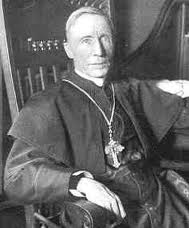
Unions sprang up to represent workers.  One of the largest in its day was the Knights of Labor founded in 1868.  Successful in several large strikes, by 1886 the membership totaled 700,000, perhaps a majority of whom were Catholic.  In 1886 the Archbishop of Quebec condemned the Knights in Canada based upon the secrecy that attended the meetings of the organization and forbade Catholics to join it.
The American hierarchy voted 10 to 2 against condemning the Knights.  Archbishop James Gibbons was going to Rome in 1887 to receive his red hat as Pope Leo XIII had made him a Cardinal.  While there he took the opportunity to submit a lengthy letter in support of the Knights.  Although the letter bears the name of Gibbons, it was probably written by his friend Bishop John Ireland of Saint Paul, who had long been active in support of the rights of workers.  The letter did the trick and the Vatican announced that the Knights were not to be condemned.  The arguments made in the letter had an impact on Pope Leo XIII and helped lay the groundwork for his historic encyclical  Rerum Novarum (1891) in which he defended the rights of workers to organize to seek better working conditions.  Ironically the subject matter of the letter, the Knights of Labor, was in decline, too many of its strikes having involved violence which the leadership of the Knights condemned, but which tarnished the Knights in the eyes of the public.  The Knights would cease to operate as a labor union in 1900, newer unions taking the place of this pioneering organization.
The letter of Cardinal Gibbons stressed that Catholic workers in America who belonged to labor organizations were not hostile to the Church as often occurred in Europe where Unions were organized by Leftist and Anarchist groups.  In America most Americans supported the workers in their struggle to improve their lot, with both major political parties vying to pass legislation aiding workers.  In short, the letter explained American labor and political conditions to the Vatican and how these differed substantially from those existing in Europe.  The letter and the decision of the Vatican were good examples of effective communication between American ecclesiastics and Rome.  Here is the text of the letter:


To His Eminence Cardinal Simeoni, Prefect of the Sacred Congregation of the Propaganda:
Your Eminence:
In submitting to the Holy See the conclusions which, after several months of attentive observation and reflection, seem to me to sum up the truth concerning the association of the Knights of Labor, I feel profoundly convinced of the vast importance of the consequences attaching to this question, which is but a link in the great chain of the social problems of our day, and especially of our country.  
In treating this question I have been very careful to follow as my constant guide the spirit of the encyclical letters, in which our Holy Father Leo XIII has so admirably set forth the dangers of our times and their remedies, as well as the principles by which we are to recognize associations condemned by the Holy See. Such was also the guide of the Third Plenary Council of Baltimore in its teachings concerning the principles to be followed and the dangers to be shunned by the faithful either in the choice or in the establishment of those various forms of association toward which the spirit of our popular institutions so stronglyimpels them. And, considering the evil consequences that might result from a mistake in the treatment of organizations which often count their members by thousands and hundreds of thousands, the council wisely ordained that, when an association is spread over several dioceses, not even the Bishop of one of these dioceses shall condemn it, but shall refer the case to a standing committee consisting of all the Archbishops of the United States; and even these are not authorized to condemn, unless their sentence be unanimous; and in case they fail to agree unanimously, then only the supreme tribunal of the Holy See can impose a condemnation; all this in order to avoid error and confusion of discipline.
This committee of Archbishops held a meeting towards the end of last October, at which the association of the Knights of Labor was specially considered. To this we were not impelled by the request of any of our Bishops, for none of them had asked it; and I must add that among all the Bishops we know of but two or three who desire the condemnation. But our reason was the importance attached to the question by the Holy See itself, and this led us to examine it with all possible care. After our deliberations, the result of which has already been communicated to the Sacred Congregation of the Propaganda, only two out of the twelve Archbishops voted for condemnation; and their reasons were powerless to convince the others of either the justice or the prudence of such a condemnation.
In the following considerations I wish to state in detail the reasons which determined the vote of the great majority of the committee — reasons whose truth and force seem to me all the more evident after this lapse of time; nor will I fail to do justice to the arguments advanced on the other side :
1. In the first place, though there may be found in the constitution, laws and official declarations of the Knights of Labor things that we would not approve, still, we have failed to find in them those elements so clearly pointed out by the Holy See, which would class them among condemned associations :
(a) In their form of initiation there is no oath.
(b) The obligation to secrecy by which they keep the knowledge of their business from enemies or strangers is not such as to hinder Catholics from manifesting everything to competent ecclesiastical authority, even outside of confession. This has been positively declared to us by their chief officers.
(c) They make no promise of blind obedience. The object and laws of the association are distinctly declared, and the obligation of obedience does not go beyond them.
(d) They not only profess no hostility against religion or the Church, but their declarations are quite to the contrary. The Third Plenary Council commands that condemnation shall not be passed on any association without the previous hearing of its officers or representatives. Now, their president, when sending me a copy of their constitution, declared that he is a devoted Catholic; that he practises his religion faithfully and receives the sacraments regularly; that he belongs to no Masonic society or other association condemned by the Church; that he knows nothing in the organization of the Knights of Labor contrary to the laws of the Church; that, with filial submission, he begs the pastors of the Church to examine their constitution and laws, and to point out anything they may find objectionable, promising to see to its correction. Assuredly, there is in all this no hostility to the authority of the Church, but, on the contrary, a disposition in every way praiseworthy.
After their convention, held last year in Richmond, he and several of the principal members, devout Catholics, made similar declarations concerning the action of that convention, the documents of which we expect to receive shortly.
(e) Nor do we find in this organization any hostility to the authority and laws of our country. Not only does nothing of the kind appear in their constitution and laws, but the heads of our civil government treat with respect the cause which such associations represent. The President of the United States told me personally, a few weeks ago, that he then had under consideration a proposed law for the amelioration of certain social grievances, and that he had had a long conversation on these topics with Mr. Powderly, the president of the Knights of Labor. The Congress of the United States, in compliance with the views presented by President Cleveland in his annual message, is at present engaged in framing measures for the improvement of the condition of the laboring classes, in whose complaints they acknowledge that there is a great deal of truth. And our political parties, far from considering them the enemies of the country, vie with each other in championing the evident rights of the workingmen, who seek not to resist or overthrow the laws, but only to obtain just legislation by constitutional and legitimate means.
These considerations, which show that in these associations those elements are not to be found which the Holy See has condemned, lead us to study, in the second place, the evils which the association contends against and the nature of the conflict.

2. That there exist among us, as in all other countries of the world, grave and threatening social evils, public injustices which call for strong resistance and legal remedy, is a fact which no one dares to deny — a fact already acknowledged by the Congress and the President of the United States. Without entering into the sad details of these evils, whose full discussion is not necessary, I will only mention that monopolies, on the part of both individuals and of corporations, have everywhere called forth not only the complaints of our working classes, but also the opposition of our public men and legislators; that the efforts of monopolists, not always without success, to control legislation to their own profit, cause serious apprehensions among the disinterested friends of liberty; that the heartless avarice which, through greed of gain, pitilessly grinds not only the men, but even the women and children in various employments, makes it clear to all who love humanity and justice that it is not only the right of the laboring classes to protect themselves, but the duty of the whole people to aid them in finding a remedy against the dangers with which both civilization and social order are menaced by avarice, oppression and corruption.
It would be vain to dispute either the existence of the evils, or the right of legitimate resistance, or the necessity of a remedy. At most, a doubt might be raised about the legitimacy of the form of resistance and of the remedy employed by the Knights of Labor. This, then, is the next point to be examined.
3. It can hardly be doubted that, for the attainment of any public end, association — the organization of all interested — is the most efficacious means — a means altogether natural and just. This is so evident, and besides, so conformable to the genius of our country, of our essentially popular social conditions, that it is unnecessary to insist upon it. It is almost the only means to public attention, to give force to the most legitimate resistance, to add weight to the most just demands.
Now, there already exists an organization which presents innumerable attractions and advantages, but with which our Catholic workingmen, filially obedient to the Holy See, refuse to unite themselves; this is the Masonic Order, which exists everywhere in our country and which, as Mr. Powderly has expressly pointed out to us, unites employers and employed in a brotherhood very advantageous to the latter, but which numbers in its ranks hardly a single Catholic. Nobly renouncing advantages which the Church and conscience forbid, our workingmen join associations in no way in conflict with religion, seeking nothing but mutual protection and help, and the legitimate assertion of their rights. Must they here also find themselves threatened with condemnation, hindered from their only means of self-defense?  
4. Let us now consider the objections made against this sort of organization :
(a) It is objected that in such organization, Catholics are mixed with Protestants, to the peril of their faith. Naturally, yes; they are mixed with Protestants at their work; for, in a mixed people like ours, the separation of religious creeds in civil affairs is an impossibility. But to suppose that the faith of our Catholics suffers thereby is not to know the Catholic working men of America, who are not like the working men of so many European countries — misguided children, estranged from their Mother, the Church, and regarding her with suspicion and dread — but intelligent, well-instructed, and devoted Catholics, ready to give their blood, if necessary, as they continually give their hard-earned means, for her support and protection. And, in fact, it is not here a question of Catholics mixed with Protestants, but rather that Protestants are admitted to share in the advantages of an association, many of whose members and officers are Catholics; and in a country like ours, their exclusion would be simply impossible.
(b) But it is asked, instead of such an organization could there not be confraternities, in which the working men would be united under the direction of the clergy and the influence of religion? I answer frankly that I do not consider this either possible or necessary in our country. I sincerely admire the efforts of this sort which are made in countries where the working people are led astray by the enemies of religion; but thanks be to God, that is not our condition. We find that in our country the presence and direct influence of the clergy would not be advisable where our citizens, without distinction of religious belief, come together in regard to their industrial interests alone. Short of that, we have abundant means for making our working people faithful Catholics;  and simple good sense advises us not to go to extremes.
(c) Again, it is objected that, in such organizations, Catholics are exposed to the evil influences of the most dangerous associates, even of atheists, communists and anarchists. That is true; but it is one of those trials of faith which our brave American Catholics are accustomed to meet almost daily, and which they know how to face with good sense and firmness. The press of our country tells us, and the president of the Knights of Labor has related to us, how these violent, aggressive elements have endeavored to control the association, or to inject poison into its principles; but they also inform us with what determination these machinators have been repulsed and beaten.
The presence among our citizens of those dangerous social elements which have mostly come from certain countries of Europe, is assuredly for us an occasion of great regret and of vigilant precautions ; it is a fact, however, which we have to accept, but which the close union between the Church and her children which exists in our country renders comparatively free from danger. In truth, the only thing from which we would fear serious danger would be a cooling of this relationship between the Church and her children; and I know nothing that would be more likely to occasion it than imprudent condemnations.
(d) A specially weighty charge is drawn from the outbursts of violence, even to bloodshed, which have accompanied several of the strikes inaugurated by labor organizations. Concerning this, three things are to be remarked — first, strikes are not an invention of the Knights of Labor, but a means almost everywhere and always resorted to by the working classes to protect themselves against what they consider injustice, and in assertion of what they believe to be their just rights; secondly, in such a struggle of the poor and indignant multitudes against hard and obstinate monopoly, outbursts of anger are almost as inevitable as they are greatly to be regretted; thirdly, the laws and the chief authorities of the Knights of Labor, far from encouraging violence or the occasions of it, exercise a powerful influence to hinder it,and to retain strikes within the limits of good order and of legitimate action.

A careful examination of the acts of violence accompanying the struggle between capital and labor last year leaves us convinced that it would be unjust to attribute them to the association of the Knights of Labor ; for this association was but one among the numerous labor organizations that took part in the strikes, and their chief officers used every possible effort, as disinterested witnesses testify, to appease the anger of the multitudes, and to hinder the excesses, which therefore, in my judgment, could not justly be attributed to them. Doubtless, among the Knights of Labor, as among the thousands of other Working men, there are to be found passionate or even wicked men who have committed inexcusable deeds of violence, and have instigated their associates to the same; but to attribute this to the association would, it seems to me, be as unreasonable as to attribute to the Church the follies or the crimes of her children against which she strives and protests.
I repeat that, in such a struggle of the great masses of the people against the mail-clad power which, as it is acknowledged, often refuses them the simple rights of humanity and justice, it is vain to expect that every error and every act of violence can be avoided; and to dream that this struggle can be hindered, or that we can deter the multitudes from organizing, which is their only hope of success, would be to ignore the nature and forces of human society in times like ours. Christian prudence evidently counsels us to hold the hearts of the multitudes by the bonds of love, in order to control their actions by the principles of faith, justice and charity; to acknowledge frankly what is true and just in their cause, in order to deter them from what is false and criminal, and thus to turn into a legitimate, peaceable and beneficent contest what might easily, by a course of repulsive severity, become for the masses of our people a dread volcanic force like unto that which society fears and the Church deplores in Europe.
Upon this point I insist strongly, because, from an intimate acquaintance with the social conditions of our country, I am profoundly convinced that here we are touching upon a subject which not only concerns the rights of the working classes, who ought to be especially dear to the Church which our Lord sent forth to preach His Gospel to the poor, but with which are intimately bound up the fundamental interests of the Church and of human society for the future. This is a point which I desire, in a few additional words,to develop more clearly.  
5. Whoever meditates upon the ways in which Divine Providence is guiding mankind in our days can not fail to remark how important is the part which the power of the people takes in shaping the events of the present, and which it is evidently destined to take in molding the destinies of the future. We behold, with profound regret, the efforts of the prince of darkness to make this power dangerous to the social weal by withdrawing the masses of the people from the influence of religion, and impelling them towards the ruinous paths of license and anarchy. Hitherto our country has presented a spectacle of a most consolingly different character —that of a popular power regulated by love of good order, respect for religion, by obedience to the authority of the laws; not a democracy of license and violence, but that true democracy which aims at the general prosperity through the means of sound principles and good social order.  
In order to preserve so desirable a state of things it is absolutely necessary that religion should continue to possess theaffections and thus rule the conduct of the multitudes. As Cardinal Manning has well written, ‘a new task is before us. The Church has no longer to deal with Parliaments and princes, but with the masses and with the people. Whether we will or no, this is our work; we need a new spirit and a new law of life.’  To lose influence over the people would be to lose the future altogether ; and it is by the heart, far more than by the understanding, that we must hold and guide this immense power, so mighty either for good or for evil.
Among all the glorious titles which the Church’s history has deserved for her there is not one which at present gives her so great influence as that of ‘Friend of the People’. Assuredly, in our democratic country, it is this title which wins for the Catholic Church not only the enthusiastic devotedness of the millions of her children, but also the respect and admiration of all our citizens, whatever be their religious belief. It is the power of this title which renders persecution almost an impossibility, and which draws towards our Holy Church the great heart of the American people.
And since it is acknowledged by all that the great questions of the future are not those of war, of commerce or of finance, but the social questions — the questions which concern the improvement of the condition of the great popular masses, and especially of the working people — it is evidently of supreme importance that the Church should always be found on the side of humanity, — of justice towards the multitudes who compose the body of the human family. As the same Cardinal Manning has wisely written, ‘I know I am treading on a very difficult subject, but I feel confident of this, that we must face it, and that we must face it calmly, justly, and with a willingness to put labor and the profits of labor second — the moral state and domestic life of the whole working population first. I will not venture to draw up such an act of Parliament further than to lay down this principle. . . . These things (the present condition of the poor in England) can not go on; these things ought not to go on. The accumulation of wealth in the land, the piling up of wealth like mountains, in the possession of classes or individuals, can not go on. No Commonwealth can rest on such foundations.’
In our country, above all, this social amelioration is the inevitable programme of the future, and the position which the Church should hold towards it is surely obvious. She can certainly not favor the extremes to which the poor multitudes are naturally inclined; but, I repeat, she must withhold them from these extremes by the bonds of affection, by the maternal desire which she will manifest for the concession of all that is just and reasonable in their demands, and by the maternal blessing which she will bestow upon every legitimate means for improving the condition of the people.
6. Now let us consider for a moment the consequences which would inevitably follow from a contrary course — from a course of want of sympathy for the working class, of suspicion for their aims, of ready condemnation for their methods.
(a) First, there would be the evident danger of the Church’s losing, in popular estimation, her right to be considered the friend of the people. The logic of the popular heart goes swiftly to its conclusions, and this conclusion would be most pernicious both for the people and for the Church. To lose the heart of the people would be a misfortune for which the friendship of the few rich and powerful would be no compensation.

(b) There would be a great danger of rendering hostile to the Church the political power of our country, which has openly taken sides with the millions who are demanding justice and the improvement of their condition. The accusation of being un-American — that is to say, alien to our national spirit — is the most powerful weapon which the enemies of the Church can employ against her. It was this cry which aroused the Know Nothing persecution thirty years ago, and the same would be used again if the opportunity offered. To appreciate the gravity of this danger it is well to remark that not only are the rights of the working classes loudly proclaimed by each of our two great political parties, but it is not improbable that, in our approaching national elections, there will be a candidate for the office of President of the United States as the special representative of the popular complaints and demands.

Now, to seek to crush by an ecclesiastical condemnation an organization which represents more than 500,000 votes, and which has already so respectable and so universally recognized a place in the political arena, would, to speak frankly, be considered by the American people as not less ridiculous than rash. To alienate from ourselves the friendship of the people would be to run great risk of losing the respect which the Church has won in the estimation of the American nation, and of forfeiting the peace and prosperity which form so admirable a contrast with her condition in some so-called Catholic countries. Angry utterances have not been wanting of late, and it is well that we should act prudently.  
(c) A third danger — and the one which most keenly touches our hearts — is the risk of losing the love of the children of the Church, and of pushing them into an attitude of resistance against their Mother. The world presents no more beautiful spectacle than that of their filial devotion and obedience; but it is well to recognize that, in our age and in our country, obedience can not be blind. We would greatly deceive ourselves if we expected it. Our Catholic working men sincerely believe that they are only seeking justice, and seeking it by legitimate means. A condemnation would be considered both false and unjust, and, therefore, not binding. We might preach to them submission and confidence in the Church’s judgment; but these good dispositions could hardly go so far. They love the Church, and they wish to save their souls; but they must also earn their living, and labor is now so organized that without belonging to the organization, it is almost impossible to earn one’s living.
Behold, then, the consequences to be feared. Thousands of the Church’s most devoted children, whose affection is her greatest comfort, and whose free offerings are her chief support, would consider themselves repulsed by their Mother and would live without practising their religion. Catholics who have hitherto shunned the secret societies would be sorely tempted to join their ranks. The Holy See, which has constantly received from the Catholics of America proofs of almost unparalleled devotedness, would be considered not as a paternal authority, but as a harsh and unjust power. Surely these are consequences which wisdom and prudence counsel us to avoid.  
7. But, besides the dangers that would result from such a condemnation, and the impracticability of putting it into effect, it is also very important that we should carefully consider another reason against condemnation, arising from the unstable and transient character of the organization in question. It is frequently remarked by the press and by attentive observers that this special form of association has in it so little permanence that, in its present shape, it is not likely to last many years. Whence it follows that it is not necessary, even if it were just and prudent, to level the sole condemnations of the Church against so evanescent an object. The social agitation itself will, indeed, last as long as there are social evils to be remedied; but the forms of organization meant for the attainment of this end are naturally provisional and short-lived. They are also very numerous, for I have already remarked that the Knights of Labor is only one among many labor organizations.
To strike, then, at one of these forms, would be to commence a war without system and without end; it would be to exhaust the forces of the Church in chasing a crowd of changing and uncertain spectres. The American people behold with perfect composure and confidence the progress of our social contest, and have not the least fear of not being able to protect themselves against any excesses or dangers that may occasionally arise. Hence, to speak with the most profound respect, but also with the frankness which duty requires of me, it seems to me that prudence suggests, and that even the dignity of the Church demands, that we should not offer to America an ecclesiastical protection for which she does not ask, and of which she believes she has no need.
8. In all this discussion, I have not at all spoken of Canada, nor of the condemnation concerning the Knights of Labor in Canada for we would consider it an impertinence on our part to meddle with the ecclesiastical affairs of another country which has a Hierarchy of its own, and with whose social conditions we do not pretend to be acquainted. We believe, however, that the circumstances of a people almost entirely Catholic, as in lower Canada, must be very different from those of a mixed population like ours; moreover, that the documents submitted to the Holy Office are not the present constitution of the organization in our country, and that we, therefore, ask nothing involving an inconsistency on the part of the Holy See, which passed sentence ‘localiter et juxta exposita.’
It is of the United States that we speak, and we trust that we are not presumptuous in believing that we are competent to judge about the state of things in our own country. Now, as I have already indicated, out of the seventy-five Archbishops and Bishops of the United States, there are about five who desire the condemnation of the Knights of Labor, such as they are in our own country; so that our Hierarchy are almost unanimous in protesting against such a condemnation. Such a fact ought to have great weight in deciding the question. If there are difficulties in the case, it seems to me that the prudence and experience of our Bishops and the wise rules of the Third Plenary Council ought to suffice for their solution.  
Finally, to sum up all, it seems to me that the Holy See could not decide to condemn an association under the following circumstances:
1. When the condemnation does not seem to be justified either by the letter or the spirit of its constitution, its laws and the declaration of its chiefs.
2. When the condemnation does not seem necessary, in view of the transient form of the organization and the social condition of the United States.
3. When it does not seem to be prudent, because of the reality of the grievances complained of by the working classes, and their acknowledgment by the American people.
4. When it would be dangerous for the reputation of the Church in our democratic country, and might even lead to persecution.
5. When it would probably be inefficacious, owing to the general conviction that it would be unjust.
6. When it would be destructive instead of beneficial in its effects, impelling the children of the Church to disobey their Mother, and even to enter condemned societies, which they have thus far shunned.
7. When it would turn into suspicion and hostility the singular devotedness of our Catholic people towards the Holy See.
8. When it would be regarded as a cruel blow to the authority of Bishops in the United States, who, it is well-known, protest against such a condemnation.  
Now, I hope that the considerations here presented have sufficiently shown that such would be the effect of condemnation of the Knights of Labor in the United States.

Therefore, I leave the decision of the case, with fullest confidence, to the wisdom and prudence of your Eminence and the Holy See.

J. Card. Gibbons,
Archbishop of Baltimore.
Rome, February 20, 1887.

12 Responses to Cardinal Gibbons and the Knights of Labor

  • LoneThinker says:
    History lessons such as these illustrate how Catholic Social Teaching by the Bishop of Rome and European bishops needed to be interpreted for and by US pastors. Same went for “separation of Church-State,” democracy, conscience freedom and such. Ironically, they are all back on the front burner with the new atheism and hostility to Natural Law
  • Michael Paterson-Seymour says:
    By one of those ironies of history, in the mid-19th century, one finds deeply conservative Monarchist bishops and clergy in France supporting workers’ rights, inspired by their inveterate hatred of the French Revolution and all its works, including, of course, the Allarde Decree of 17 March 1791 and the Le Chapelier Law of 14 June 1791.
    It was not until the law of 25 May 1864, under Napoléon III that workers regained the right to associate and to strike.
    Père Henri-Dominique Lacordaire OP, who restored the Dominican order in France in 1850 and who was the most celebrated preacher of his day was an early champion of the rights of labour. An admirer of Lord Shaftsbury’s Factories Acts in the UK, he famously remarked, “Between the weak and the strong, between the rich and the poor, between the master and the servant, it is freedom which oppresses and the law which sets free.”
  • Donald,
    Thanks for posting this article and letter. The late 19th Century (bleeding into the early 20th Century) was one of the most outstanding times in human history for technological growth, and the improvement of the lives of all people. But, it was not without some pain, especially felt among the workers who became little more than “wage slaves”.
    Ultimately, work places were made safe and salaries rose. While there certainly was violence and blood, what is amazing is that the antagonism, and anarchy, that marked European labor movements did not take hold as deeply nor as long here in the US. This was due (IMHO) to the influence and true interest of Catholic Church leadership here, as compared to the European model.
  • LoneThinker says:
    JP 11 championed the sacred dignity of the worker, who made labour sacred, and thus stole the Commie thunder. Leo X111 started with the FACTORY OWNER etc and asked for trickle down as it were, whereas JP11 reversed that and showed where the HUMAN’s SACRED VALUE entered in. That kind of moral evolution is crucial and is the kind of revolution that the late Cdl MARTINI called for in updating the Church being 200 years out of date. Clericalism, bishops addressed and some/many living as lords and Kings with almost untrammeled power. Clericalism needs to be stripped so Servant Leaders take over after 2i00 years as JESUS demanded
  • Pingback: LABOR DAY EDITION | Big Pulpit
  • John Nolan says:
    Rerum Novarum is actually quite positive about Trade Unions, and was influenced by the ideas of Henry, Cardinal Manning (Archbishop of Westminster) whose intervention in the London dock strike of 1889 made him a hero in the eyes of working men. Unions were given full legal recognition in the 1870s, and Margaret Thatcher actually removed some of the rights which had been granted by her Conservative predecessor Benjamin Disraeli over a century before.
    The anarcho-syndicalism prevalent on the Continent was indeed largely absent in Britain and America. This is due less to the influence of the Church than to a tradition of effective representative government which militated against revolution.
  • John, Cardinal Gibbons considered his victory re: the Knights of Labor to be greatly helped by Manning. Gibbons wrote to him: “I cannot sufficiently express to you how much I have felt strengthened in my position by being able to refer in the document to your utterances on the claims of the working man to our sympathy and support.” Gibbons in later years recalled with amusement a cartoon which had Manning on one side of Pope Leo, and Gibbons on the other, with Pope Leo exclaiming that he must watch himself between two such foxes!

  • John,
    Thanks very much for the information. This is one of the reasons I love TAC so much; unlike many other blogs, the correspondents here (excepting myself) have so much knowledge that the comboxes are actually a great continuation of the excellent posts.
  • Michael Paterson-Seymour says:
    John Nolan
    Anarcho-syndicalism, in the tradition of Sorel and Proudhon, has deep roots in the Latin distrust of government, as such. Its main appeal was always in Italy, Spain and France south of the Loire, places in which the political class is held in deep and, often, well-merited contempt.
    In Britain, trade unionism and the Labour party had strong roots in the Nonconformist tradition, especially Methodism in England & Wales and the Covenanter legacy in Scotland.

Tuesday, September 4, 2012

Father John Ireland and the Fifth Minnesota

.

Father John Ireland and the Fifth Minnesota in the Civil War


One of the titans of the Catholic Church in the Nineteenth Century in the United States was Archbishop John Ireland, the first Archbishop of Saint Paul, Minnesota.  Future blog posts will cover his career as Archbishop.  This blog post is focused on his service during the Civil War.  Ordained a priest only a year, Father John Ireland at 24 in 1862 received permission of his bishop to join the Fifth Minnesota Volunteer Infantry.  He joined the regiment immediately after the battle of Shiloh.
At the battle of Corinth on October 4, 1862 the Fifth Minnesota saved the day for the Union with a charge that stopped a Confederate breakthrough of the Union lines.  Running short on ammunition, the troops received additional cartridges from Chaplain Ireland who ran down the line dispensing ammunition.  When the fighting was over, the soldiers noted that their chaplain tirelessly tended the wounded and administered the Last Rites to soldiers whose wounds were beyond human aid.
The troops were very fond of their young priest and built him a portable altar from saplings.  His sermons were popular with the men, being direct, blunt and brief.  He was noted for his sunny disposition, quick wit  and his courage.  He was also an enthusiastic chess player, and would take on all comers in the evenings in camp.
Before battles he would hear the confessions of huge numbers of soldiers, with some Protestant soldiers often asking for admission to the Church.  He was always ready to pray with any soldiers no matter their religion, and give them what comfort he could in reminding them that God was ever at their side during their time of peril.  On one occasion he went to the side of an officer who had been shot and was bleeding to death and had asked for a chaplain.   the Archbishop recalled the scene decades after the War.   ‘Speak to me,’ he said, ‘of Jesus.’ He had been baptized — there was no time to talk of Church. I talked of the Savior, and of sorrow for sin. The memory of that scene has never been effaced from my mind. I have not doubted the salvation of that soul.”
Father Ireland was mustered out of service in March of 1863 due to ill-health, but he never forgot his time in the Union Army.  He was ever active in the Grand Army of the Republic, the Union veterans’ organization,   and would write about his experiences as a combat chaplain.  Unlike most Catholics of his day, he was a firm Republican, the friend of Republican presidents including McKinley and Roosevelt, and never forgot why the Civil War had to be fought, as this statement by him regarding the rights of blacks indicates:
There is but one solution of the problem, and it is to obliterate absolutely all color line. Open up to the Negro as to the white man, the political offices of the country, making but one test, that of mental and moral fitness. Throw down at once the barriers which close out the Negro merely on account of his color from hotel, theater, and railway carriage. Meet your Negro brother as your equal at banquets and in social gatherings. Give him, in one word, and in full meaning of the terms, equal rights and equal privileges, political, civil, and social. I know no color line, I will acknowledge none. The time is not distant when Americans and Christians will wonder that there ever was a race prejudice.
In his old age, Archbishop Ireland, after a life marked with many accomplishments, looked back upon his time as a chaplain with the Fifth Minnesota as the most fruitful part of his ministry.  In 1894 he gave a speech on patriotism to Union veterans.  This section of his speech I think is just as relevant today as when he gave it:
There is a danger  and a most serious one  in corrupt morals. A people without good morals is incapable of self-government. At the basis of the proper exercise of the suffrage lie unselfishness and the spirit of sacrifice. A corrupt man is selfish ; an appeal to duty finds no response in his conscience ; he is incapable of the high- mindedness and generous acts which are the elements of patriotism ; he is ready to sell the country for pelf or pleasure. Patriotism takes alarm at the spread of intemperance, lasciviousness, dishonesty, perjury; for country’s sake it should arm against those dire evils all the country’s forces, its legislatures, its courts, and, above all else, public opinion. Materialism and the denial of a living, supreme God annihilate conscience, and break down the barriers to sensuality ; they sow broadcast the seeds of moral death : they are fatal to liberty and social order. A people without a belief in God and a future life of the soul will not remain a free people. The age of the democracy must, for its own protection, be an age of religion.

Tuesday, July 24, 2012

Samuel Aquila's Denver Return Marred by Tragedy

.
The new archbishop of Denver is dealing with the aftermath of the Aurora theater tragedy just two days after his installation.

07/24/2012 

Archbishop Samuel Aquila was installed July 18 as the fifth archbishop of the Archdiocese of Denver. The appointment brings Archbishop Aquila home to the archdiocese where he was first ordained 36 years ago.

His first week has been a difficult one, given the tragedy at the Century Aurora 16 theater just two days after his installation. He spoke July 24 with Register senior writer Tim Drake about his installation and the Aurora tragedy.


How is the Church responding to the Aurora tragedy?
The Church has reached out to the victims and the wounded. The priests and deacons in Aurora have visited the hospitals and been present to the families who were impacted in different ways.
On Friday afternoon, I celebrated Mass at Queen of Peace Catholic Church in Aurora. There were well over 1,000 people there. One young girl had been in the theater, and another had five friends who were injured. The Church has continued to reach out amidst the sadness, the tragedy and the evil of it.
There will be three Catholic funerals. We’re visiting with the families and trying to respect everything they are going through. Catholic Charities has made counseling available for those who desire it.
There has been a real outreach to the families who have lost loved ones and those who have been wounded. There’s been great compassion and charity shown toward them in carrying out the corporal works of mercy to those who have been impacted by this.
Anytime where there is such a violent act that is so unexpected there is the shock and horror and questioning that goes on. We’re trying to help people with those questions and help them to bring it all to the Lord, whether they are experiencing vengeance, anger, emptiness.
There’s a tremendous hole when one loses a spouse, a child, a friend. That unique individual will never be replaced on this earth. There’s a tremendous sense of loss there.
In addition, dying a violent death is quite different from an accident. All those who went to the movie theater went to enjoy a film. Suddenly, that’s been shattered by the power of evil and sin, and it’s so unexpected.
In some of the conversations I’ve had with some of the people impacted, I’ve tried to help them to see how they can bring their suffering to the cross and see how the Father permitted his only Son to suffer a violent death — and to remember that that death and the evil that was present did not conquer the love of God.
Rather, God conquered death and evil with the Resurrection and the gift of eternal life. I let them know that they stand at the cross with Mary and John. They experienced the death of Jesus Christ, and so Mary and John intercede and are with them.
The questions they are asking are likely the same questions Mary and John asked. So, I encourage them to remember their humanity in it all and their deep faith and love to stand with the Lord.
The Church is very much in solidarity with those who have been wounded and hurt and lost their lives.


Is there any indication of how many of the victims were Catholic?
Of those who were killed, we know of three. I’ve met with one of the families and will be meeting with the other two.  Bishop [James] Conley or I will be present for the funerals. I would ask all people of good will to continue to pray for those impacted.
What many of these people experienced will take time to heal. After the funerals will be the greatest part of the adjustment, when they need our continued prayer.


This tragedy has occurred just days after your installation. You were ordained a priest here. Does it feel like you’ve come home?
In many ways, it does. I served as a priest here for 25 years, so I know a lot of the people. Even though I was away for almost 11 years, there were a lot of friends and contacts that I had here.
In that way, it is very much like a homecoming. There’s been a lot that has changed. When I looked out at the clergy, there were a number of younger men who have been ordained over the last seven or eight years who I did not recognize. Archbishop [Charles] Chaput also brought in some new religious communities.
I look forward to reconnecting with people and look forward to meeting the new clergy and all those in seminary, the staff at the pastoral center and the diocese.


What was the highlight of your installation?
The installation Mass itself was filled with meaning and tremendous joy. Never in your imagination do you think you’ll ever be in the diocese where you were ordained a priest. As we celebrated Mass, there were a flood of memories of being ordained at the cathedral. I was in residence at the cathedral for almost eight years and celebrated Mass there.
There were also memories from World Youth Day in 1993 and being an assistant emcee for Pope John Paul II. There is a stained-glass window of the Council of Ephesus that has always spoken to me of Mary’s love and protection, and that was very much present. There was also the strong face of the people and the reception I was given as I entered into the cathedral. To see so many of the clergy present who I hadn’t seen for 11 years and so many of the faithful — my heart was filled with a great love for the Father for his providential love for me.


In what ways is the Archdiocese of Denver different or similar to the Diocese of Fargo, N.D.?
They are very, very different. The Diocese of Fargo is a rural diocese. It has 130 parishes, and about half of those have about 75 households or less. It’s a much smaller community.
Denver is a huge metro area, and there are more than 550,000 Catholics there. In Fargo, there were about 75,000 Catholics and about 100 priests. Here, there are over 380 priests. The differences are quite great, in terms of size and territory. The Archdiocese of Denver is about 40,000 square miles. Eastern North Dakota was about 35,000 square miles.


What are the major challenges that you face in Denver?
I think, certainly, part of it is the size of the diocese. It’s much more complex than Fargo. Denver is much more secular, in terms of belief and in terms of political views than Fargo, and in that way it will be a new challenge, because the people of North Dakota were primarily a people of faith.
About 90% of the people of North Dakota had some type of faith. Here, in Colorado, they told me, it’s about 30%. That itself will be a challenge.
How do you keep God in the public square and engage in conversation with society to promote the common good?


You made the restoration of the order of the sacraments of initiation a primary focus during your time in Fargo. Do you anticipate looking at that issue in the Archdiocese of Denver?
It has already surfaced, and it’s certainly something we’ll look at, especially after the encouragement I received from Pope Benedict XVI during the ad limina visit. He encouraged me to continue in that direction.
I will continue to speak to that and reflect on it with the priests and lay faithful of the archdiocese.


Denver is home to a rich diversity of apostolic efforts. I understand there are a couple of new efforts under way (Lighthouse Crisis Pregnancy Center and Christ in the City). What can you tell me about those?
Lighthouse is certainly something I’ve been aware of. The founders came up to see what we had put together in Fargo. They visited the St. Gianna Maternity Home and First Choice Clinic, an ecumenical response to crisis pregnancies and helping women choose life.
Given my own work in the pro-life movement and concerns in that area, I’m very supportive of it and look forward to meeting those involved. It falls under the auspices of Catholic Charities, so will now be a part of the ministry of the archdiocese.
Christ in the City is a movement of young people in the inner city bringing Christ to those who are homeless and poor and in need. Christ in the City combines solid Catholic intellectual and spiritual formation with service to the poor. I encourage young people to look into it.


What do you see as Denver’s greatest strengths?
It’s a young, vibrant, zealous Church. I think it’s a Church that has taken the New Evangelization seriously.
When I see things like the Augustine Institute, Focus [Fellowship of Catholic University Students], the Catholic Biblical School, movements like the Neocatechumenal Way and Communion and Liberation and the Oblates of the Virgin Mary, and the seminaries, they are tremendous signs of light in the archdiocese.
There is a tremendous amount of life and proclaiming the Gospel of Christ and carrying out the mission of Christ in the archdiocese.


What kinds of things do you enjoy doing when you’re not “on duty?”
I enjoy golf, fishing, and I enjoy sitting quietly in prayer, reflection or reading. I also enjoy going out and being out and about.
When I lived here, I would go out and hike on trails in the mountains. I used to ski, but gave that up. My knees are not what they used to be.


Do you have a favorite saint?
There are a lot that I go to. There are two that stand out the most.
Our Lady of Guadalupe: I have a deep devotion to her, just in terms of her deep desire to share her Son with the world and give us the gift of the tilma. I’ll never forget the first time I saw the tilma and realized it was almost 500 years old. What a great gift it is.
Also, St. Joseph, in terms of his fatherhood, his manhood and his deep love for Jesus and Mary — in protecting them and being the one who formed the humanity of Jesus as a father.
It demonstrates the great confidence of God the Father to trust to Joseph the care of Mary and Jesus. I seek his intercession often for being a spiritual father to the faithful and seek his help in that.
When we talk about the saints, something I’ve discovered throughout the years in my own walk of faith is that they are really our friends. The more I read them, the more I see their sanctity and their cooperation with God. They are each unique, and all of us are called to be saints.
Each one of us has a particular relationship with the Father, Jesus and the Holy Spirit, and we’re called to live that out in the life of the Church.