Friday, May 4, 2012

Is Confession valid if we don’t do the penance?

.
 From the Catholic Spirit's Catholic Hotdish blog

Is Confession valid if we don’t do the penance?


Have you ever had to leave right after confession, intending to do your penance as soon as you could—but then you forgot? Or has a priest told you to do a charitable or self-sacrificial act for your penance instead of saying a prayer and because you couldn’t do it at that moment it slipped your mind? In both cases is the absolution valid?
The answer is, it depends.
As with many of the laws and norms governing the Christian life, your level of culpability depends on where your heart is. According to canon law, “the confessor is to impose salutary and suitable penances in accord with the quality and number of sins, taking into account the condition of the penitent. The penitent is obliged to fulfill these personally.” (Canon 981)

What makes a confession invalid

We’re obliged to do the penance, but what  if we accidentally don’t?  The conditions below make a confession invalid, according to a book co-authored by Cardinal Donald Wuerl:
  • No true sorrow for sins and lack of intention to avoid grave sin in the future,
  • Deliberately neglecting to confess all grave sins, or
  • Refusing to do an assigned penance.
So it seems that forgetting to do a penance doesn’t carry the same weight as willfully refusing to do it, and therefore doesn’t invalidate the absolution. But Father John Hardon points out that through centuries of Church teaching, the following have been required of those who receive the Sacrament of Reconciliation:
  • They must be truly sorry for their sins, at least out of fear of God’s punishments;
  • They must confess their grave sins, or (if there are no mortal sins) at least some venial sin(s) from their past life; and
  • They must perform the penance which the confessor gives them.

Importance of the penance

Receiving absolution isn’t the whole story, however. When it comes to making amends for our sins, the penance given in confession plays an important role.
The Catechism states: “Absolution takes away sin, but it does not remedy all the disorders sin has caused. Raised up from sin, the sinner must still recover his full spiritual health by doing something more to make amends for the sin: he must ‘make satisfaction for’ or ‘expiate’ his sins. This satisfaction is also called ‘penance.’” (CCC 1459)
I’m not quite at the point where I’m tying strings around my fingers to remember things like Uncle Billy in It’s a Wonderful Life but I have forgotten to do a penance – or worse, done it half-heartedly. I guess in those cases it might be good to think about why we’re going to confession and who we’re apologizing to.

Thursday, May 3, 2012

Catholics urged to resist unjust laws, join in ‘fortnight for freedom’

.100% American diocesan bishops have gone on record as being opposed to some provisiions of the "Obama-care" legislation that would make Catholic employers  provide contraceptive insurance coverage for employees and insurance policy buyers.  This is considered to be the most blatant infringement of religious freedom in America since the First Amendment of the Bill of Rights to the U.S. Constitution was adopted in 1791.  Consequently, the Bishops are calling for a fortnight (14 days) of prayer between June 21 and July 14 to get the government to change the law.

From The Catholic Spirit

American Catholics must resist unjust laws “as a duty of citizenship and an obligation of faith,” a committee of the U.S. bishops said in a new statement on religious liberty.

Titled “Our First, Most Cherished Liberty,” the 12-page statement by the Ad Hoc Committee on Religious Liberty also calls for “a fortnight for freedom” from June 21, the vigil of the feasts of St. John Fisher and St. Thomas More, to July 4, U.S. Independence DayAmerican Catholics must resist unjust laws “as a duty of citizenship and an obligation of faith,” a committee of the U.S. bishops said in a new statement on religious liberty.

Titled “Our First, Most Cherished Liberty,” the 12-page statement by the Ad Hoc Committee on Religious Liberty also calls for “a fortnight for freedom” from June 21, the vigil of the feasts of St. John Fisher and St. Thomas More, to July 4, U.S. Independence Day.

“This special period of prayer, study, catechesis and public action would emphasize both our Christian and American heritage of liberty,” the committee said. “Dioceses and parishes around the country could choose a date in that period for special events that would constitute a great national campaign of teaching and witness for religious liberty.”

Made public April 12, the document was approved by the U.S. Conference of Catholic Bishops’ Administrative Committee during its March meeting for publication as a committee statement.

The document quotes from the Second Vatican Council’s “Declaration on Religious Liberty,” stating that “the human person has a right to religious freedom. This freedom means that all men are to be immune from coercion on the part of individuals or of social groups and of any human power, in such wise that in matters religious no one is to be forced to act in a manner contrary to his own beliefs.”

“I think that really says in a nutshell what we’re saying and the message we want to convey,” said Archbishop John Nienstedt, a member of the ad hoc committee.
Citing concerns

The ad hoc committee opened its statement with several concrete examples of recent threats to religious liberty, saying that “this is not a theological or legal dispute without real-world consequences.”

Cited first was the Department of Health and Human Services’ mandate that most health plans must include contraception, sterilization and some abortion-inducing drugs free of charge, even if the employer is morally opposed to such services.

“In an unprecedented way, the federal government will both force religious institutions to facilitate and fund a product contrary to their own moral teaching and purport to define which religious institutions are ‘religious enough’ to merit protection of their religious liberty,” the statement said. “These features of the ‘preventive services’ mandate amount to an unjust law.”
Among other examples of “religious liberty under attack” the bishops named:
  • Immigration laws in Alabama and other states that “forbid what the government deems ‘harboring’ of undocumented immigrants — and what the church deems Christian charity and pastoral care to those immigrants.”
  • An attempt by the Connecticut Legislature in 2009 to restructure Catholic parishes.
  • Discrimination against Christian students on college campuses.
  • Government actions in Boston, San Francisco, the District of Columbia and the state of Illinois that have “driven local Catholic Charities out of the business of providing adoption or foster care services” because the agencies would not place children with same-sex or unmarried heterosexual couples.
  • A New York City rule that bars small church congregations from renting public schools on weekends for worship services, while allowing such rentals by nonreligious groups.
  • Changes in federal contracts for human trafficking grants that require Catholic agencies “to refer for contraceptive and abortion services in violation of Catholic teaching.”
Archbishop Nienstedt said the Archdiocese of St. Paul and Minneapolis would make bulletin articles, prayers of the faithful and homily ideas available to pastors for use during the “fortnight of freedom.” “The main focus of what we want to do is going to be on the parish level,” he said, although an event might be planned at the Cathedral of St. Paul during that time as well.

“I’d like this ‘fortnight of freedom’ to be an opportunity for Catholics to truly understand what is at stake here,” Archbishop Nienstedt said. “I would consider it a great success if at the end of that ‘fortnight for freedom’ our Catholic people had been introduced to the ideas that are in the 12 pages of this document.”

Confronting unjust laws
The statement quotes the Founding Fathers and the Rev. Martin Luther King Jr. to bolster its arguments.

Rev. King, writing from jail in Birmingham, Ala., in 1963, described an unjust law as one “that is out of harmony with the moral law,” and said he agreed with St. Augustine that “an unjust law is no law at all.”

“An unjust law cannot be obeyed,” the bishops’ statement said. “In the face of an unjust law, an accommodation is not to be sought, especially by resorting to equivocal words and deceptive practices.

“If we face today the prospect of unjust laws, then Catholics in America, in solidarity with our fellow citizens, must have the courage not to obey them,” it added. “No American desires this. No Catholic welcomes it. But if it should fall upon us, we must discharge it as a duty of citizenship and an obligation of faith.”
The bishops also distinguished between conscientious objection and an unjust law.

“Conscientious objection permits some relief to those who object to a just law for reasons of conscience — conscription being the most well-known example,” the committee said. “An unjust law is ‘no law at all.’ It cannot be obeyed, and therefore one does not seek relief from it, but rather its repeal.”

The statement also raised the issue of religious freedom abroad and said “the age of martyrdom has not passed.”

“Assassinations, bombings of churches, torching of orphanages — these are only the most violent attacks Christians have suffered because of their faith in Jesus Christ,” the bishops said. “It is our task to strengthen religious liberty at home . . . so that we might defend it more vigorously abroad.”

The statement called on “American foreign policy, as well as the vast international network of Catholic agencies” to make “the promotion of religious liberty an ongoing and urgent priority.”

Meeting our responsibilities

The bishops assigned special responsibility for advancing religious freedom to several groups:
  • Those who hold public office must “protect and defend those fundamental liberties guaranteed by the Bill of Rights,” regardless of their political party.
  • Leaders of Catholic hospitals, universities and social service agencies “who may be forced to choose between the good works we do by faith, and fidelity to that faith itself” were encouraged to “hold firm, to stand fast and to insist upon what belongs to you by right as Catholics and Americans.”
  • Priests must offer “a catechesis on religious liberty suited to the souls in your care,” a responsibility that is shared with “writers, producers, artists, publishers, filmmakers and bloggers employing all the means of communications.”

In addition to the “fortnight for freedom” June 21 to July 4, the bishops designated the feast of Christ the King — Nov. 25 this year — as “a day specifically employed by bishops and priests to preach about religious liberty, both here and abroad.

Wednesday, May 2, 2012

Archbishop Nienstedt: "Beware of ‘secular Catholicism!"

.
Archbishop John Nienstedt wrote the following for his weekly column in the archdiocesan paper, The Catholic Spirit.  It is well worth your time to read.

Beware of ‘secular Catholicism!

I hope you had a joy-filled Easter! A priest friend of mine from Detroit gave a most thought-provoking and challenging homily to his parishioners on Easter Sunday. I found his description of a “secular Catholicism” to be quite perceptive.
He also commented on the impact that this movement is having on our college-age sons and daughters and how imperative it is that we communicate to them the beautiful truths of our faith, especially regarding human sexuality, marriage and human life.
I share his homily here with you in the hopes that you will find it equally stimulating:

“Jesus is Lord”

This was a particularly difficult homily for me to prepare. I wanted all of you to embrace the resurrection of Jesus Christ . . . and with it, his victory over sin and death without reflecting on a single negative. The more I thought about it, the more I was convinced that you and I must confront a kind of spiritual death that is embracing our church and our society.

For some time now, there has been a secular Catholicism which has been slowly replacing the passionate, strong and enduring faith that many of us received from our parents. Secular Catholicism is more a social religion than a religion that comes from a deeply seated faith in Jesus Christ as the Son of God. It invites people to have a causal relationship with the Catholic Church . . . a church Jesus founded for us as a gift for all ages.

Secular Catholics are casual about many things. They are casual about church attendance, casual about the importance of a prayer life, casual about the commandments, casual about authentic church teaching and casual in the ways they pass faith on to their children.

It doesn’t seem to be so bad when we hear the word casual. Yet, it is bad because when one generation falls into that trap, the generations that follow have even less faith or no faith at all . . . and the church is diminished. So why is this important enough to take time and space in my Easter homily?

The answer is simple. There is spiritual warfare going on in our church and in our society and, as faithful Catholics, you ought to know about it.

This year I re-read parts of Dinesh D’Souza’s book “What’s So Great About Christianity?” In that book he warns about a new atheism that is infecting our society as a whole, but, more importantly, it is affecting many of our young people in colleges and universities.

In his chapter “Mis-Educating the Young: Saving Children From Their Parents” he says, “The atheist strategy can be described in this way. Let the religious people breed them, and we will educate them to despise their parents’ beliefs.”
When I was growing up, there was only one prominent atheist, Madelyn Murray O’Hair. Back then, every Catholic, indeed every Christian, ignored her as an oddity. Today’s atheists are legion. They have an agenda and their names are familiar.

Christopher Hitchens . . . God called him to Judgment last year.
Carl Sagan.
Daniel Dennett.
Richard Dawkins.
Sam Harris . . . and many, many more.

They are on my list because they are all highly acclaimed authors whose works are commonly read in realms of higher learning.

In his book, D’Souza says “Atheistic educators are now raising the question of whether parents should have control of what their children learn.” And you and I know that in public schools parents are losing more and more control each and every year.

Richard Dawkins in his book “The God Delusion” asks “How much do we regard children as being the property of their parents? It is one thing to say people should be free to believe whatever they like.

But should [parents] they be free to impose their beliefs on their children? Is there something to be said for society stepping in? Isn’t it always a form of child abuse to label children as possessions of beliefs that they are too young to have thought out?”

Daniel Dennett goes further. “Parents don’t own their children the way slave owners once owned slaves, but are, rather, their stewards and guardians and ought to be held accountable by outsiders for their guardianship.”

What he is saying essentially is that outsiders do have a right to interfere.

My friends, you and I are living in a new kind of world and if we want to overcome that kind of thinking, we have to take our faith in Jesus Christ and in his church much more seriously. This celebration tells us that we do have the power to make a difference. We have within this church the transformative power of Jesus Christ.
To understand that power we have to first understand that Easter really did happen. We believe that because the Scriptures of the New Testament are filled with eyewitness accounts. Those accounts tell us over and over again that Jesus did die on the cross . . . that he was buried . . . that on the third day he did rise from the dead . . . and, finally, that he is Lord and Savior and the Son of the Living God.

During this Easter celebration we ask only one question. Are the witnesses reliable? Their later actions say that they are. Almost every one of them suffered a martyr’s death rather than deny what they had seen with their own eyes and heard with their own ears. If you and I believe that they are reliable, then all of us must pay much more attention to our faith in Jesus Christ and in his church.
St. Augustine tells us that faith is given to us as a sacred trust. It must be protected. It must be developed. It must be allowed to grow.

In his book “The City Of God,” he says: “There is a sanctuary of conscience inside every person that is protected from political control, and that kings and emperors, however grand, cannot usurp authority that rightly belongs to God.” In our society, that statement is equally true when applied to congressmen, senators and presidents.

Today we celebrate the resurrection of the Lord. We are called to think about our own sinfulness and, as we do that, to remember especially that Christ died for us while we were still in our sin. He went to the cross for each of us to reconcile us to God and to each other.

I pray today that through the cross of Jesus Christ, God will give us the Easter power to be inflamed by his love and to share that love in every possible way with everyone within our reach.

May God give us the grace.

God bless you!

Sunday, April 29, 2012

Longtime director offers personal perspective on Net Ministries

Net Ministries is an archdiocesan evangelization ministry that sends teams of young people around the country giving retreats to parishes. It has been incredibly successful.  The archdiocesan newspaper, the Catholic Spirit published this article on them in a special edition.

Longtime director offers personal perspective on local youth ministry


Mark Berchem, executive director of NET Ministries, was serving on the youth retreat team with the Catholic Youth Center in St. Paul when NET Ministries was formed in 1981. Following are edited excerpts of an hour-long interview about the past, present and future of the Catholic youth ministry organization.
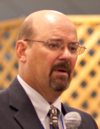
Bercham
A couple of things: One was my own faith, and the faith of other people at the Catholic Youth Center, had been reinvigorated. I grew up Catholic and went to Catholic grade school and Catholic high school, got excellent instruction but I don’t know that I made my faith my own until I was finishing high school and into college, where it clicked internally.
All of a sudden I began to experience God’s presence, that he was alive, that he loved me, he had a plan for my life. The Scriptures kind of came alive. The things I had to learn growing up, now, I had someplace to hang them. They became meaningful. Along with that renewal of faith, came this desire — I want to show this to other people.
I had majored in social work in college with the intention of helping people solve problems. I realized that we spend a lot of time, as a society, trying to deal with problems after they occurred and not as much time trying to prevent problems.
One of the things I came to see working with young people is that young people who discover that God loves them, who grab onto their dignity as a person, who belong to an active or strong faith community, they tend to do better in life with other things.
It was my interest in faith and spreading faith and my desire to help people — especially young people — that kind of intersected.
I found myself at the Catholic Youth Center as part of the retreat team, doing retreats locally.
A lot of parishes would bus kids up to the old CYC on Smith Avenue for retreats. Over a period of time some of them said, “Would you ever send a team out to our town, rather than us busing our kids up?”
We started doing that. One of the staff would take a group of college volunteers and go down to Winona, or Sioux Falls [S.D.] or Rochester or Albert Lea, conduct a retreat and come back to the Twin Cities.
I was one of the new guys on staff, so, guess who got asked to do a lot of the traveling? After doing that for a couple of years, one day, I took out a map and made X’s on all these little towns I visited.
I said to the director that it would be more efficient if we got a team together to go down to Winona and do all these retreats consecutively and then come back. I wasn’t trying to start something. I was just looking for a way to make life a little easier.
In January 1980, I took 11 college students down to the diocese of Winona and we did 16 retreats in 21 days – we weren’t trying to start something. We just did it. We got back and the people in Winona said, “that was great, will you do it again next year” and I said, “absolutely.”
We got a call from bishop Dudley in Sioux Falls — “will you come and do that in Sioux Falls?” Another week went by and I got a call from a priest in Fargo – a priest named Bernie Pfau – he said, “you don’t know me but I heard what you did in Winona, will you come and do that in Fargo?”
In January 1981, we sent out three teams just for the month.
I went to Winona, someone else went to Sioux Falls, someone when to Fargo. As we were debriefing, evaluating and praying it was like a light bulb went off. Wouldn’t it be cool if we could do this for the whole year? As a young man, I remember praying “God, if you will give me the help I need to put together a team that can go out for a year, I’ll consider my life to be successful.”
I thought it would take years. Within nine months, the first team was trained and sent out – mainly in the Midwest, though we scoop down to Louisiana.
The first year we sent out an advertisement across the country
Very few people took us up on it. That was the last time that we advertised. It’s all been word of mouth and people calling us to say “can we get a team to come to our area?”
The first year, we were in nine dioceses. Now we’re in 90-plus, each year, that the teams will visit. It’s been exciting. I get to see every year, over 100 young adults who love Christ – they are proud to be Catholic. They want to serve. They think they can change the world and all I need to do is give them an opportunity, some training and guidance.
You mentioned earlier, it’s like the first apostles, they want to go out and do mission and they know when they come here that they may be sent anyplace. They all hope they get sent to California or Florida or someplace more exotic. But they get sent to rural North Dakota or Nebraska or small town USA and they come saying “I’ll go wherever you send me. I want to serve, I want to share my faith, I want to help other young people discover what I’ve discovered — that God is alive and interested.”
It’s contagious being around young people of faith.

You seem to have had a favorable response doing retreats in southern Minnesota. Did you expect that? What do you think accounted for the success?

I don’t know if I had great expectations because there was so much unknown. We were excited and I thought we had something valuable to share.
It was prior to John Paul II and the new evangelization. Now, there is a lot of talk about the new evangelization — back in the early ’80s, not so much. One thing we got asked all the time is, “Are you Catholic.” The notion of Catholic people going out and directly sharing their faith with other people, it wasn’t part of our world view, although, historically, that’s always been the Catholic world view.
At that period of time people thought faith was a private thing.
Here we were — a group of young people traveling around with a couple of guitars and a lot of energy and talking about Jesus — and it caught people off guard.
The first retreat we did in January 1980 was at Winona Cotter High School and we were scheduled to do a retreat every day of the week – seniors, juniors then the sophomores.
When we got there, the school principal, the head of the religion department and a bunch of people wanted to talk with us about what we were going to do and what would happen. I tried to answer them to the best of my ability. It was kind of planned out, but at the time I had a master’s degree in social work but I didn’t have any formal training in theology. I’ve since gone back and got some. I realized that as I answered their questions, I wasn’t satisfying their concerns. At one point I said, “I’m not answering all your concerns. Let us do the retreat tomorrow and if you like us we’ll stay and if you don’t we’ll leave,” which was a really stupid thing to say. I’d talked 11 college students into giving up their J term to come and do this.
We did the retreat and there was nothing unusual about the retreat. Young people shared about God’s love, there were talks, small groups, faith testimonies, praying with the kids, had Mass.
The retreat was over and we cleaned up and went to have a meeting with the school authorities. Before the meeting was to begin, the receptionist knocks on the door and beckons the principal to come over and whispers something to him. He comes back over and says she had already gotten three phone calls wanting to know what happened today at school. Parents said, “This is the most excited my son or daughter has ever been about their faith.” That was the end of the meeting. He said, “you can stay.”
Because it was so novel, there were a lot of questions they had.
We weren’t a well-oiled machine then. Now, we have a lot more things in place and prep material we send out. Then, it was an adventure. I think in the early years, God protected us from our ignorance. I think there’s a special grace the first couple of years where things that could have gone wrong didn’t go wrong. After a few years I think God said OK now you’ve got some experience start using your head. Start writing some stuff down.

Was it a challenge to convince pastors, bishops and others about the value of this ministry?

The challenge was that it was new and people had to break out of their mindset of how you do ministry with young people.
What was working in our favor was a lot of bishops, priests and so on would look around church on Sunday and not see too many young people. When they had a NET retreat and they saw the excitement that the retreatants left with, they said, “I like the end results.”
Jesus says, “you’ll be known by your fruit.” That was what was convincing. Kids were energized about their faith. They wanted to get back involved in church. That’s a good thing. That was really the key to our growth — the positive results. And it was contagious.
Shortly after we got started, along comes John Paul and he starts talking about the new evangelization and evangelization became more normative and a part of our everyday vocabulary. Then when we talked about the national evangelization teams, they go “I get it.” The first couple of years evangelization was treated like “that is an evangelical word, not a Catholic word.”

Tell me about the people who helped support you.

When we started Archbishop John Roach was archbishop here. He gave us enough support to get started. I took it as let’s see what happens. As it looked like it was gaining traction, he asked Bishop [now Archbishop] Robert Carlson to get involved and so bishop Carlson became the first president of our board. I worked with now Archbishop Carlson for many years and he was a great help, very encouraging. He gave us some good guidance. He walked with us from moving from the St. Paul CYC, to Brady High School, to getting this property. He was instrumental with helping me with the purchase of this property and a subsequent addition to the back. We bought this and there was no place to sleep people so we added dorms for 144 and a large meeting room. That all happened when Bishop Carlson was president of the board.
When Archbishop Harry Flynn came he was wonderful, very pastoral, great with young people. I asked him to do a lot and he was extremely accommodating, coming to the commissioning Mass to commission the teams at the beginning of the year. He would host a lunch for us with the U.S. bishops in Baltimore. He would help with a fundraising thing in Naples, Fla., a fundraising thing here. He would come to a thanksgiving Mass with the team members, come to a Lifeline event, talk about vocations, plus he served as president of the board for a couple of board meetings. He was very involved.
Archbishop John Nienstedt has followed suit. He is equally involved and he’s been great and has done many of the same things that I just mentioned about Archbishop Flynn. He will keynote our banquet. He will preside at the public anniversary celebration at St. Joe. He’s been great. He’s been very supportive. We’ve been very fortunate that all the bishops, locally, that have been involved have been very generous in giving of their time with all sorts of different events. I think that carries over to the bishops across the country. A good word from one of the bishops here helps other bishops to see that “these are good people, let’s have them in our diocese as well.”

What else does net offer young people, today?

I want to talk about the teams first. The core of NET, the bread and butter, if you will, has been the NET teams that go out and conduct the evangelistic retreats across the country. This year, we have seven teams traveling around the U.S. in 90-plus dioceses, and their main ministry is just doing retreat work with the Catholic young people.
We have one team that stays here in the archdiocese and does retreat work here for the young people in the parishes and high school as well as assists in our monthly Lifeline, our youth Mass.
So, once a month we have a youth Mass here, the first Saturday of the month we have Mass, a little break and some kind of presentation geared to helping young people with their faith and daily life. That’s attended by 1,000-plus young people every month. It’s exciting. The gym is packed. It’s lively. The music is reverent but lively. It’s amazing — at the moment of consecration you will have 1,000 young people on their knees on a hard gym floor and it will be totally silent, focused on what is happening on the altar.
It’s very impressive. It’s one of those things you wish you could invite more people to see, because people think young people aren’t interested in their faith. It’s there; we just have to do a better job of making it available to them.
We have two teams that work strictly in parishes. This is a relatively recent development. About six years ago we started an experiment with Divine Mercy Catholic Church in Faribault. We had a team dedicated entirely to that one parish. Rather than doing retreat work, they went out and made contact with every young person who was no longer involved. Anybody who got confirmed and wasn’t going to youth group, our team members found, and talked with them, met with them, went out to their school, went to their sporting events, went to their concerts, went to the youth hangouts, established a relationship and looked for ways to invite them to re-engage with their faith. At the same time, we worked with some of the kids who were involved in the parish to mentor and disciple them to become the leaders in the parish program.
We come into a parish and make a three year commitment — the idea is get the young people who aren’t involved, get them re-engaged — let’s fortify the youth program and let’s train up the young people involved here to carry it on once the team is done. We’ve been at Divine Mercy, at St. Michael in St. Michael, we are finishing our third year at St. Elizabeth Ann Seton in Hastings. We’re finishing our second year at All Saints in Lakeville.
The last team works full time at Providence Academy. We’ve started inserting a team into a high school as part of the campus ministry program. They do a lot of the same work as they would in the parish, but now it’s in the high school setting. They are doing a lot of relational ministry, trying to connect young people and students that have been involved to get them more involved. We go into some of their classes. We’ll sit in their theology classes and listen to the same lecture and carry the conversation out into the hallway and they’ll have a chance to process it more. We go to some of the sporting events and other things. We run small groups. We run bible studies. We have faith sharing groups so young people can meet in small groups with team members to grow in their faith. We have extra time for communal prayer in the chapel.
Those are some of the newer things working in the parishes and high schools.
Besides the NET team, we have Lifeline, the monthly youth Mass for young people in our area.
We run a gathering for youth ministers. It’s a monthly morning for people working with youth, we provide some training and support for them in their role as youth workers.
In the summer, we run Discipleship Week, which is a four-to-five-day to a week-long retreat. It’s a follow-up for kids who have been on a retreat. It’s geared to help a person develop some of the daily practices you need to live your faith, like how to pray, how to make prayer time, understanding the sacraments, how to live a chaste life when you’re 16-17. It’s geared for young people who’ve experienced an initial conversion; they’re living their faith but they are looking for more hands-on help. Those are held here, in northern Minnesota, one in Texas and one in California.

How does NET embody the call to new evangelization?

One of the main tenents that John Paul offered was that the new evangelization isn’t a new message, it’s the message that has been saving people for 2,000 years, but presented with new methods and new vitality. I think that’s what NET does.
It’s a peer to peer ministry. It’s young people sharing with young people about their faith. Obviously it comes with high energy because young people come with high energy. We take the basic Gospel message that the church has been handing down for 2,000 years and we put that in language that a young person can understand. One of the keys for us is that we invite young people to make a response. We invite them to entrust their life in Christ, to pray for grace to understand God’s love more. It’s not just throwing out the message and hoping it sticks. You present the message, but you invite a response on the part of the young person
Young people need to be encouraged and coached on here’s how you respond to God, here’s how you pray, here’s how you can entrust your life to God. They just need a little bit of help. You can’t just say to them, you should pray.
One of the ways we embody the new evangelization is the call to present the consistent message of the church in a new way and with new vitality.
The second way we embody it is John Paul’s call to us was to start with the people in the pew. When we talk about the new evangelization, we’re not talking about going out to people who never heard about Christ. Let’s present the Gospel to people who have been born Catholic, raised Catholic, but for a variety of reasons have quit practicing. It’s going back and starting with our own and reinvigorating their faith. That’s where we work. We work with primarily Catholic young people in parishes and schools.
A third way we embody the new evangelization goes back to Paul VI. Paul VI said: “Is there any more effective way to evangelize then by having one person share with another person their experience of Christ.” That’s what the NET teams are doing. It’s a young person who is 18, 19, 20-22, sitting down with someone who is 13, 14 and 15 and sharing how “God has worked in my life. This is why I’m following Christ; this is why I’m Catholic. It’s worth it and I invite you to do the same thing.”
It’s that person-to-person transmittal of our faith story and that invitation to join the family.
Those are 3 ways we embody the new evangelization.

What are you most proud of regarding NET Ministries?

Changed lives. One of the things we hear a lot from young people on retreat is “I never knew there were other kids that believed this.” There are a lot of young people who have faith handed down from their parents but they often feel they are the only one. When they realize there are other young people, it gives them a new found confidence, a new found courage.
One of the most profound experiences for me, early on, is when we were at a retreat and there was a young man there who had a deformity in his forehead. It was wavy. He was the butt of a lot of teasing, a lot of jokes. Unbeknownst to us, he brought with him a weapon. It was a piece of metal shaped like a “t.”
You grab it and it pokes out for punching – it was the early ’80s. He had decided that the next kid that made a comment about his forehead, he was going to beat up. We didn’t know any of this.
The retreat was focused on God’s love and self-image and our dignity. He listened to the talks, was part of the small groups, saw one or two dramas, and was prayed with.
When the retreat ended, he walked up to me and took that metal weapon, handed it to me and said, “I don’t need this anymore.”
He said he realized on this retreat that “God loves me just the way I am and I don’t need to lash out at people because they tease me.”
It made me realize that we don’t know what hurts and junk a young person carries in with them when they come on retreat. But we do know that whatever it is, the message of God’s love and mercy can begin to give that young person freedom, can give them healing and hope, that whatever junk they are carrying because of their past life, or past activities or bad families or no friends, that Christ can begin to take that away from them.
I think about that incident every year we train the teams. We won’t know the junk these kids have when we start with them. We may find out because they may tell us. We do know the power of God. The love of God can answer the challenge those young people  have.
It has also been exciting for me to see what our team members do after they leave NET. We have team members teaching at the seminary here in St. Paul: Father Thomas Margevicius, Father Andrew Cozzens, Father Michael Becker, the rector of SJV, Bill Dill at the archdiocese’s office of Marriage and Family and Life.
At our 30th anniversary we will honor three alumni – Gordy DeMarais, founder of St. Paul’s Outreach; John Bolieau, director of the youth office at Franciscan University in Steubenville, Ohio; Sister Consolata, vocations director for the Sisters of St. Francis of the Martyr St. George. We could pick from hundreds of alumni who have continued to serve the church in all sorts of different ways and are committed to the new evangelization — the new springtime that John Paul talked about. I’ve seen the first fruits of that springtime in what our alumni are doing. Most of them don’t go into full-time ministry. Most of them get married and are raising beautiful families. I’m starting to get second generation kids now on NET. For the last four years, we’ve have kids whose parents have served with NET. This year, we have three kids whose parents served on the first team. That’s pretty exciting.
There’s more to do. Each year we reach 60,000 or 70,000 young people but that’s a drop in the bucket compared to how many young people there are in the United States.
As we move forward we want to put more teams on the road, we want to recruit more young people to serve. We want to touch more parishes. One thing we are looking seriously about is offices in other parts of the country to make our work more efficient and effective in the local area. One reason we can do more here in the archdiocese is because we office here, we have a team based here. So, we’d like to replicate that in other parts of the country, have a small office and another team in another locale so they can do the NET retreat, but also help develop some of the local programming we are able to do here.

What are the challenges fro NET today?

I think the greatest challenge. There’s always more to do then there are resources to do it. For us the challenge is can we recruit more and more team members and then can we support them.
If someone would say, what do you need to do more ministry? I’d say, I need more people, I need more money – it’s both. Need more vans, more insurance, more training.

Any new things for NET in the next five to 10 years?

We’d like to expand the number of parish teams, increase the overall number of teams, establish some satellite offices.
We are always open to the possibility of helping other countries get started. We’ve replicated NET in Canada and Australia. They’ve gone on and replicated NET in Ireland and Uganda.
That’s something we are open and excited about.
I look at it and scratch my head and say “how did this happen?”
I’ve had the privilege of working with young people and a super, dedicated staff – a lot have been with me 10 and 20 years.
The board of directors has been great. Benefactors have been great. People that support us have been great. We have people that have been donating to us for 25 years. Others have made significant contributions. It’s a whole flood of families.
The host families, in the course of a year, 1,000 families across the country will house our teams. If we had to find hotel space and restaurants, it would be an astronomical cost. People have opened their homes and taken in two or three members a night. Team members then get to experience what Catholic family life looks like. The families love having 18-20 year-olds who are excited about their faith and they hope it rubs off on the kids they have in the house.

What was reasoning behind parish and school teams?

We serve in hundreds of parishes across the country. One of our observations is that the effectiveness of parish youth ministry is varied. Some parishes do a very good job. A lot don’t do well at all. It’s our observation that there is a huge drop-off in parish youth involvement after confirmation. Kids are involved during confirmation preparatory phases and 80 or 90 percent are then no longer active. We’re looking at what we can do to reverse that.
What many parishes are doing now is not connecting with young people. Can we help with what we’ve learned over three decades and apply that into a parish situation and help create a re-invigorated model of what parish youth ministry should look like?
That’s our hope — to help parishes light a fire with their young people and with their parish to be a strong inviting place for young people to get involved and to stay involved.
Most people make their lifelong faith decisions while they are teenagers. The teenagers that decide to not remain involved — most aren’t making a decisive decision, they are just drifting away. By focusing our efforts in some select parishes, we can help the broader church keep our young people engaged during those formative years, while they are making those lifelong decisions, whether they are going to live as a Christian and in the Catholic community.

Youth have always been a difficult group to attract. What does NET and the church need to do to attract and evangelize them?

A couple of things – one is to share the basic Gospel message unashamedly. We don’t need to sugar coat the Gospel We don’t need gimmicks We don’t need trickery. Young people are looking for something to base their life on. Today’s generation is looking at my generation, those of us who were products of the sexual revolution. We’re post Vatican II. Many of us weren’t catechized and they are looking at our life and saying “you don’t look all that happy.” Maybe, the casting off of faith and loosening of social morals is not the way to go. Maybe there is something else.
They are looking for something solid. I think we have that to offer as a church. We have the message of Christ. We have a faith community. We have to present it in a way that is straightforward, attractive. We use youthful means so if you come to a Lifeline Mass, the music will be more upbeat. We use drama as a way to help communicate. Young people listen with their eyes. Presenting the Gospel visually is important. The witness of faith being lived out is huge. Young people need to see us living out our faith. They should see that it makes a difference.
One of the most effective things NET does is just the witness of the team’s life. You see people in their 20s that are respectful and courteous and serve one another and love one another and they say “that’s not my experience of friendship.” It’s communicating the Gospel in word and in picture by shared life, using drama or social media. I think it’s critical.
Those of us who are older need to make sure we make room for young people. They are going to do things differently, but that’s OK. As we get older, we tend to get conservative, not risk-takers and it bugs us when young people do something more adventuresome. We need to make room for that to be involved.
If loud music gets them in, God has a chance to work on them.
What do you say about the people who want to keep the music and liturgy more conservative?
I think there’s a balance. One of the things that happened after Vatican II is we put on the shelf a lot of our traditional, pious  practices, like adoration, the rosary, stations of the cross, pious prayers. There is a certain attraction for young people with some things that are ancient, that are traditional. Reviving some of these lost devotional practices won’t drive young people away. It can be a part of their spirituality.
Where we get in trouble is when we try to make one thing the whole thing. The church has a treasure chest of pietistic practices.
We want to expose people to a variety of ways we can connect with Christ and support them in the ways they can connect to Christ. If a person experiences their faith coming alive through a Marian devotion, that’s a good thing. We should encourage that. Another young person may experience their faith coming alive in more expressive praise and worship. That’s a good thing. They are both legitimate. The way we get in trouble is when we try to say the way I experience my faith is the way you have to experience your faith. We don’t want to be afraid to share with young people the ancient treasures of the church.
If young people are looking to connect with the sacred, we have to give them opportunities to do that. Adoration is a chance to do that. It can happen at liturgy. It also can happen on a mission trip in the woods. I get nervous when somebody says we have to do it this way for everybody.
As long as we stay within the bounds, we need to be familiar with different avenues. They all lean to the same place. We get to a commitment to Christ. We get to a decision to live the Catholic faith. We get to the point of being part of the faith community. That is what we are aiming for. Which path we travel is less important than where we get to with our young people.

View more stories from the Catholic Spirit's NET Ministries Special Section!

Friday, April 27, 2012

And you thought the book "Nineteen Eighty-Four" was a novelty book indicting fascism and communism.

.
"Nineteen Eighty-Four" is actually a major work of prophecy.

Professors at Georgetown University, nominally Catholic, don't want to permit Congressman Paul Ryan speak on their Jesuit, nominally Catholic campus because their interpretation of legislation he endorses is in their opinion "anti-poor people."

I find it incredible that lefties don't want to permit freedom of speech at universities. They only want to be exposed to things that they already agree with.

They want to turn our beloved country into one much like in Orwell's "Nineteen Eighty-Four", where the scene is the country of Oceania, where NewSpeak and ThoughtCrime rule the language ["Truth is doubleplus ungood!!!], camera surveillance is everywhere, the Ministry of Truth handles censorship and the Ministry of Peace manages the perpetual war. Have you NOT noticed that Obama has had several wars already in his less than four years?

I once thought that the book Nineteen Eighty-Four would disappear from the public's awareness. But it has become a major book of prophecy under Obama and his Party apparatchiks. I LOVE BIG BROTHER!!!!!

Thursday, April 26, 2012

Defend the sanctity of marriage at the 65th Annual Archdiocesan Family Rosary Procession

.
Archbishop Nienstedt will not be able to participate
in the Rosary Procession due to a previous commitment.
Taking the archbishop’s place will be Auxiliary Bishop Most Rev. Lee Piché.

Join the Minnesota Catholic Conference in a Rosary Procession for Marriage
Defend the sanctity of marriage at the 65th Annual Archdiocesan Family Rosary Procession (PDF flier)
“As the family goes, so goes the nation and so goes the whole world in which we live.”
—Blessed John Paul II
May Rosary Procession

On May 6, join Archbishop Nienstedt, priests, and faithful from around the Archdiocese and the state of Minnesota at 2:00 p.m. for a rosary procession from the State Capitol to the Cathedral of St. Paul.
What: Archdiocesan Family Rosary ProcessionWhen: Sunday, May 6—gather at 1:30 p.m. at State Capitol, procession begins at 2:00 p.m.Where: Minnesota State CapitolAddress: 75 Rev. Dr. Martin Luther King Jr. Blvd., St. Paul MN 55155 (Map)
***
This year’s Family Rosary Procession is being offered for the grace and courage to defend marriage as between one man and one woman in a lifelong, exclusive relationship of loving trust, compassion, and generosity, open to the conception of children.
Inside the Cathedral, we will offer prayers for marriage and the family, and will close with Adoration and Benediction of the Most Blessed Sacrament.
Special guest Fr. James Kelleher, SOLT of the Eucharistic Family Rosary Crusade (www.eucharisticfamilyrosary.com) will be in attendance.
Come give public witness to our Catholic faith during the month of May, dedicated to our Blessed Mother. Assemble at the Capitol at 1:30 p.m.; the procession begins at 2:00 p.m. We look forward to seeing you there!
***

The Rosary Processions are sponsored by the Office of Worship for the Archdiocese of St. Paul and Minneapolis in collaboration with the Family Rosary Processions Association (
http://www.archspm.org/news-events/events-detail.php?intResourceID=5419).
For more information, please see the PDF flier above.

Marriage: Feminine Slavery or Fulfillment of her Liberation?

.
(by Theresa)

The first wave of feminism at the turn of the century and the early 1900s supported women's equality, wanted to give women the right to vote, and sought to elevate everything feminine. The second wave of feminism around the 1960s pushed forward the plight of women's equality, but there was one very significant divergence from the earlier feminists.

There is a tragically brilliant movie called "Mona Lisa Smile"starring Julia Roberts (2003) that illustrates what I believe is the very crux of this "liberal feminists" divergence. In the movie, Roberts plays a teacher in the 1950s who challenges her female students at a prestigious private college to question "the system. etc.; While watching the film, a woman is moved to rally behind the teacher (even though most of the students in the film resist). And then you see it: the school nurse is giving out the newly created birth control pills to any girl who asks for them. The biggest problem of the feminism of the 1960s is that it happened in the 1960s. The sexual revolution was supposed to free women, to liberate them. (Liberate them from what exactly? Hmmmm We'll get to that.) As much as it saddens my heart to watch, the film perfectly and accurately portrays the reality of what occurred: the fused intertwining between the feminist movement and the sexual revolution. And therein lays the fracture between the first- and second-wave feminists.

Are our bodies really not relevant?

What spurred on this divergence from the earlier feminists was a mindset that our very bodies and our partaking in child birth and child rearing is in itself oppressive to women. They believed (stemming from their own interpretation of Marxist philosophy) that our bodies were not part of our nature. Thinking this way, what you did with the body did not matter. The sexual revolution and birth control pill allowed women to "have sex as men do" and completely disconnect it from any responsibility.

Despite the divergence, the over-arching goal of feminism is the same. "liberal" and "conservative" feminists alike want a society where women are respected as much as men are. It would be a society in which women are highly valued, not objectified (nor used) and are not left to handle the child-rearing alone. Instead, the childrearing would be shared between men and women. It would be a society where women feel free to be themselves and choose any career they wish. The world would praise, support and encourage her to choose her destiny and never block that path nor demean her in any way.

As Christians, we believe that we were made in the image and likeness of God. Instead of our bodies and their sexual expression being irrelevant to who we are, we believe that our bodies are intrinsic to who we are. We are not some vague, non-gender being. We do not want our femininity stripped away from us, but elevated.

We see this truth come to the surface as statistics confirm that "having sex like a man" is unfulfilling to and depressing women. Generally, men experience sex more physically and women experience it more emotionally. Thus, sexual activity for recreation sake without the personal attachment or long commitment slowly eats away at the heart of the woman.


Sexual freedom vs. chastity

Yet, sexual freedom continues to be a rallying cry of liberal feminism. Which scenario is more supportive and honoring of a woman? This first is a young lady who has sexual relationships throughout high school, feels emotionally empty and used, and reaches a point at 18 where she must choose between having a baby or aborting that baby (both options seem horrid to her). The second scenario is a young lady who does not engage in sexual activity and has boyfriends, but retains her chastity, thereby maintaining her self-respect and joy. She meets a boy in college who has waited as well and they get married after they graduate. She is 22 and pregnant. She is overjoyed. She knows she will never have to face parenting alone. She knows that if her husband could control his sexual passion all this time, then he will be able to be faithful to her and love her respectfully and deeply.

The role of marriage in women's liberation

Perhaps when seeking women's liberation, we threw out the baby with the bath water. Marriage and lifelong, monogamous sexual intimacy is not the prison of feminine slavery that it was thought to be. If there was indeed a problem of only allowing women to stay at home, the solution was not to destroy the home. A truly feminist approach would have honored and supported equality whatever choice women chose.

Liberal feminists speak of this ideal society where women are completely respected and men share in child-rearing. Yet, they kick to the curb the one institution that protects women from being exploited and used, and demands men to become responsible: marriage.

Marriage is the key to women's true equality and liberation, not their oppression. Authentic, self-giving marriage creates for her a place of respect, assuring that her sexuality will not merely be used for another's pleasure but will be honored and cherished. This understanding of marriage demands that a man be compelled to participate in child-rearing.

As the state of marriage deteriorates (from the destruction of the nature of marriage as well as the frequency of divorce), woman's true equality lessens. She is objectified and picked apart, judged by her body and her looks, and left alone to raise the next generation. It is common knowledge that single mothers and children disproportionately suffer from poverty in this country. A society without strong marriages is not a place of equality for women, but a place that perpetuates women's degradation.

If we are seeking a society that respects women and demands that men share the burden of child-rearing, self-proclaimed liberal feminists must finally open their eyes. If they do, they will see that the stone they have rejected must become the cornerstone of the ideal society they claim to be promoting.


About Theresa

Wife, mother of four boys, author, artist and New Feminism Rising blogger (newfeminismrising.com). She loves the way God uses family life to stretch her, but also the way good healthy food shrinks her down again. Originally from New Orleans, she's a southern belle bringing a little warmth to Minnesota.

View all posts by Theresa →


Whew. I got my old Blogger back while I try to learn the new Blogger

Sorry for my long absence. I was quite sick for the first three months of this year, bronchitis, etc.

I'm much better now, but still mending.

Ray

Tuesday, April 3, 2012

Sandro Magister’s list of sites on Churches and religions

Sorry for the huge gap in posting. Pretty much from January through the end of March was laid up with COPD (Chronic Obstructive Pulmonary Disease) and hospitalized for 7 days in early March. Ray Marshall

Sandro Magister’s list of sites on Churches and religions

Resource page updated April 3, 2012. With two new additions: "Doctrina fidei," with all of the documents of the congregation for the doctrine of the faith, and the CCEO, the code of canons of the Eastern Churches


> The Bible
. Text and hypertext of the Hebrew-Christian Sacred Scriptures.

> Nova Vulgata. The Bible in Latin, in the revised official version based on Saint Jerome's translation.

> Documenta Catholica Omnia. A gold mine of 20,000 texts by popes, councils, fathers, and doctors of the Church. In their original versions and translations.

> Holy See. The official site of the pope and his curia. News, speeches, travels, documents.

> Doctrina fidei. All of the documents of the congregation for the doctrine of the faith

> Vatican City. The pontifical state as it is today. Institutions, services, monuments.

> Vatican Museums. Tours, Exhibitions, events.

> Dioceses and bishops. The who's who of the Catholic hierarchy in the world. Edited by David M. Cheney.

> Cardinals. The who's who of red hats, indexed from 1605. Edited by Salvador Miranda.

> Catechism of the Catholic Church. The full-length edition of the Catechism.

> Code of Canon Law. The laws that govern the Latin Catholic Church.

> CCEO. The code that regulates the Eastern-rite Catholic Churches .

> Documents of the II Vatican Council. The constitutions, declarations, decrees of the great assembly.

> The Pew Forum on Religion & Public Life. The most up-to-date research studies on the public role of religion. From Washington, directed by Luis Lugo.

> Aid to the Church in Need. An organization founded by Fr. Werenfried van Straaten. With an annual report on religious liberty, country by country.

> Caritas Internationalis. A network of Catholic relief organisations, in more than 200 countries.

> Latin America. The portal for Catholics of the subcontinent.

> American Religion Data. Statistics on religions in the U.S.

> USCCB. United States Conference of Catholic Bishops.

> Ethics and Public Policy Center. The think-tank of George Weigel.

> Acton Institute. The think-tank of Fr. Robert A. Sirico.

> CEI. The Italian bishops’ conference.

> Cultural project. For an encounter between Christianity and modernity. Conceived by Cardinal Camillo Ruini.

> Communion and Liberation. The international website of the movement founded by Fr. Luigi Giussani.

> Opus Dei. Official site of the followers of St. Escrivá de Balaguer.

> Order of Malta. Order of St. John of Jerusalem, of Rhodes, and of Malta official site.

> Legionaries of Christ. The movement founded by p. Marcial Maciel.

> Focolare. The movement founded by Chiara Lubich.

> Neocatechumenal Way. The Way founded by Kiko Argüello and Carmen Hernández.

> Sant'Egidio. The community directed by Andrea Riccardi.

> Jesuits. The Company of Jesus in the United States.

> Dominicans. The Order of Preachers.

> We Are Church. International movement for married priests, women priests, etc.

> Priestly Society of Saint Pius X. Website of the followers of Archbishop Marcel Lefebvre.

> Mater Boni Consilii Institute. Fellowship of sedevacantists founded by Fr. M.-L. Guérard des Lauriers.

> Lourdes. The official site of Lourdes.

> Vailankanni. The Lourdes of India.

> World Council of Churches. Forum for the Protestant and Orthodox Christian Churches.

> Ecumenical Patriarchate. The patriarchate of Costantinople.

> Moscow Patriarchate. News and documents on the Russian Orthodox Church.

> Mount Athos. The sacred mountain of Orthodoxy.

> Copts. The Coptic Church of Egypt.

> The Lutheran World Federation. The Churches that sprang from Luther.

> World Alliance of Reformed Churches. Churches of Calvinist character.

> Anglican Communion. Official website of the Anglican Church.

> Baptist World Alliance Association of Baptist Churches.

> World Methodist Council. Federation of Methodist Churches.

> Quakers. The Society of Friends.

> Mormons. Or more properly: the Church of Jesus Christ of the Latter Day Saints.

> Jehovah's Witnesses. Official information site of the Witnesses.

> Judaism. A repertory of links on Judaism throughout the world.

> Torah. The Hebrew Bible. Text and commentary for the five books of Moses.

> Custody of the Holy Land. The official website of the Christian sites in Jerusalem and the Middle East.

> The Koran. The holy book of Islam.

> Ismaili Muslims. The website of Aga Khan Network.

> Dalai Lama. Official site of Tibetan Buddhism.

> Falun Dafa. Spiritual movement born in China, with millions of followers.

> CESNUR. Center for Studies on New Religions, directed by Massimo Introvigne.

Sunday, February 26, 2012

Archbishop Vlazny of Portland, OR, former Bishop of Winona, to Retire

Archbishop Vlazny turns 75 today and will be sending
his mandatory resignation letter to the Pope

Archbishop John G. Vlazny

Archbishop John G. Vlazny


Born in Chicago February 22, 1937, Archbishop Vlazny attended Quigley Preparatory Seminary in Chicago and St. Mary of the Lake Seminary, Mundelein, IL., where he received a Bachelor of Arts degree in 1958. He attended the North American College and the Pontifical Gregorian University in Rome earning Sacred Theology Bachelor degree in 1960 and a Sacred Theology Licentiate degree in 1962. He later earned a Master of Arts degree in the Classics from the University of Michigan in 1967, and a Master of Education degree in School Administration from Loyola University, Chicago, in 1972. Archbishop Vlazny was awarded an Honorary Doctor of Ministry degree from St. Mary's University, Winona, in 1998, an Honorary Doctor of Laws degree from the University of Portland, Portland, OR, 1999, and an Honorary Doctor of Theology degree from Mount Angel Seminary in 2010.

He was ordained a priest at St. Peter's Basilica, Rome, on December 20, 1961. As a priest of the Archdiocese of Chicago, Father Vlazny served as Associate Pastor in five parishes between 1962 and 1979. At the same time he served on the faculty of Quigley Preparatory North in Chicago from 1963 to 1979. He was Dean of Studies at Quigley Preparatory North from 1969 - 1979.

Father Vlazny was President of the Presbyteral Senate for the Archdiocese of Chicago 1976 to 1977. He was appointed Pastor of St. Aloysius Parish in Chicago, where he served from 1979 - 1981. He was appointed Rector of Niles College Seminary in 1981, and served in that position until 1983.

He was named a Bishop by Pope John Paul II, and was ordained an Auxiliary Bishop of Chicago at Holy Name Cathedral, Chicago, on December 13, 1983. As Auxiliary Bishop, he served as Episcopal Vicar for Lake County and Northwestern Suburban Cook County. He was appointed Bishop of Winona, MN., by Pope John Paul II on May 19, 1987, and was installed as the sixth Bishop of Winona on July 29, 1987. On October 28, 1997 he was appointed the tenth Archbishop of Portland in Oregon.

Archbishop Vlazny previously served on United States Conference of Catholic Bishops (previously National Conference of Catholic Bishops) committees:
Chairman of the NCCB Vocations Committee,
Chairman of the NCCB Committee on Evangelization,
Chairman of USCCB Committee on University Presidents and
Bishops,
Chairman of USCCB Committee on Women in Society and in the Church,
Chairman of USCCB Committee on the Economic Concerns of the Holy See,
Chairman of the USCCB Committee on National Collections
Member of the USCCB Administrative Committee
Member of the Committee on Migration and Refugee Services,
Member of the NCCB Priestly Formation Committee,
Member of the NCCB Subcommittee on the Millennium,
Member of the NCCB Committee on Consecrated Life,
Member of the USCCB Committee for the North American College in Rome,
Member of the USCCB Committee for Hispanic Affairs,
Member of the USCCB Committee on the Relationship between
Eastern and Latin Catholic Churches,
Member of the USCCB Committee on Catechesis,
Member of the USCCB Committee on Diocesan Audits,
Member of the USCCB Committee on Conciliation and Arbitration
Member of the USCCB Committee on Shrines
Member of the USCCB Task Force on Faith Formation & Sacramental Practice
Consultant, USCCB Committee on African-American Catholics
Consultant to the USCCB Committee on Divine Worship

Chairman, Region XII Catholic Bishops

Other Episcopal Services:
Member of the board of Sacred Heart School of Theology, Hales
Corner, WI (1985 - 1994),
Member of the board of the Catholic Communications foundation
(1989 - 2007),
Chairman of the Board of Oregon Catholic Press (1997 - Present),
Chairman of the Board, Oregon Catholic Conference
(1997 - Present),
Member of the Board of Directors, Mt. Angel Seminary,
St. Benedict, OR (2000 - Present),
Episcopal Moderator, Catholic Cemetery Conference
(2000 - 2009),
Episcopal Liaison, National Council of Catholic Women
(2001 - 2006),
Trustee of the Catholic United Investment Trust, Christian Brothers Investment Service (2000 - 2007),
Member of the Board of Advisors, Erasmus Institute, Notre Dame University (2001 - 2006).

Coat of Arms Explained

Archbishop Vlazny's column in the
Catholic Sentinel

Archbishop Vlazny's Catholic Sentinel Columns on the Child Sexual Abuse Situation

Archdiocese of Portland, OR

Monday, February 20, 2012

Lent's coming this Wednesday; Fr. Z has some Confession Tips for You

.
Fr. Z’s 20 Tips For Making A Good Confession


We should…

1) …examine our consciences regularly and thoroughly;
2) …wait our turn in line patiently;
3) …come at the time confessions are scheduled, not a few minutes before they are to end;
4) …speak distinctly but never so loudly that we might be overheard;
5) …state our sins clearly and briefly without rambling;
6) …confess all mortal sins in number and kind;
7) …listen carefully to the advice the priest gives;
8) …confess our own sins and not someone else’s;
9) …carefully listen to and remember the penance and be sure to understand it;
10) …use a regular formula for confession so that it is familiar and comfortable;
11) …never be afraid to say something “embarrassing”… just say it;
12) …never worry that the priest thinks we are jerks…. he is usually impressed by our courage;
13) …never fear that the priest will not keep our confession secret… he is bound by the Seal;
14) …never confess “tendencies” or “struggles”… just sins;
15) …never leave the confessional before the priest has finished giving absolution;
16) …memorize an Act of Contrition;
17) …answer the priest’s questions briefly if he asks for a clarification;
18) …ask questions if we can’t understand what he means when he tells us something;
19) …keep in mind that sometimes priests can have bad days just like we do;
20) …remember that priests must go to confession too … they know what we are going through.


Saturday, February 4, 2012

Duluth woman wants to restore forgotten grotto's glory

.
.
When Robin Mainella looks at the fenced-in, rocky patch of land just west of the Observation Hill Children’s Center, she sees a piece of history, and more.

“This is definitely a sacred place,” the Duluth woman says as she looks up at an overgrown mound of rock once the site of the Grotto of Our Lady of Lourdes.

The rocky rise, snug up against city land that once was home of the Darling Observatory, belongs to Bill and Trish Irving, who own the day care center on West Third Street off Mesaba Avenue. East of the center is a privately owned home that used to be the St. Peter’s Church rectory, and east of that is the church itself, which was closed in late 2010.

In 1945, all of the land belonged to the church, which served Duluth’s “Little Italy,” but there was no rectory and no school building. And the church’s priest, Father John Zarrilli, had a vision for the rocky hill above the church. He wanted an appropriate welcome home for men from Duluth’s Italian community who had served the country in World War II. The shape of the mound inspired his vision of what that tribute would be. The stone masons who were part of the St. Peter’s parish gave him the means.

“The same stone masons who built the church … and Enger Tower built this,” said Mainella, 54. “The stone masons … took a picture of the grotto that’s in Lourdes, France, and they replicated it. And they did a darn good job.”

Soon, St. Peter’s Church had its own version of the Grotto of Our Lady of Lourdes. It imitated the grotto at the site where 14-year-old Bernadette Soubirous saw her first vision of the Virgin Mary on Feb. 11, 1858. The St. Peter’s grotto included a statue of Saint Bernadette kneeling and looking up at a statue of the Virgin Mary.

A time capsule in the cornerstone contained the names of the Italian-

Americans from Duluth who served in World War II. Seven of them didn’t come back, Mainella said. A bronze plaque had the words: “Dedicated to St. Peter’s Church boys and all Italian-American boys of Duluth who served in the Second World War 1941-1945. Erected in honor of Mary, the Queen of Peace, praying that she may implore a lasting peace for America and the world.”

A simple stone altar was built in front of the grotto. Before the school was built in 1959, St. Peter’s had outdoor Masses in front of the grotto, Mainella said.

The altar was visible earlier this week amid the overgrowth, mostly covered in snow. The statues, the bronze plaque and the time capsule all are gone. Mainella said she’s determined to find the time capsule, but she has no idea where it is.

The Irvings, who bought the property from other private owners in 1996, have seen it.

“Unfortunately, that disappeared with a group of people who came by a few years back,” Bill Irving said.

The Irvings don’t know the names of the people who came for the time capsule about a decade ago, but they understood them to be members of the Italian-American Club. Some of them may have been named in the time capsule, Bill Irving said. The plaque had been stored in their building’s basement since before they bought it, and the group took that as well, he added.

Mainella, whose links to the church go back three generations, said the time capsule never should have been removed. She also thinks the grotto should be restored. “It might not be able to be restored to the extent that some people might consider restoration,” she said. “It certainly could be cleaned up.”

Mainella said she’s willing to do much of the work herself. She also has peppered people involved in historic preservation and veterans issues with e-mails advocating the grotto’s restoration. The response has been tepid.

Dan Hartman, a Duluth city councilor who is program curator for Duluth Veterans Memorial Hall, said the city has numerous neglected or forgotten memorials. Veterans Memorial Hall would be happy to preserve archives of the grotto, he said, but that probably would be it.

“It’s kind of hard to tell how large a significance it had to the veterans community when it was there,” Hartman said. “It probably had more significance to the church. Most veterans today don’t even know it existed.”

Kyle Eller, spokesman for the Diocese of Duluth, said the diocese is favorable in general toward anything that enhances devotional life. But the diocese would be unlikely to take a position on restoring the grotto, he said.

The Irvings have allowed Mainella and others access to the property, but they’re wary of restoration talk.

“If we have to give up the rights to the property, I’m not in favor of that at all,” Bill Irving said. “If she’s going to make it into a historical site which precludes us from selling it, that ain’t going to happen.”

Mainella said she wouldn’t even know how to get the grotto designated as a historic site, although she is part of an effort to have the nearby church named a historic landmark.

“Maybe it just needs to be restored, cleaned up and enjoyed,” Mainella said. “It was beautiful, and it could be beautiful again.” Duluth News Tribune