Tuesday, December 27, 2011

Stained glass is a 'a way of sharing the faith' (dating to the times when most people couldn't read).

.

Stained glass at Peoria's St. Joseph Catholic Church 'a way of sharing the faith'


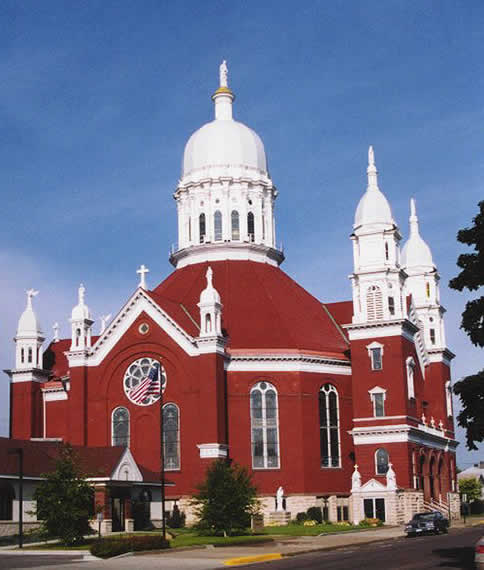
A congregation of German immigrants, members of St. Joseph Catholic Church had the building's stained glass windows made in Munich about 100 years ago. Some of the most magnificent stained glass windows in the area, the panels depict the 15 mysteries of the rosary, with each window showing an important event in the life of Jesus Christ.


No one knows who made the first stained glass windows. Some of the earliest examples date to the first century, A.D.

And while the materials have improved since then, the tools used by stained glass artists have changed very little.

"We had an artist once who told me that if you brought a stained glass artist from the 1600s and set him down at my bench, he would feel right at home," said Carl Iverson, special projects manager for Reinarts Stained Glass Studios Inc. in Winona, Minn. "It's one of the few industries that still does it a lot of the way it was done in the past."

Reinarts has worked in many churches in central Illinois, including St. Joseph Catholic Church after a 2005 fire destroyed one window behind the alter and badly damaged another. A third window was also redone so it would match the two newly restored panels.

"When the windows get heated up too much, it actually makes the glass brittle," Iverson explained. "When you take the glass out of the lead, it actually disintegrates."

Workers used the resulting piles of glass to select new glass when they re-created the windows. Matching old glass is tricky because each batch of glass varies. In addition, there are types and colors made 100 years ago that aren't produced today.

"It's not like paint where you can say, 'Mix me this color up,'" Iverson said. "Glass is manufactured differently today. There's less hand-blown glass and more mechanically made glass."

The windows Reinarts re-created for St. Joseph were figure windows, with the images of Matthew and Mark painted on the glass. They were made by an artist using a special type of paint which, when heated in a kiln, fuses to the glass. The process creates nuanced images and forms that would be impossible to make with cut glass and leading.

"The paint is actually made of glass," Iverson said. "You paint it on and then you take off what you don't want. When you're working with a figure, especially on a face, you may fire it 10 times. The painting is created in stages."

"That's why figure windows are more expensive," Iverson said. "There's more time and skill involved."

The skills are so specialized that each window is created by a team of artisans. At Reinarts, one person paints just the hands and faces. Another artist paints the robes and background details. Another person does the design and layout, and yet another selects the glass and assembles the window.

That's the main reason why stained glass windows are so expensive, Iverson said.

"There is no margin for profits," he said. "Everything is done by hand, and labor has gone up over the years."

Expense was an important factor to the Rev. Larry Zurek when he took on the task of restoring Sacred Heart Church in 2005-06. The restoration, done shortly before the church's 100th anniversary, undid an earlier renovation from the 1960s.

At that time the building's original stained glass windows, in need of repair, were instead replaced with modern stained glass.

"It was the trend to make things look new," Zurek said.

Pastor at both Sacred Heart and St. Joseph Catholic churches, Zurek has a deep admiration for beautiful stained glass windows. They not only create colored light, but also tell a story.

"It's a way of sharing the faith," he said. "We say a picture paints a thousand words. In the Middle Ages, when people couldn't read or write, the windows told a story."

Because stained glass windows are more expensive than ever, during the restoration at Sacred Heart, Zurek had to make some compromises. He decided the majority of the church's new windows be made in a simple style by a company out of St. Louis, while three windows in the choir loft were created in the more expensive figural style by a company in England.

"I went there during the process," Zurek said. "I was really worried about the faces. That's where the art is. The higher quality artist is the one who does the face."

Zurek was quite pleased with the way the windows turned out, but he still speaks of his other church when talking about magnificent stained glass.

Built in 1879, St. Joseph is the oldest Catholic Church in Peoria. In the early 1900s, the congregation, mostly German immigrants, ordered elaborate windows from an art glass studio in Munich, Zurek said.

Like many churches, the congregation could only raise enough money initially to build the structure. The more ornate windows came later to replace the less complex windows installed when the church was built.

Several of the original windows are still in use above the front doors and in the choir loft. The three windows rebuilt after the 2005 fire are also original, Zurek said.

While the church's oldest windows are nice, those made later in Germany are masterpieces. Each tells a story, depicting the important events in the life of Jesus Christ - the joyful, sorrowful and glorious mysteries of the Rosary.

"It's amazing," said Zurek as he stood recently in the empty sanctuary of St. Joseph gazing at the image of Jesus in the manger. "A lot of time, a lot of love, were put into these windows. We are so fortunate that we didn't lose them in the fire."

Closing the church was considered after the fire, Zurek said. Once filled with a vibrant congregation, the church is surrounded by a deteriorating neighborhood and has, in recent years, lost attendance.

The windows were one of the reasons leadership chose to go ahead with the $1.3 million repair of the building. Zurek believes it would likely have been razed if the windows had not survived the fire.

While attendance during a normal service is small, on Christmas Eve the old building once again overflows as family members return to celebrate in the church of their youth.

"An old church speaks more to them than a modern place," Zurek said.

Some days Zurek comes to the empty church to pray the Rosary. While gazing at the old windows he occasionally discovers details in the intricate designs he hadn't noticed before. As the light filters through the colored glass, Zurek enjoys a feeling of reverence.

"It's not just another building. It's a sacred place," Zurek said.

The stained glass windows are a big part of that.

"It's kind of like heaven breaking into our world."

Peoria PJStar

AUDIO: Fargo Bishop Samuel Aquila Believes Elements Of Communism And Nazism Attack Religious Freedoms

.

There were strong statements from Fargo Catholic diocese Bishop Samuel Aquila.

ShareThis

</em>

Fargo Catholic diocese Bishop Samuel Aquila. (Submitted Photo)

AUDIO: Fargo Bishop Believes Elements Of Communism And Nazism Attack Religious Freedoms

.
Fargo Catholic diocese Bishop Samuel Aquila talks about where the country is heading

There were strong statements from Fargo Catholic diocese Bishop Samuel Aquila. The bishop says elements of communism and Nazism are attacking religious freedoms and moving the nation away from its Judeo-Christian foundations.

In an interview with KFGO news, the bishop acknowledged that his words are strong, but necessary to convey his message. Aquila says the country began slowly changing into a secular society sometime after World War II.

Aquila says the re-definition of marriage, the debate over when life begins and euthanasia are examples of what he's concerned about.

He says the effects of communism, Nazism and atheism are stronger now than just 30 to 40 years ago. KFGO News

Catholic school realignment leaves winners, losers in St. Paul, Dakota County

.

A plan by the Archdiocese of St. Paul and Minneapolis to consolidate Catholic schools on St. Paul's West Side and in northern Dakota County keeps changing, with the latest twist leaving members of one parish proclaiming a "Christmas miracle" and members of another crying foul.

Holy Trinity in South St. Paul is the latest school to escape being absorbed into a new regional school that the archdiocese is planning to combat falling enrollment, financial stress and aging facilities at five parish schools. The decision was announced to parishioners at a recent Christmas event.

"I can't tell you how many people have described this as a Christmas miracle," said the Rev. John Echert, who appealed the decision to close the school on behalf of parents and church leaders. "That's how strongly they felt about this."

But the move has upset some members of St. Matthew's School on St. Paul's West Side who say the entire "realignment" plan has been convoluted and lacked a clear vision from the start.

The confusion has made it hard for members of St. Matthew's to see how they will fit into a regional school without losing their neighborhood ties.

"The whole realignment is a joke," said Brian Osborne, a longtime member of St. Matthew's. "They don't know what they are doing. How can a billion-dollar company be so dysfunctional?"

The initial plans that were announced had five schools - St. Joseph's, St. Michael's, St. Matthew's, Holy Trinity and St. John Vianney merging into two regional campuses.

St. Joseph's in West St. Paul quickly won an appeal to remain a parish school, and now with Holy Trinity staying open, the remaining three parish schools will form one regional campus at St. Michael's in West St. Paul.

Dennis McGrath, spokesman for the archdiocese, said that after the initial plans were announced, members of Holy Trinity and St. Joseph felt their schools were still "viable" on their own. Any appearance of confusion was unintended.

"Organizations change direction all the time, if there is reason for it," McGrath said. "We are not a dictatorship."

McGrath acknowledged the emotions involved in consolidating schools with long-standing community ties. Changing population demographics and enrollments make it necessary to consolidate schools such as St. Michael, St. Matthew and St. John Vianney.

"It makes sense and they will be a stronger school going forward," McGrath said, noting the age and repairs needed at locations such as St. Matthew. "It would be irresponsible to keep a school like that going."

There currently are 361 students at the three parish schools to be consolidated. If the students won't all fit at St. Michael's, the archdiocese will find a way to accommodate them, McGrath said.

The archdiocese said in October that the "common sense plan" was recommended by a task force made up of pastors, principals and stakeholders and came after six months of "intensive discussion."

But Glenn Burke, who served on the task force, said the discussion was heavy on local demographics, governance of the new regional school board and administrative costs. It lacked talk about facilities.

"As far as I was concerned, we missed the bigger issues about facilities and finance," he said. "I did not feel that we came to a good, solid decision and made a real recommendation to the archbishop."

He called the recommendation "premature."

"I didn't feel like there was a real good recommendation that came out of the committee to the archbishop," he said. "I understood Holy Trinity and St. John Vianney were going to be consolidated together - that was my feeling - but the question was which was the best facility?"

Burke said St. John Vianney in South St. Paul has fewer classrooms than Holy Trinity but is more up to date with a newer gymnasium and cafeteria and an expanded church lobby.

Holy Trinity has 133 students in kindergarten through eighth grade. St. John Vianney, a K-6 school, has 100 students.

Echert said the initial plan generated "a very passionate response" from Holy Trinity parents and parishioners, many of whom voiced their displeasure at a November meeting attended by the archdiocesan superintendent of schools.

"Over 80 percent of the parents signed a respectful statement to the archbishop which they presented him, indicating that they did not have confidence in the plan as it was proposed," Echert said.

Echert said that he requested that Archbishop John C. Nienstedt reconsider the decision and that the archbishop then directed a formal independent assessment of the Holy Trinity and St. John Vianney buildings.

Burke, who serves on Holy Trinity's school board and has a son enrolled at the school, said he understands the uncertainty that parents and parishioners at St. John Vianney and St. Matthew's are facing.

"We got the bad news a month and a half ago," he said. "It's tough."

Meanwhile, the archdiocese is planning a contest in the three parishes to name the new regional school, McGrath said.

Osborne worries that the regional school will wind up split between St. Michael's and St. John Vianney, leaving St. Matthew's as the only school being closed.

"There are too many unanswered questions," Osborne said. "Too many people just want to know what is going on."

2011 ENROLLMENT

Holy Trinity (South St. Paul) - 133

St. John Vianney (South St. Paul) - 100

St. Joseph's (West St. Paul) - 572

St. Matthew's (St. Paul) - 169

St. Michael's (West St. Paul) - 92

Pioneer Press

Tuesday, December 20, 2011

Kateri Tekakwitha, first Native American declared to be a Saint by Pope Benedict!

.

(Above) La Crosse WI: Shrine to Bl Kateri Tekakwitha

VATICAN CITY, 20 DEC 2011 – The Holy Father, yesterday signed decrees acknowledging miracles attributed to the intervention of seven blesseds (three men and four women) who will shortly be canonised. One of the new saints is Kateri Tekakwitha, the first native North American to be raised to the glory of the altars. -Vatican Information Service

Blessed Kateri Tekakwitha lived in a society where publicly and literally people ate other men, offered sacrifices to demons, and every human act was done in view of others, I mean EVERYTHING. In the mist of all this she remained a pure virgin, even before she was a Christian, but after baptism in the True Faith under the One True God, she rocketed into great holiness.A Friar With Great Devotion to her

Daughter of a Christian Algonquin woman captured by Iroquois and married to a non-Christian Mohawk chief. Orphaned during a smallpox epidemic, which left her with a scarred face and impaired eyesight. Converted and baptized in 1676 by Father Jacques de Lamberville, a Jesuit missionary. Shunned and abused by relatives for her faith. Escaped through 200 miles of wilderness to the Christian Native American village of Sault-Sainte-Marie. Took a vow of chastity in 1679. Known for spirituality and austere lifestyle. Miracle worker. Her grave became a pilgrimage site and place of miracles for Christian Native Americans and French colonists. First Native American proposed for canonization, her cause was started in 1884 under Pope Leo XIII. The Tekakwitha Conference, an international association of Native American Catholics and those in ministry with them, was named for her. – http://saints.sqpn.com/blessed-kateri-tekakwitha/

Air Maria

Montreal Gazette

ABC News

Catholic Conservation Center


Natioinal Shrine of Kateri Tekakwitha

Wikipedia Article on Kateri Tekakwitha


[National Catholic Register] on Blessed Kateri 27 December 11

The Three Absolvers on How to Make a Good Confession

.
 Updated again on March 3, 2013

Don't believe in Mortal Sins?  Francis Cardinal Arinze would like to chat with you, NOW!

Updated a third time on December 20, 2011


Sr. Mary Ann Walsh with the USCCB has ten good, practical reasons for going to Confession regularly, with one really important reason added by Fr. Z!


First Posted on December 9, 2008


Commandments of the Church
III. To confess our sins to a priest, at least once a year.

IV. To receive Our Lord Jesus Christ in the Holy Eucharist at least once a year during Easter Season.

.


Father John Zuhlsdorf, "Father Z, renowned blogger", has 20 Tips for Making A Good Confession

Father George Rutler, author, preacher and pastor of the Church of Our Savior in Manhattan, has ten pages on "How to Make a Good Confession."
Father Robert Altier, preacher and chaplain in Hastings, MN, has a wonderful "Examination of Conscience" for you. "Keep custody of those eyes!"

and

Father John Zuhlsdorf [Fr. Z.] on "I haven't been to Confession for ten years; I don't know what to do!
Fr. Z, again:
Why I still have this blog: a reader’s testimony

And here are two more useful Examinations for children:


Click Here for an Examination of Conscience for ChildrenLink
Click Here for another Examination for Elementary School ChildrenTip O' the Hat to Catholic Parents OnLine

You say that you think that you prefer to confess your sins directly to God? You don't need to do it to a priest? Read what Francis J. Beckwith, Professor of Philosophy and Church-State Studies at Baylor University, former President of the protestant Evangelical Theological Society, and a convert in April 2007 to the Catholic Church has to say on the matter.


Monday, December 19, 2011

Winona Now Has a Minor Basilica

.


The diocese of Winona is announcing that St. Stanislaus Kostka church in Winona has been elevated the to the status of a Minor Basilica by Pope Benedict XVI. The decree from the Pope was made on November 10, 2011 and announced to the congregation of St. Stanislaus this past weekend.

The papal decree is intended to “strengthen the relation of this church with the Chair of Peter and to make it an ideal center of special liturgical and pastoral ministry” in the diocese, said Archbishop J. Augustine De Noia, OP, the secretary to the Vatican congregation.

St. Stans, as those of us from Winona fondly call her, is a stunning building of beauty. It was built by the Polish immigrants in that city, literally by donation of dimes and nickels from the poor wage earners of the time. It has been remarkably preserved and restored.

One unspoken yet key person in all of this has been Deacon Justin Green who, with Janice Market and others, put in a tremendous amount of time and effort to gather and present all the materials and necessary paperwork for this to be forwarded to the Holy See.

Congratulations to all involved! To the rest of you, come to Winona and see St. Stans for yourselves!

Here is a copy of the press release from the diocese.

December 19, 2011

CONTACT: Joel Hennessy – Director of Stewardship and Advancement

Phone: 507-8581249

Email: jhennessy@dow.org

WINONA

VATICAN NAMES SAINT STANISLAUS KOSTKA PARISH A MINOR BASILICA

Through the faculties granted by the Holy Father Pope Benedict XVI, the Congregation for Divine Worship and the Discipline of the Sacraments has declared that Saint Stanislaus Kostka Parish, Winona, Minn., has assumed the status of “Minor Basilica,” emphasizing the special bond that the parish has with the Pope and with the whole Catholic Church. This Decree was made on November 10, 2011 and announced to the congregation this past weekend.

In May, His Excellency, Bishop John M. Quinn of the Diocese of Winona sent a petition to the Congregation for Divine Worship and the Discipline of the Sacraments, an office of the Vatican, so that Saint Stanislaus Kostka Parish, Winona, might take on the status of “Minor Basilica.” In November, the Congregation replied in favor of the petition, conferring this title of Minor Basilica on the parish. The decree is intended to “strengthen the relation of this important church with the Chair of Peter and to make it an ideal center of special liturgical and pastoral ministry” in the diocese, Archbishop J. Augustine Di Noia, OP, the secretary to the Vatican congregation wrote to Bishop Quinn.

One way the link is demonstrated is by celebrating feasts in a special way that are linked to the papal office, including the feast of the Chair of Peter, the feast of the Apostles Peter and Paul and the anniversary of the election of Pope Benedict XVI. The papal symbol of crossed keys may be exhibited on banners and furnishings and on the seal of the basilica and those who devoutly make a visit to the basilica on certain feast days may obtain a plenary indulgence.

”Saint Stanislaus Kostka is now a member of a small number of churches in the United States to be recognized as a Minor Basilica, and only the second in Minnesota. The other being the Basilica of St. Mary in Minneapolis, which was the first U.S. church designated as a basilica in 1926.” stated Bishop Quinn. “It is a very significant and important occasion for not only the parish and the diocese, but the entire region.”

The word basilica comes from the Greek term for “royal hall.” There are two kinds of basilicas: major basilicas, the six great Roman churches, and the minor basilicas, which are important churches in Rome and abroad which the Holy Father has honored with this title.

A church designated as a minor basilica must be a center of active and pastoral liturgy with a vibrant Catholic community and may have unique historical, artistic or religious importance. In seeking the distinction, the parish must provide a detailed report with an albumof photographs documenting the origin, history and religious activity of the church and its exterior and interior form, particularly regarding celebration of the sacraments.

Conferring the title of Minor Basilica is also a formal recognition of the beauty and dignity of the parish church. Father Thomas Hargesheimer, pastor of Saint Stanislaus Kostka, says that one of the reasons that the petition was sent was due the extraordinary architectural quality of the parish, as well as the significant Polish heritage that accompanies it.

“We really wanted to recognize the Polish immigrants that settled in the Winona area. Their heritage has had such a large impact on the development of the region. We also want to honor this parish as a faith community that contributes to not only the religious aspects of the community, but also the secular side of society as well,” said Father Hargesheimer.

This church was built and paid for by Polish immigrants and dedicated to God in honor of St. Stanislaus Kostka, a popular saint from Poland on Thanksgiving Day 1895. Now, alongwith The Polish Cultural Institute, more commonly known as The Polish Museum, Winona has truly become a destination and pilgrimage center for people of Polish heritage. Fr. Paul Breza, founder of the museum said “the news about St. Stans is very exciting – the church was built on “nickels and dimes” by the Polish immigrants during a time when wages were only around a dollar per day. This will be a great opportunity for people to learn more about the Polish heritage of Winona.”

Fr. Hargesheimer said a Mass of elevation, with Bishop Quinn presiding, will take place in 2012 at a date to be announced. For more information, contact the Saint Stanislaus Parish office by calling (507)452 Deacon Bob Yerhot

Saturday, December 17, 2011

Arizona Editorial to Wisconsin atheists: Quit whining!

.
One of the all time great editorial opinions!!!

Arizona Editorial to Wisconsin atheists:

Quit whining!

December 16, 2011

A federal judge in Phoenix, Arizona, has told a group of Wisconsin atheists that they need to go home and quit fussing about other people’s business, writes Mary Kochan for Catholic Lane.

In an opinion column titled “You Whiny, Sniveling Little Atheists Are Pathetic,” Kochan left no question as to her opinion of the out-of-staters.

“You whiny, sniveling, little, pusillanimous cowards,” she writes:

You have the audacity to tell us Christians that we are “weak” and that our religion is a “crutch.” You are supposed to be so “courageous,” venturing forth boldly into the existential mystery of being alone, facing with stoicism the nothingness that awaits you at death, priding yourself on your realism and self-reliance. You are a bunch of feeble fakers.

Yes, you are outsiders. Go start your own damn country. This one was started by Christians, you puerile dimwits. It is Christians who established and largely Christians who fought and died to maintain the freedoms you enjoy. And Christians are still the majority. Apparently your vaulted belief system doesn’t equip you to handle being in the minority. That’s interesting, isn’t it? After all, this was and is a societal situation valiantly handled by millions and millions of Christians who suffered — and currently suffer — real oppression, violence, torture, economic deprivation, and cruel deaths. But you have to go through turning off the TV once in a while and so your precious puny feelings are hurt. How delicate and frail your mental architecture is!

You are a pitiful joke. Trembling over the mere mention of God. Running like babies to court because of your brittle feelings. “Oh, but judge, but judge, I saw a cross and I just can’t stand it.” “I heard someone say ‘Merry Christmas’ and it hurt my feelings.” “I just can’t sleep knowing there is a manger scene at the courthouse.” “The sight of the Ten Commandments makes me wet my pants.”

Now we see how inadequate and feeble you really are. Rage, therapists say, is the flip side of helplessness. And so we see your rage against religion in the public square for what it is: a product of your own insubstantial internal resources. Go look at yourself in the mirror if you can bear the pathetic, contemptible sight of yourself.

In case you are not certain of how Kochan really feels, she continues: “Let’s get this straight. The atheists are suing because they had to turn off the television to avoid the topic of religion or news announcements about the Day of Prayer. They had to alter their conversation to avoid the topic of religion. This made them feel like ‘outsiders.’ Oh, boo hoo.”

The case to which she is referring is a lawsuit thrown out by a judge that said the Wisconsin-based Freedom From Religion Foundation had no legal standing to sue Arizona’s governor for proclaiming a statewide day of prayer. The court said they were not injured by the governor’s proclamation, saying:

Plaintiffs provide affidavits to establish they turned off the television and altered conversational habits to avoid the topic of religion on the day of prayer.

Plaintiffs, however, do not explain why their alleged injury is different than injuries in other Establishment Clause cases in which the plaintiffs did not have standing, such as the President’s day of prayer proclamation. Essentially, Plaintiffs seek a ruling obliquely holding that injury sufficient to confer standing exists under the Establishment Clause where government action is covered in the news or the subject of a social conversation.

The Court declines to depart from Establishment Clause case law on this ground. Plaintiffs have not shown injury beyond “stigmatic injury” or feeling like an “outsider.”

[If the government violates the law in a way that stigmatizes a particular group, does a member of that group have standing to challenge the violation in federal court? In the well-known case of Allen v. Wright, the Supreme Court said no. According to the Court, stigmatic harm is too abstract and generalized to support standing in most cases. To permit standing on the basis of stigmatic harm alone, the Court stated, would "transform the federal courts into no more than a vehicle for the vindication of the value interests of concerned bystanders."
http://bit.ly/rrEwky
]

Arizona’s East Valley Tribune observed:

“Gov. Brewer’s proclamations proclaim a day of prayer, and one proclamation encourages all citizens to pray for God’s blessings on our state and nation,” the judge acknowledged. “Though ‘encouraged,’ no one, including plaintiffs, is obligated to pray. Nor are plaintiffs forced to alter their physical routine or bear a monetary expense to avoid a religious symbol.”

At best, the judge said, those challenging the governor’s actions have incurred a “stigmatic injury” or “feeling like an outsider.” None of that, said Silver, gives them the right to sue.

Attorney Marc Victor said his clients are weighing whether to seek review from the 9th Circuit Court of Appeals or file a new lawsuit in state court.

In a prepared statement Brewer praised the court, calling the lawsuit “a futile attempt to stifle an American right and tradition.”

“Citizens of every race, background and creed have been coming together in voluntary prayer since our nation’s founding, and will continue to do so against this organization’s best efforts,” the governor said.

Press aide Matthew Benson acknowledged that not everyone believes in prayer. But he said that does not mean his boss is doing anything unconstitutional.

Friday, December 16, 2011

Archbishop Nienstedt issues prayer for marriage

.
Archbishop issues prayer for marriage

To assist statewide efforts to defend and define marriage in the Minnesota Constitution, Archbishop John Nienstedt has issued a prayer intended for use as part of the Prayers of the Faithful at Mass.

The archbishop also encourages use of the prayer in eucharistic adoration chapels so worshipers can pray for the success of the state marriage amendment and all efforts to strengthen marriage, according to a letter posted on the archdiocesan website at http://www.archspm.org. He also is calling on Catholics in the archdiocese to embrace Fridays as a day of prayer and sacrifice for the success of the amendment effort.

The amendment, supported by Minnesota’s Catholic bishops, will appear on the 2012 ballot. It will ask voters: “Shall the Minnesota Constitution be amended to provide that only a union of one man and one woman shall be valid or recognized as a marriage in Minnesota?”

“The current struggle to defend and define marriage within our civil constitution demands a three-fold approach,” Archbishop Nienstedt said.

[1] “We must educate our fellow citizens on the meaning and good of marriage.

[2] We must actively and resolutely promote widespread participation among our fellow believers in the support of a marriage amendment.

[3] And, most importantly, we must pray and offer sacrifice for the success of all endeavors that seek to protect and promote marriage.”

Copies of the prayer may be downloaded or ordered from the archdiocesan Office of Worship.

Marriage Prayer


Heavenly Father,

Through the powerful intercession of the Holy Family, grant to this local Church the many graces we need to foster, strengthen, and support faith-filled, holy marriages and holy families.

May the vocation of married life, a true calling to share in your own divine and creative life, be recognized by all believers as a source of blessing and joy, and a revelation of your own divine goodness.

Grant to us all the gift of courage to proclaim and defend your plan for marriage, which is the union of one man and one woman in a lifelong, exclusive relationship of loving trust, compassion, and generosity, open to the conception of children.

We make our prayer through Jesus Christ, who is Lord forever and ever. Amen.

Sunday, December 11, 2011

Catholic Worker community has served Winona's homeless and those in need for almost 20 years

.
buy this photo

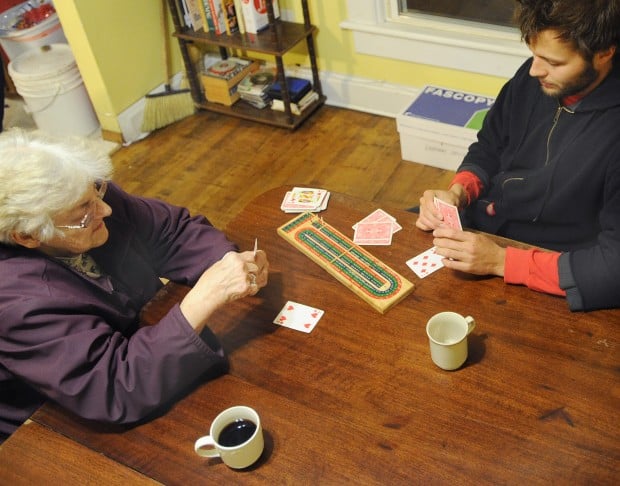
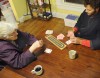
Dan Wilson, a live-in volunteer at the Bethany House in Winona, plays a game of cribbage with Sue Wallow, of Winona, over a cup of coffee Wednesday, December 7, 2011, at the Bethany House. Wilson has been volunteering at Bethany House for almost two years. (Rory O'Driscoll/Winona Daily News)

  • Winona Catholic Workers
  • Winona Catholic Workers
  • Winona Catholic Workers
  • Winona Catholic Workers

What is Catholic Worker?

The Catholic Worker movement was founded by Dorothy Day and Peter Maurin in 1933 among the poor of New York City. The movement is grounded in a firm belief in the God-given dignity of every person.

Today, 213 Catholic Worker communities remain committed to nonviolence, voluntary poverty, prayer, and hospitality for the homeless, exiled, hungry, and forsaken. Catholic Workers continue to protest injustice, war, racism, and violence of all forms.

Learn more at www.catholicworker.org. For more information on the Winona community, visit www.winonacatholicworker.org.

All they ask is your first name. Every day, the Winona Catholic Worker community breathes life into the words of the Gospel, offering home, help and a hot meal to whoever comes to the door. "Knock and it will be opened," the Gospel reads. No questions asked. "There are no forms to fill out," said Laurie Watson, a live-in community member at Bethany House. "We don't check IDs or ask questions, except ‘What is your first name?'"

Winona Catholic Workers have been opening doors to people in need since the Dan Corcoran House opened in 1992 at 802 W. Broadway. The house was named in honor of the Rev. Dan Corcoran, a chaplain at Winona State University's Catholic Newman Center who inspired a generation of students with his commitment to living the message of Jesus, according to Mary Farrell, one of the founding members of the Winona Catholic Worker community. The two-story house that had long been student housing offered shelter and hospitality to women and families in need of a place to stay. Four years later, when a house just down the block came up for sale, the community was able to open Bethany House, 832 W. Broadway, to offer hospitality to single men. It's the only non-referred emergency shelter in Winona County, Watson said, "and there's a real need."

The faces of need

That need has many faces, and speaks in a diversity of voices.

There's Bill, who on a recent evening spoke of how he spent the wee hours of Black Friday with the crowds in a Walmart parking lot. He wasn't there to shop. He was trying to catch a couple hours' sleep in his broken-down van before resuming his search for a job the next day.

There's Dan, who had hot chow and a bunk while on deployment in Iraq, but neither waiting for him when he came home.

There's Stacy, who needed a place to land while she got her financial and emotional feet back under her. Her stay at Dan Corcoran gave her the time she needed to find her niche in the larger community.

"People who come here are in crisis," said Molly Greening, live-in volunteer at Dan Corcoran. "They literally need to take time to breathe." "We need to meet them where they are. Help them feel secure. Feel at home." Greening speaks of providing a "ministry of presence" to the people who share the home. "Just being there," she said-to listen, to comfort, to play a game of cards or run an errand in an unfamiliar city-is as important as meeting physical needs for food, clothing and shelter.

Openness to the whole person and the recognition of every individual as a person of equal worth and value is at the heart of the Catholic Worker movement, Watson said. It's demonstrated as community members live in the same house, eat the same food, and for the most part have the same income as the guests living temporarily among them. Voluntary poverty puts workers on equal footing with guests, Watson said, allowing them to see the world from a perspective closer to those they serve.

A simple, welcoming routine

In practice, voluntary poverty means the six live-in community members and their guests depend on donations and their own enterprise to meet daily needs.

Winona Catholic Worker provides beds for up to five live-in guests at Bethany House, and beds for up to 14 at Dan Corcoran. They offer open hospitality Monday through Friday from 4-7 p.m. at Bethany House, a time when anyone is welcome to come in and relax with the community, take a shower, do laundry, and enjoy a good hot meal.

Guests are asked to comply with two simple rules at Bethany, Watson said. No drug or alcohol use, and be in the house by 10 p.m. Dan Corcoran has a few additional rules intended to avert potential friction in a larger house. Guests are not asked to sign in and out, attend religious services or perform household chores. "You don't ask guests to clean your bathroom," said community member Mike Abdoo.

Both houses are paid for, Farrell said, largely through the generosity of the Winona community. Day-to-day needs are met through donations of food, both groceries and food left over from events or prepared by friends. Cash donations cover other expenses and donations of clothing, furniture and services help meet the needs of guests and community members.

Live-in community members purposefully limit work time outside the community to about 15 hours a week, to prevent commitments from interfering with providing hospitality and presence to guests, Watson said.

"There's a joke that Catholic Workers aren't Catholic and they don't work," said community member James Johnson-adding that there is an element of truth lurking in the sentiment. "To be present to someone you have to be here," Greening said. "It's really as simple as that."

Catholic with a small ‘c'

"Dorothy Day (one of the founders of the Catholic Worker movement) was Catholic, so we're Catholic Workers," Johnson joked. The reality is that while the movement has a definite Christian and Catholic flavor, expressed in the traditional emphasis on the importance of performing traditional Works of Mercy and service to the poor, Catholic Worker volunteers and their supporters are more likely to be non-Catholic than members of the Catholic Church, Johnson said.

"We are definitely not ‘that homeless shelter run by the Catholic Church,'" Greening said. There are no formal ties between the institutional Catholic Church and the Catholic Worker movement, or the local Catholic Worker community, Watson said. Nor is Catholic Worker affiliated with Catholic Charities.

Catholic Worker communities are also independent of government programs and assistance, Watson said. Not being involved with government programs means communities are able to offer hospitality as they see the need, rather than abiding by government standards and limitations, she said. Independence from government extends to refusing to file for tax-exempt status, meaning donations to the Catholic Worker community are not tax-deductible.

Catholic Worker communities not only stand apart from the government, they are often critical of it. Social action is deeply ingrained in the Catholic Worker tradition, and members of Catholic Worker communities are supported and encouraged to join in protesting injustice. Community member Matt Byrne said the way of life reminds workers every day of the need to fundamentally change elements of society.

"These houses exist," he said, "because we live in a society that forces some people to be homeless." Winona Daily News

St. Paul-area Catholic Women's Guild is gone but still giving

.


The Guild of Catholic Women sew for the poor in 1932, and the group also supported Mexican immigrants at the time, by organizing a Spanish language chapel in a West Side storefront. That evolved into today's Our Lady of Guadalupe parish. The Red Cross, Little Sisters of the Poor and other groups also benefited from its activists.

The Guild of Catholic Women left St. Paul much the same way it arrived - quietly, and with the good of the community in mind.

No fanfare or proclamations announced its end. Just a final gathering of about 50 women at the same Summit Avenue church where the organization began more than a century ago.

"I guess you could say that we came around full circle," President Alison Enestvedt said of the send-off at the Catholic Community of St. Thomas More, formerly known as St. Luke's.

In late October, the Guild's board of directors, citing an aging membership and declining numbers, voted to dissolve the organization that since 1906 has offered care to St. Paul's needy. The nonprofit leaves behind two endowment funds totaling more than $800,000, which will be distributed to community organizations.

Throughout its history, the Guild served the community. It worked to set up temporary housing for poor immigrant women, established a church for Mexican immigrants and more recently helped those with mental illness.

The Guild's volunteer work over the past century is woven into St. Paul's social fabric.

Its members helped establish a number of existing agencies, including the Bureau of Catholic Charities (the forerunner to today's local Catholic Charities), Our Lady of Peace Home for adults with incurable cancer and Guild Inc., which provides housing and counseling services for people with mental illness.

"They saw a need and responded to them faithfully for 106


Advertisement

years," said the Rev. Joe Weiss of St. Thomas More. "That's their legacy. And that's a glorious thing."

CHANGING ROLES OF WOMEN

Disbanding was a decision not taken lightly, Enestvedt said. But for several decades, the Guild struggled to attract new members and get those they had to step into leadership roles, she said.

"No one wanted to close it; everyone just wanted to keep it going on forever," she said. "But everybody who was involved had every job imaginable."

Like many volunteer organizations, the Guild was affected by the changing roles of women. Women who began working outside the home suddenly were too busy to commit to the group's charity work, Enestvedt said.

So numbers shrank. In the 1970s and early '80s, membership consistently flirted near 1,000. At its end, the Guild had about 200 members, about half actively involved.

"A lot of them are older than I am," Enestvedt said. "And I'm on Medicare."

In 2006, for its 100th anniversary, the Guild tried to stem the tide by focusing on children's and adolescents' mental health problems, such as eating disorders. A task force was also set up to look at its future.

"The things we tried just didn't generate the number of members and the kind of members we needed," Enestvedt said.

GENERATION PASSED OVER

JoAnne Dunn, the interim executive director of the National Council of Catholic Women, is all too familiar with the Guild's plight. The Arlington, Va.-based organization has more than 4,000 affiliated Catholic women's organizations in parishes and dioceses throughout the United States, down from 12,000 in the 1970s.

Some groups waited too long to address declining membership, and some didn't embrace younger women, she said. As a result, an entire generation was passed over, and now current members are aging.

"The St. Paul group and those in other cities did all this great work wholeheartedly for so many years and were very successful," she said. "But while they were doing this, they sort of forgot about the fact they had to keep their eye on their own organization."

And while Dunn acknowledged that women entering the workforce played a part in the national slide, she also pointed to church consolidations and closures, as well as changes in volunteering, as factors.

"The structural organizations that used to exist are changing, and there's been a growth of many parishes of very active social ministry groups, so the traditional women's groups are kind of going out of favor," she said. "I mean, anybody that's under 70 really doesn't want to go to a monthly meeting. And they're not engaged about the idea of decorating an altar."

So two years ago, the group started a drive to focus on younger women and black and Hispanic women, she said, "because they're the fastest-growing population in the church."

Tim Sanders, left, and Eileen Ward string lights on a Christmas tree at the Guild Inc. office. The Guild of Catholic Women established the agency in 1990 to manage direct services to about 100 people with mental illness; today, it serves about 850.

The national organization is hoping to attract younger Catholic women through social networking websites. It is also working closely with the U.S. Conference of Catholic Bishops and other organizations such as Catholic Charities, Catholic Relief Services and the Society of St. Vincent DePaul.

"Everyone knows we have to reach down into the younger generation," Dunn said. "It's going to be a challenge, but I think there's potential."

THE GRAND GALA

Recruiting volunteers was simpler in the early years.

Often, members would invite friends and neighbors over for a silver tea - with the goal of getting them to join and maybe even throw a donation into a silver bowl placed in the middle of the table.

"These were ladies who by and large had the means - they were fairly rich - and had working husbands so they could volunteer and have the teas in the afternoon," recalled Fred Kueppers Jr., the Guild's longtime attorney whose mother served as president in the 1930s. "Those were great days, and I remember them fondly."

Beginning in 1917, most of the Guild's projects were funded with proceeds from its annual charity ball, where members' daughters were "introduced" in a grand march. The last ball was in 1991, but for decades, the gathering was one of the most important events in St. Paul's Roman Catholic community.

Girls who attended St. Joseph's Academy, Derham Hall, Visitation Convent and Our Lady of Peace schools danced at the gala events, escorted by cadets from St. Thomas Academy and Cretin High School.

"They lined you up by height, and that was your date for the evening," said Enestvedt, whose four children participated in the event. "They were something else - they raised a lot of money and helped raise the awareness of doing something for the charity."

Proceeds from the first ball, held at the St. Paul Hotel, helped support the Guild's Nelson Street (now Marshall Avenue) home for young working women who came to St. Paul to work. The gala also helped members launch the original Catholic Infant Home, which later became known as the Seton House, in St. Paul's Rondo neighborhood.

In 1930, when Guild members discovered that Mexican families were not receiving their sacraments, they turned a storefront at Wabasha Street and Fillmore Avenue on St. Paul's West Side into a chapel for hundreds of Mexican immigrants. It was the modest beginning of Our Lady of Guadalupe parish.

"The Mexican community of the West Side Flats had their own chapel," reads a church narrative written in 2006 to mark the 75th anniversary of the parish. "There were smiles all around and tears of joy."

During World War II, like the earlier war, the Guild stayed busy serving the needs of veterans.

In 1964, the Guild's Marshall Avenue property was sold to make room for St. Paul Technical College (now St. Paul College) and the Guild used money from the sale and a donation drive to buy land across the street and open a hall for young working women. In the 1970s, when this type of supervised living facility was no longer in demand, the women focused on providing housing for elderly women on limited incomes.

"They were just superior at finding a cause, putting their heads together, digging in and doing what it takes to get a certain objective achieved," Kueppers said.

A NEW CAUSE

The mid-'70s brought a new cause for the Guild that members would carry on for the next four decades.

For many years, state hospitals for the mentally ill had been closing. In 1974, Ramsey County Human Services asked the organization to provide a boarding home for people with mental illness. Once again, the Guild stepped up, buying an apartment building on Marshall Avenue.

In the early 1980s, at Dakota County's request, the organization bought three homes in South St. Paul and turned them into temporary residential housing for people with mental illnesses.

By 1990, many mentally ill people were getting medication and receiving financial aid from government programs. Helping them became too complicated for the volunteer organization, and the Guild established Guild Inc. to manage direct services to clients.

As part of its centennial year of 2006, the women of the Guild of Catholic Women decided there was a need to better educate the public about mental illness. They began a series of talks, known as "The Puzzle of Mental Illness," with speakers such as mental health advocates Kathy Cronkite, daughter of Walter Cronkite, and actress Carrie Fisher. The talks drew hundreds.

"They were very much at the forefront of serving people with mental illness in the community and opening their arms to welcome them into the community," said Guild Inc. President Grace Tangjerd Schmitt. "And that's characteristic of them throughout their history - always responsive to the needs of the community."

Meanwhile, the demand for Guild Inc.'s services continues to grow.

Last month, as the agency opened an office in Minneapolis, it was named the Provider of the Year by the National Alliance on Mental Illness.

"In 1990, when we were formed, we served about 100 people, and now on any given day we're serving about 850 people," Tangjerd Schmitt said.

The agency will continue to reap the rewards from the Guild's work in the form of a $630,000 endowment.

A second endowment of nearly $200,000, which came from the sale of the Guild's office building in West St. Paul, will be given to organizations that promote "wellness in the community."

Nick Ferraro can be reached at 651-228-2173. Follow him at twitter.com/NickFerraroPP.

A BRIEF HISTORY OF THE GUILD OF CATHOLIC WOMEN

1906: Guild of Catholic Women is founded in St. Paul by Caroline Beaumont and Mrs. J.W. Bishop; consists of 30 women from St. Luke's parish who help the needy by creating food baskets and organizing sewing groups and language and catechism classes.

1908: The Guild opens a local branch of Traveler's Aid Bureau to help immigrants.

1910: Organization places 173 young women in jobs after visiting juvenile court.

1911: YWCA asks the Guild to establish a boarding house at 574 St. Peter St. for young women employed in the city.

1915: Guild members conduct 600 home visits as part of their work with the juvenile court department.

1916: Organization buys a home at 215 Nelson St. (now Marshall Avenue).

1917: Guild hosts its first charity ball in St. Paul at the St. Paul Hotel; proceeds help support the home for young women and the original Catholic Infant Home at Dale Street and Rondo Avenue (later Seton House).

1914-18: Guild promotes Liberty Bonds during World War I, assists veterans and arranges burials for indigent soldiers.

1920: Guild assists in establishment of a Bureau of Catholic Charities, forerunner to today's Catholic Charities; works to have a female physician named to the Minnesota State Board of Health.

1925-30: First Guild Hall to house young working women opens on a lot adjacent to 215 Nelson St.

1930s: Guild transforms a grocery store on the West Side into a chapel for Mexican immigrants, marking the beginning of Our Lady of Guadalupe parish; active in Community Chest, Red Cross, Home of the Good Shepherd, Little Sisters of the Poor, Ramsey County Home for Girls.

1941: Guild assists Dominican Sisters in establishing Our Lady of Good Counsel Home for people with incurable cancer.

1964: Guild sells property at 215 Marshall Ave., buys land across the street at 286 Marshall Ave., where Guild Hall is erected to provide supervised housing for young women. (The building later housed elderly women.)

1974: Ramsey County Human Services asks Guild to provide a boarding and care home for people with mental illness. Purchases 14-unit apartment building at 268 Marshall Ave.; 86 mentally ill people move into vacant Guild Hall.

1983: Dakota County requests services for housing people with mental illness; Guild buys three homes in South St. Paul that are rehabbed and furnished, known as Guild South.

1990: Guild establishes Guild Residence Inc. (now Guild Inc.) as a nonprofit subsidiary to manage direct services to people with mental illness.

1994: Guild sells Guild Hall and apartment building at 268 Marshall Ave. to comply with new government regulations; shifts focus to provide support for people with mental illness to live independently.

1994: Guild buys building at 1025 Dodd Road, West St. Paul, as headquarters.

2006: Guild celebrates "a century of caring community connections."

2011: Guild disbands, establishes two endowment funds.

Monday, November 28, 2011

Internet brings prayer requests via email to nuns in La Crosse

.

"Please pray my husband and I stay together."

"Please pray for a successful knee surgery."

"Please pray that I may be restored back to the way I was."

"Please pray for my soul."

The prayers come 24 hours a day from all over the world to the Franciscan Sisters of Perpetual Adoration. While the stories behind the emailed prayers are different, the sentiment is always the same: Please pray.

The sisters have been praying continuously - all day, every day in shifts - since Aug. 1, 1878. Since 2003, many of the prayer requests have come through their website.

Michelle Frazier's job is to answer the prayers - literally. Frazier is the prayer minister and a Franciscan Sisters of Perpetual Adoration associate who is in the process of becoming a nun. She oversees the prayer requests, making sure they get to the sisters. "Mechanically, it's not a difficult job," Frazier said. "Spiritually and emotionally, it can be difficult. That's OK, it's part of the ministry."

Mondays are usually the busiest because the emails stack up over the weekend. Just recently, she's received emails from New Zealand, Zimbabwe, Poland, India and Northern Ireland as well as from all across the United States from people of all faiths. "I think people just want to be prayed for," Frazier said. "It gives them a sense of hope."

The prayers for children are the hardest to read. Recently, Frazier received a request to pray for a 10-year-old girl with brain cancer. "She's a little angel," the email said. "Just recently her tumor near her brain stem has grown, and she has been given less than a year."

Fittingly, Frazier starts her day by praying in the St. Francis Chapel. Some of the emails are actual prayers to God. "I'm a third party in someone's prayer," Frazier said. "Sometimes I really feel like I'm intruding. It's pretty personal stuff."

The requests are kept confidential. Each one gets a reply. Frazier has standard responses, but sometimes she adds a personal note.

Sister Ronalda Hophan oversaw the prayers from 2003-07, when the nuns first began accepting requests over the Internet. Immediately, the emailed requests came in from all over the world. "It's fantastic," Hophan said. "It just shows the need for prayer." Hophan is glad the technology helps them reach people in their hour of need, whenever that may be. "You'd like to hug them all, but you can't," Hophan said. "You just want to hold them."

Prayer requests are still taken by phone and mail, and they can be dropped off at the Chapel. Sometimes Frazier gets thank yous or updates on how people are doing. Most of the time, she just has to have faith. "We are in our way affecting change, whether great or small," Frazier said.

One prayer at a time. Pioneer Press

If you desire to have the Sisters pray for your special intention, you may send them an email by using this form.

You may mail or phone them or drop off your request in person here:

Franciscan Sisters of Perpetual Adoration
912 Market St.
La Crosse, WI 54601-4782
608-782-5610


Wednesday, November 23, 2011

An Evening Affirming the Faith’ at St. Charles Borromeo, Mpls -- Bishop Sirba of Duluth to Speak Dec 3

.
‘An Evening Affirming the Faith’ at St. Charles Borromeo, Minneapolis — December 3: Evening begins with the 5 p.m. Mass, followed by a wine and hors d’oeuvre social at 6 p.m.; dinner at 6:30 p.m. and the keynote address at 7:45 p.m. at 2739 Stinson Boulevard N.E. Bishop Paul Sirba of Duluth will speak on “Holiness, Pure and Simple.” Tickets are $30 per person and must be purchased before November 23. Call (612) 781-6529.

Monday, November 21, 2011

Superior General of FSSP to Celebrate EF Mass at St. Augustine's Nov 27

.
Many of you have been to Saint Augustine for the Argument of the Month dinners, but never seen any part of the Church besides the basements. This Sunday, November 27th, you'll have an opportunity to change that.

Father John Echert, Pastor of Holy Trinity and St. Augustine churches in So. St. Paul, has invited The Superior General of the Priestly Fraternity of St. Peter (FSSP), the Very Rev. John Berg to offer the 11:15 Traditional Latin Mass at the Church of St. Augustine (408 3rd St. N. in So. St. Paul) on the 27th of November. That 11:15 time is 15 minutes earlier than the normal EF Mass time at St. Augustine's!

The Fraternity of St. Peter is an international priestly fraternity established by Pope John Paul II to provide the traditional Mass and Sacraments to Catholics around the world under the provisions established by the motu proprio Ecclesia Dei.

There will be a reception for Father Berg in the church hall immediately after Mass, at which time he will also offer a brief presentation on the general mission of the Fraternity of St. Peter.


So please--tell your friends and family members, forward this email to your Catholic contacts, pray for the success of this event, and mark your calendars for the 27th of November.


Thursday, November 10, 2011

St. Paul Shrine/Cathedral Re-Opens Museum with new exhibit:

.
Cathedral Re-Opens Museum with new exhibit:

The Archbishop and the Architect

The public is invited to a grand re-opening of the Cathedral Museum, Sunday, Nov. 20th from 2-4 p.m. The museum is located in the lower level of the Cathedral of Saint Paul, 239 Selby Ave., at the corner of Summit Ave. and John Ireland Blvd.

The exhibit, titled “The Archbishop and the Architect,” features personal artifacts belonging to Archbishop John Ireland and the architect for the Cathedral, Emmanuel Masqueray. The two men were said to have become great friends not long after their initial meeting at the 1904 Louisiana Exposition, informally known as the St. Louis World’s Fair.

It was the vision of Masqueray's architecture for the Exposition that impressed Ireland and ultimately convinced him to hire the Frenchman to design the Cathedral of Saint Paul in the beaux arts-style.

Monsignor George Ryan later described the two men in his book, Historical Sketch of the Cathedral of Saint Paul, 1904-1937:

How many hours they dreamed and planned… These two soared on the wings of enthusiasm, and Masqueray, throwing aside halting English, broke into French until he had the Archbishop equally fluent and eloquent in it. Hands were going like a Dutch windmill.”

A few of the treasured artifacts from both the archbishop and the architect on loan for this special exhibit have never before been available to the public:

· Archbishop John Ireland’s death mask (on loan from Archdiocese Archives)

· Two of the 49 personal scrapbooks Ireland kept over his lifetime on loan from the Archives of the Archdiocese of Saint Paul and Minneapolis (Archdiocese Archives)

· Original drawings by E.M. Masqueray and one of his paintings (on loan from R.J. Seagren, the great-grandson of Frank Abrahamson, one of Masqueray’s architects)

· A collection of original photos of the 1904 Louisiana Purchase Exposition buildings designed by E.M. Masqueray. You can see the similarities in a few features of the buildings in St. Louis and the Cathedral of Saint Paul. (R.J. Seagren)

· Other relics of early missionary work including a saddle used by Fr. Felix Tissot at the turn of the century as he covered territory in Goodhue and Wabasha counties (Archdiocese Archives).

After the re-opening, the museum will have daily open hours. Watch the website for details. The Cathedral Museum is located on the Lower Level of the Cathedral of Saint and can be reached by the elevator on the left of the vestibule or the stairway on the right.

Cathedral Hours: The Cathedral doors are open daily from 7 a.m. to 7 p.m. and Saturday from 7 a.m. to 9 p.m. For more information, visit www.cathedralsaintpaul.org or call the Welcome Center at 651-228-1766.

Tuesday, November 8, 2011

Biography of Bishop Paul Anderson of Duluth [1968-1982]

.

Welcome to the

Bishop Anderson Site.

In August 1969, I packed my meager possessions and with a heartfelt goodbye left the University of Wisconsin--Madison. My years in graduate school included many rewarding and memorable experiences at the University Catholic Center, where I was active in the liturgical reform movement inspired by the Second Vatican Council.
Like most Catholics, I followed the developments of Vatican II, 1962-1965, from afar reading reports in newspapers and magazines. The council, a series of sessions in Rome led first by Pope John XXIII... (Read the Intro)

Biography by Neil Storch

Complete
Introduction

Part I
Part II
Part III
Part IV
Part V
Printable Version (PDF) (MS Word) (HTML)

Listen to the Audio (Requires Quicktime)
View Pictures, Paintings

Tuesday, November 1, 2011

Women & Spirit: American Women Religious in the U.S.

.

Duluth Benedictines - from the Women & Spirit Exhibit

On Sunday, I visited the Women & Spirit Exhibit at the Center for History in South Bend, Indiana. “WOMEN & SPIRIT: Catholic Sisters in America” is a traveling exhibit sponsored by the Leadership Conference of Women Religious (LCWR), designed to “reveal the mystery behind a small group of innovative American women who helped shape the nation’s social and cultural landscape.”

Although I had heard great things about the exhibit, I was not prepared for its powerful impact. As a Sister, I know the history of our community, and of the other Benedictines in America. I listened to all 18 lectures from Margaret Susan Thompson’s courseHistory of US Women Religious. It’s one thing to know history. It’s another to be surrounded by the words and pictures of those who lived it, to see the cradle that the Sisters of the New York Foundling Hospital left outside their door so that – day or night – there was someplace safe to leave a baby.

The Duluth Benedictines are part of the exhibit – not only our name on the immense list of women’s orders active in the US, but in a photo of Sister Amata Mackett, who traveled to the lumberjack camps in the cold northern Minnesota winters to care for the spiritual and practical needs of the workers – and to sell tickets good for one year of medical care at any of the hospitals sponsored by the community.

The YouTube video below shows parts of the exhibits – and the reactions of some visitors. It will be in South Bend through December 31 before going to its last location in California. If you are within driving distance, I encourage you to see the exhibit: it is definitely worth while.


Monastic Musings Too